Search This Blog

Monday, February 3, 2014

TED_Printing a human kidney - Anthony Atala in 3D


Let's Begin…

Surgeon Anthony Atala demonstrates an early-stage experiment that could someday solve 
the organ-donor problem: a 3D printer that uses living cells to output a transplantable kidney. 
Using similar technology, Dr. Atala's young patient Luke Massella received an engineered bladder 
10 years ago; we meet him onstage.
Listen and answer the questions at REVIEW at ed_TED


A model of a 3D-printed kidney drew wild applause when a surgeon first held it up at a TED conference in 2011. But the dream of creating replacement human kidneys using 3D-printed  technology still remains years away, even as the technology has enabled the rise of "bioprinting" aimed at building organs suitable for transplantation.
Kidneys represent the human organ in highest demand among the more than 120,000 U.S. patients currently waiting for organ donations. 
Researchers hope that new generations of 3D printers can use living human cells to build replacement organs layer by layer — especially organs such as livers, hearts and kidneys.
"These are by far the most complex, because you have a lot more cells per centimeter than any other organ, and because you have so many cells that are functionally complex," said Tony Atala, director of the Wake Forest Institute for Regenerative Medicine in Winston-Salem, N.C.


Chinese Scientists Successfully Produce a Living Kidney Using a 3D Printer

by , 09/09/13


3d printing, 3d printed kidney, medicine, green technology, sustainable design, green design, china, medical technology, science, eastern Zhejiang Province, 3d printed organs


We’ve all seen the cool things that can be done with 3D printers, but now scientists at a Chinese university in eastern Zhejiang Province have made an incredible leap for medical technology by producing a 3D printed kidney that they say can function as a human organ. This development comes two years after Anthony Atala printed a human kidney live at a TED event two years ago, and researchers are progressing in their effort to produce a viable organ that will be suitable for


Read more: Chinese Scientists Successfully Produce a Living Kidney Using a 3D Printer | Inhabitat - Sustainable Design Innovation, Eco Architecture, Green Building 


Other sources:

3D Printing Aims to Deliver Organs on Demand

The tiniest challenges
The ability to print full-size functioning organs depends on figuring out how to seed 3D-printed organs with both large and small blood vessels that can supply nutrient-rich blood to keep living tissue healthy. So far, no lab has succeeded in 3D-printing organs with the network of blood vessels necessary to sustain them.
Organovo has begun working toward that goal by experimenting with 3D-printing blood vessels 1 millimeter or larger in width. The company has also built tissues containing tiny blood vessels about 50 microns or smaller (1 millimeter is equal to 1,000 microns) — enough to sustain a millimeter-thick chunk of organ.


A group at the German Fraunhofer Institute has created blood vessels, by printing artificial biological molecules with a 3D inkjet printer and zapping them into shape with a laser.

Tuesday, January 28, 2014

Marlboro and chronic obstructive pulmonary disease (COPD)


An American actor has become the fifth former “Marlboro Man” from the long-running series of cigarette advertisements to die from a smoking-related disease.
Got a smoke? Filtered,
 flavored, pack or box? 

William Thourlby
In the 1950s, William Thourlby looked out from billboards and invited smokers to Marlboro Country, said Corey Kilgannon in The New York Times. “I’m the original Marlboro Man,” says the 88-year-old former actor and model.
“But I never smoked or drank, and I was no cowboy.”
Four other stories that succumbed to illnesses linked to smoking:
(Eric Lawson, David Millar, Wayne McLAren, David McLean and Richard Hammer)

Eric Lawson, who portrayed the rugged cowboy character in magazines during the late 1970s and early 1980s, died from a lung condition at his home in San Luis Obispo, California. He was 72.
Mr Lawson, who started smoking when he was 14, suffered respiratory failure due to chronic obstructive pulmonary disease (COPD), according to his wife, Susan.

In October 1987, David Millar, one of the first Marlboro Men on television screens in the 1950s, died from emphysema at 81 at a hospital near his home in New Hampshire.
Almost five years later, Wayne McLaren died at 51, after a long struggle with lung cancer. In his final years he used his status as a former Marlboro Man to mount a high-profile lawsuit against Philip Morris, which manufactures Marlboros, and warn the public about smoking’s health risks.
“Tobacco will kill you, and I am living proof of it,” were some of his last words, his mother said shortly after his death in California.
David McLean (73) and Richard Hammer (69) , both 1970s Marlboro Men, died from lung cancer in California in the late 1990s.
  Mr McLean, who was when he died, reportedly smoked five packets a day at one stage. Mr Hammer died aged 69.
Like Mr McLaren, Mr Lawson criticised smoking later in his career. He appeared in a commercial that parodied Marlboro Man, and discussed on American television the negative effects of smoking.
However, his wife conceded that he was addicted even then:
“He knew the cigarettes had a hold on him. He knew, yet he still couldn’t stop.”

Monday, January 27, 2014

ethical questions without answers: Marlise Muñoz

Texas judge: Remove brain-dead woman from ventilator, other machines

By Ed Lavandera. Josh Rubin and Greg Botelho, CNN
January 25, 2014 -- Updated 0309 GMT (1109 HKT)

Judge orders pregnant woman off ventilator

STORY HIGHLIGHTS
  • Judge orders hospital to remove woman from ventilator, respirator
  • Hospital agrees woman brain dead since November 28, fetus not viable, court papers say
  • Family wants her taken off respirator, ventilator so they can take her body and bury it
  • Fort Worth hospital had said it was following state law by keeping her on ventilator
Fort Worth, Texas (CNN) -- 
A Texas judge ordered a Fort Worth hospital to remove a pregnant and brain-dead woman from respirators and ventilators on Friday, perhaps ending a wrenching legal debate about who is alive, who is dead and how the presence of a fetus changes the equation.

Could we disconnect Marlise Munoz 
from life support immediately?


in life, there are humans, and what these people consider "right" and "wrong" can change. That's the trick with ethics, the study of right and wrong. Accepted beliefs evolve. 
So how does ethics work in medicine, and how might it be different in 100 years?
Different professions have their own ethical standards. Examples of ethical themes in most of them include honesty, carefulness, integrity, non-discrimination and confidentiality. Because of medical ethics, you can have a reasonable expectation that your personal information will be kept private, your clinical providers won't be impaired, and your wishes for care while incapacitated will be respected.
Ethics are so highly valued in medicine that most doctors pledge to adhere to the Hippocratic Oath.

health -cranky sociologists

Not Getting What One Pays For – 

US Healthcare System Compared


Bookmark and Share
By SocProf.
A few weeks back, the Economist’s Daily Chart feature had this highly informative chart:
Compared to other rich countries, the United States has a whole bunch of health and health care outcomes that are out of whack with the rest of high-income countries especially considering the higher % of the GDP dedicated to health spending.
A non-communicable disease, or NCD, is a medical condition or disease, which by definition is non-infectious and non-transmissible among people. NCDs may be chronic diseases of long duration and slow progression, or they may result in more rapid death such as some types of sudden stroke. They include autoimmune diseases, heart disease, stroke, many cancers, asthma, diabetes, chronic kidney disease, osteoporosis, Alzheimer's disease, cataracts, and more

Yesterday, the Washington Post had a series of graphs on the same topic, zeroing on higher prices for procedures and medications. Here are a few.
Cost differential for a regular doctor visit:
Hip replacement:
Cost per hospital day:

And last but not least:
So, higher costs across the board, but poorer outcomes in the end.
As always, the essential sociological question: who benefits? (It’s not a hard one)

bacteria, virus and epidemics


How Bacteria in Our Bodies Protect Our Health


Researchers who study the friendly bacteria that live inside all of us are starting to sort out who is in charge—microbes or people?
Biologists once thought that human beings were phys­iological islands, entirely capable of regulating their own internal workings. Our bodies made all the enzymes needed for breaking down food and using its nutrients to power and repair our tissues and organs. Signals from our own tissues dictated body states such as hunger or satiety. The specialized cells of our immune system taught themselves how to recognize and attack dangerous microbes—pathogens—while at the same time sparing our own tissues.

The real size of things to come... here
The amazing world of Bacteria


Epidemiological research:


The Future Of Facebook [Research]


Some real research conducted by real rocket scientists, John Cannarella and Joshua A. Spechler, from Princeton’s Department of Mechanical and Aerospace Engineering in their article,“Epidemiological modeling of online social network dynamics”.

Facebook’s future, the research

Cannarella and Spechler used epidemiological models to explain social media user behavior where adoption was analogous to infection and abandonment was analogous to recovery. 
Their model suggests Facebook has already reached the peak of its popularity. They conclude that Facebook has entered a decline phase, as shown by a downward trend in search frequency since 2012. Extrapolating the best fit model into the future, they predict Facebook activity will rapidly decline over the next few years. 

Facebook concerned with health:

 Mark Zuckerberg gives $5 mn for health centre


And ... Facebook hits back, 

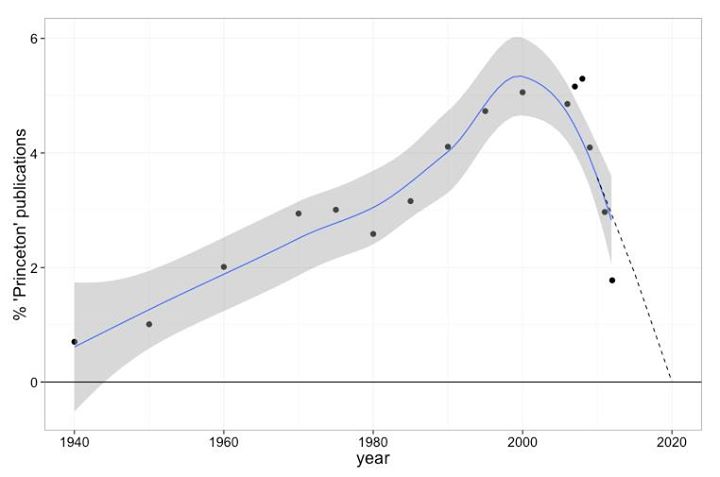
'Princeton University will shut down'

Facebook data scientist Mike Develin has decided to use similar methods to give Princeton a taste of its own medicine and “prove” that Princeton’s enrollment will crash all the way to zero in less than a decade.

  • Facebook schools Princeton: The uni will have no students by 2021, claims platform after being described as an infectious disease: 
  • Facebook has hit back at a study from Princeton which suggested that the social media platform would lose 80 per cent of its users by 2018 in a tongue-in-cheek blog posts which suggests the university. (Thedrum.com) Read News
  • Princeton Study Saying Facebook Is Doomed Gets Destroyed In Hilarious Fashion By A Facebook Data Scientist (FB): 
  • Researchers at Princeton made news this week by proclaiming the impending doom of Facebook. They concluded that Facebook will lose 80% of its peak users between 2015- 2017. Naturally this research re. (BusinessInsider) Read News
  • Facebook mocks 'infection' study, predicts Princeton's demise: 
  • A study by researchers at Princeton University made waves this week with its prediction that Facebook could lose 80 percent of its users by 2017. Facebook has struck back with a post using similar statistics.(NBCNews) Read News
  • Facebook Study Finds That Princeton Is The One On Brink Of Extinction: 
  • A new study shows that Facebook isn’t in danger of extinction. But maybe Princeton is. A Facebook data scientist released his own analysis today to poke at a recent study out of Princeton that.(Adweek.com) Read News
  • Facebook gives best possible response to ridiculous Princeton study: 
  • Earlier this week we highlighted a study from Princeton that used Google search trends to predict that Facebook would lose 80% of its users by 2017. The study seemed so flat-out ridiculous to us t.(Yahoo!News) Read News


Wednesday, January 22, 2014

Deteriorata


                                                        by Tony Hendra - 197

(You are a fluke of the universe.
You have no right to be here.
Deteriorata, Deteriorata) 
Go placidly amidst the noise and waste, and remember what comfort there may be in owning a piece thereof. Avoid quiet and passive persons, unless you are in need of sleep. Rotate your tires.
Speak glowingly of those greater than yourself; and heed well their advice, even though they be turkeys. Know what to kiss - and when. Consider that two wrongs never make a right, but that three do. Wherever possible, put people on hold.
Be comforted, that in the face of all irridity and disillusionment, and despite the changing fortunes of time, there is always a big future in computer maintenance. 

(You are a fluke of the universe.
You have no right to be here.
Whether you can hear it or not,
The universe is laughing behind your back.)

Remember the Pueblo. Strive at all times to bend, fold, spindle, and mutilate. Know yourself. If you need help, call the FBI. 
Exercise caution in your daily affairs, especially with those persons closest to you... That lemon on your left, for instance. Be assured that a walk through the seas of most souls would scarcely get your feet wet. 
Fall not in love, therefore, it will stick to your face. Gracefully surrender the things of youth: the birds, clean air, tuna, Taiwan - and let not the sands of time get in your lunch. Hire people with hooks. For a good time, call 606-4311, ask for Ken. 
Take heart in the deepening gloom that your dog is finally getting enough cheese. And reflect that whatever misfortune may be your lot, it could only be worse in Milwaukee. 
(You are a fluke of the universe. ... ) 
Therefore, make peace with your god, whatever you perceive him to be: hairy thunderer or cosmic muffin. With all its hopes, dreams, promises, and urban renewal, the world continues to deteriorate. GIVE UP!

(You are a fluke of the universe. ...)


The parody was written by Tony Hendra for National Lampoon, and was recorded as part of the National Lampoon Radio Dinner album, released in 1972. Voiceover talent Norman Rose read the "poem" and Melissa Manchester was a background singer on the chorus section of the song. Christopher Guest wrote the music.

Eduardo Saiz is a biologist and scientific illustrator.

Eduardo Saiz
www.eduardosaiz.com
Born in Burgos in 1950, Eduardo Saiz is a biologist and scientific illustrator.
Zoology, botanical studies, archaeology, palaeontology, history and ethnography are some of the scientific fields in which he has worked during his professional career as an illustrator. He has also dedicated himself to museography and publishing publications and is professor of scientific illustration in various universities and institutions: UAB, UB, Escola Massana, UdG, UVic or the Museum of Human Evolution of Burgos, amongst others.


http://www.elperiodico.cat/ca/videos/opinio/entrevista-eduardo-saiz-illustrador-cientific/2898220.shtml

Cuaderno de la trashumancia
http://www.eduardosaiz.com/archivos/espanol/cuaderno/trashuma/trashu04.htm

http://www.eduardosaiz.com/archivos/espanol/galerias/evo.hum/evolu01.htm


Eduardo Sáiz dibuja en directo un homínido