Life is .... a chaos between two silences (Beckett) ...
they lived und laughed ant loved end left (Joyce)
But A language is ... a dialect with a Department of Education and firm grasp of the curriculum.
Bartle Bogle Hegarty’s campaign for Johnnie Walker reversed the trend in the brand's value.
It was awarded the Grand Prix, the highest accolade, at the 2008 IPA Effectiveness Awards for their global campaign.
Finding the right strategic direction can fundamentally unlock the value of the brand and liberate the creative process. Johnnie Walker is a fabulous example.
Whisky had always been sold as the drink for people who were successful, it’s about celebration.
But success isn’t a place .... it’s a journey and really successful people are always moving forward.
Unlocking that truth and aligning the sentiment with the Johnnie Walker brand through great creative work, based on our ‘Keep Walking’ thought allowed us to create incredibly effective advertising.
A one-shot-wonder for Johnnie Walker.
'Keep walking' 2007
Sold in more than 180 markets, it is the world's largest whisky brand by some margin, with more than $4.5 billion in sales in 2007. The brand's portfolio ranges from Blue Label, one of the world's most expensive whiskies, to Red Label, the world's most popular. Back in 1999, however, Johnnie Walker was on red alert. In the preceding three years, volume sales had fallen by 14 per cent, while market share was also in steady decline. For a brand with such a proud past, the future was looking bleak; Bartle Bogle Hegarty was called to pitch for the business. The brief was twofold: to immediately reverse sales fortunes; and to develop a future-proof global communications strategy.
John Maynard Keynes used the term as early as ............, warning:
"We are being afflicted with a new disease of which some readers may not yet have heard the name, but of which they will hear a great deal in the years to come – namely, technological unemployment.
a) From AE (artcraft evolution) to IR (industrial revolution) took 2000 years1-“engines will free us from that which makes us automata job workers.”
b) From IR (industrial revolution) to AIR (artificial intelligence revolution) takes 300 years 1-“automation frees us from that which makes us feel free.” 2- The nouveau-poor (precariat) will learn to live with less and enjoy all the new digital distractions, while the rich, well, they'll be the new benevolent ruling class' (N. Carr)
In 1931, Aldous Huxley wrote Brave New World.a book that has come to symbolise our instinctive reaction to the proposition of a happy pill: Born to run a mill. Another speculative idea slides into this argument—Brave New World echoed a successful factory in which Robots (we could call them Epsilons with Huxley) do all the rut (mechanical) work.
DEFINITIONS: ............................ is when ....
your neighbour loses his job.
you lose yours.
you, your neighbour and half the other people in your street lose their jobs too.
use these: Recession --- Catastrophe -- Depression
EXAMPLE ONE. REPORTERS. Notions of newsworthiness in a brave new world of automated content producer can lead us to any of these three: Automated Insights, Narrative Science, or another system built by IBM Research that can summarize sports events based only on tweets about them - according to the Bureau of Labor Statistics. Younger journalists may have less turf on which to prove themselves “better than a robot.”
Self-driving cars, intelligent digital agents that can act for you,
and robots are advancing rapidly.
Will networked, automated, artificial intelligence (AI) applications and robotic devices have displaced more jobs than they have created by 2025?
Join the ANSWER:
Some percentage of these experts (......%) envision a future in which digital agents have displaced significant numbers of both blue- and white-collar workers—with concerns about increases in income inequality, unemployable masses of people.
The rest of the percentage of these experts (......%) expect that technology will not displace more jobs than it creates by 2025.
And we are being OUT of the job market..... (outnumbered, outrun, outgunned and outflanked) by today’s increasingly widespread network of digital devices and algorithms.
Key themes: reasons to be hopeful
Advances in technology may displace certain types of work, but historically they have been a net creator of jobs.
We will adapt to these changes by inventing entirely new types of work, and by taking advantage of uniquely human capabilities.
Technology will free us from day-to-day drudgery, and allow us to define our relationship with “work” in a more positive and socially beneficial way.
Ultimately, we as a society control our own destiny through the choices we make.
Key themes: reasons to be concerned
Impacts from automation have thus far impacted mostly blue-collar employment; the coming wave of innovation threatens to upend white-collar work as well.
Certain highly-skilled workers will succeed wildly in this new environment—but far more may be displaced into lower paying service industry jobs at best, or permanent unemployment at worst.
Our educational system is not adequately preparing us for work of the future, and our political and economic institutions are poorly equipped to handle these hard choices.
FIRST GUESS: YEAR 1930 SECOND GUESS: 48% NEGATIVE + 52% POSITIVE
Robots are the way forward
EXAMPLE ONE. LAWYERS.Lawyers, even at the highest level, are vulnerable to the advances of artificial intelligence as Amazon, Google and Facebook focus on ways of replacing humans with robots in all parts of the workplace.
'lawyers will be usurped by algorithms - citing Lex Machina software (which predicts the outcome of patent lawsuits) as an early example.' 2- Kevin Kelly, 'senior maverick' at Wired Magazine stated:
2a) 'You'll be paid in future depending on how well you work with robots.'
2b) 'the main beneficiaries of automation will be those already rich enough to own the technology, leading to a world of billionaires and beggars.'
3- Thomas Friedman notes: “Average is over, is connected to job skills. apparently means that you can’t get a good job anymore if your skill level is only average.'
4- American economist Tyler Cowen about a brave new world:
'The key divide is between 12% of people who can work effectively with artificially intelligent machines. new elite as a “hyper-meritocracy”, and everyone else 88%.'
'for every senior maverick able to work with robots, there will be a legion of teachers, lawyers, accountants and diagnosticians whose "skills" will be increasingly redundant in the age of the intelligent machine.'
The vastly reduced costs to business, say the optimists, will create a boom that will ultimately lead to millions of new jobs — jobs that we can’t even envisage yet.
it lets readers know what your essay is about and it encourages them to keep reading.There are countless ways to begin an essay effectively. As a start, here are 5/13 introductory strategies accompanied by examples from a wide range of professional writers. (all 13 ways can be checked here)
I adapted them to this suggested title:
A new trend: Fashion victims 1- State your thesis briefly and directly (but avoid making a bald announcement, such as "This essay is about . . .").
It is time, at last, to speak the truth about Fashion victims, and the truth is plainly this. I am on the sunny side of 40 and Fashion victims is really not such a terrific territory plagued by teenagers, it can be infected at any age . . . .
2- Pose a question related to your subject and then answer it (or invite your readers to answer it).
What is the charm of Fashion victims? Why would anyone put something extra around their neck and then invest it with special significance? A cool brand necklace doesn't afford warmth in cold weather, like a scarf, or protection in combat, like chain mail; it only decorates our image.....
3- Recount an incident that dramatizes your subject.
One October afternoon three years ago while I was visiting my parents, my mother made a request I dreaded and longed to fulfill. She had just poured me a cup of jasmine tea, shaped like a little pumpkin; outside, two sparrows splashed in the birdbath in the weak Canigó sunlight. Her greyish hair was gathered at the nape of her neck, and her voice was low. “Please help me get Josep Maria make a U-turn in his blog "TACKY. the other side of Fashion victims" she said, using my father’s full name. I nodded, and my heart knocked.
4- Reveal a secret about yourself or make a candid observation about your subject.
I spy on my customers at the 2nd floor of the Corte Ingles. Ought not a professional to observe his VIP clients by any means and from any stance, that he might the more fully assemble evidence? So I stand in doorways of changing rooms and gaze. Oh, it is not all that furtive an act. Those in bed need only look up to discover me. But they never do.
5- Open with a riddle, joke, or humorous quotation, and show how it reveals something about your subject.
Q: What did Eve say clad with a fig leave to Adam on being expelled from the Garden of Eden?A: "I think we're in a time of fashion victims."The irony of this joke is not lost as we begin a new century and the power of branding (new icons became Eve, Apple...) about social consumerism seem rife. The implication of this message is that our image is paramount; there is, in fact, no era or society in which shoppers minds where so immersed in. . . .
6- Offer a contrast between past and present that leads to your thesis.
As a child, I was made to look out the window to a brand car and appreciate the beautiful differences of a Citroen Shark or a Volvo XT Coupe, with the result that now I don't care much for Japanese cars. As a result, I prefer classics, ones with an aura of the past made present and the delicious whiff of a Marlboro cigarette man.
30% of organism's genetic material swapped for engineered replacements
A global research team has built five new synthetic yeast chromosomes, meaning that 30 percent of a key organism's genetic material has now been swapped out for engineered replacements. This is one of several findings of a package of seven papers published March 10 as the cover story for Science.
Led by NYU Langone geneticist Jef Boeke, PhD, and a team of more than 200 authors, the publications are the latest from the Synthetic Yeast Project (Sc2.0). By the end of this year, this international consortium hopes to have designed and built synthetic versions of all 16 chromosomes -- the structures that contain DNA -- for the one-celled microorganism, Baker's yeast (S. cerevisiae).
"This work sets the stage for completion of designer, synthetic genomes to address unmet needs in medicine and industry," says Boeke, director of NYU Langone's Institute for Systems Genetics.
"Beyond any one application, the papers confirm that newly created systems and software can answer basic questions about the nature of genetic machinery by reprogramming chromosomes in living cells."
The world is churning out so much data that hard drives may not be able to keep up, leading researchers to look at DNA as a possible storage medium. DNA is ultra compact, and doesn’t degrade over time like cassettes and CDs. In anew study, Yaniv Erlich and Dina Zielinskidemonstrate DNA’s full potential and reliability for storing data. The researchers wrote six files—a full computer operating system, a 1895 French film, an Amazon gift card, a computer virus, a Pioneer plaque, and a study by information theorist Claude Shannon—into 72,000 DNA strands, each 200 bases long. They then used sequencing technology to retrieve the data, and software to translate the genetic code back into binary. The files were recovered with no errors.
Erlich thinks it could be more than a decade before DNA storage becomes accessible to the general public.
And even then, the technology might be reserved for things like recording patient data in medical systems, as opposed to being sold to consumers as the latest tech product.
"This is still the early stages of DNA storage. It's basic science," Erlich told Eva Botkin-Kowacki at The Christian Science Monitor. "It's not that tomorrow you're going to go to Best Buy and get your DNA hard drive."
Issue of Time with the cover story on Harry Belafonte that Dylan took the scissors and paste to when constructing his section on Belafonte in Chronicles: Volume One.
TRANSLATION from Dylan's Chronicle:Como intérprete batió todos los récords de asistencia. Podía tocar en un Carnegie Hall abarrotado y aparecer al día siguiente en un mitin sindical.
No hacía distingos. Para él, las personas eran personas. Tenía ideales y te
hacía sentir como parte de la raza humana. Jamás un cantante sobrepasó
tantos límites como Harry. Atraía a todo el mundo, ya fueran trabajadores
del acero, amantes de la música clásica, quinceañeras o incluso niños.
Poseía ese don. Alguna vez dijo que no le gustaba salir en televisión porque
le parecía que la pequeña pantalla no hacía justicia a su música, y
probablemente no iba errado. Todo en él era grandioso. Los puristas del
folk tenían un problema con él, pero a Harry -que les daba sopas con honda
sus críticas le resbalaban; en cierta ocasión declaró, públicamente, como si
alguien lo hubiese emplazado a dejar las cosas claras, que todos los
cantantes de folk eran intérpretes. Llegó a asegurar que odiaba los temas
pop, que le parecían basura. Yo compartía muchas de sus opiniones. En el
pasado le habían negado la entrada en el archifamoso club Copacabana por
el color de su piel, y tiempo después pasó a ser el artista de cabecera en el
local. No podías dejar de preguntarte qué sensación debió de producirle
todo aquello. Por asombroso e increíble que parezca, debuté como músico
profesional de estudio con Harry, tocando la armónica en uno de sus
álbumes, Midnight Special. Curiosamente, aquella fue la única fecha de una
sesión de estudio que se me quedó grabada en la cabeza. Incluso las
sesiones para mis propios discos acababan por desvanecerse en
abstracciones. Con Belafonte me sentí como ungido. Obró en mí el mismo
efecto que el Guapo George. Harry figura entre esas rarezas que rezuman
grandeza y de las que esperas que se te pegue algo. El hombre inspira respeto. Sabes que nunca siguió la senda más trillada, aunque pudo.
As J J Sullivan wrote in the NYT: Everything Dylan touches turns to fuel. Readers who are into his music (it’s hard to imagine other readers) will get pleasant and in many cases unexpected shocks of recognition as he ticks off the items he was stuffing into his bag. In one memorable scene, Dylan sits and listens to the Robert Johnson album King of the Delta Blues Singers, an advance pressing of which his first producer has smuggled to him. We see him, still practically a child, communing with the dead and at that point largely forgotten singer, whose exquisitely creepy voice “made [him] nauseous.” But there are also pages on Brecht, the early professional wrestler Gorgeous George, and Harry Belafonte, whose indifference to critics’ constant harping on authenticity Dylan notes and files away.
At Words from Solitude, a live blog from India, we read:Chaos to Creation: the enigma of Bob Dylan (Part One)Old Dylan began
his musical journey with traditional materials, adding his own words to
melodies derived from folk compositions and singing them with a thin nasal
voice at folk clubs and coffee houses of New York’s Greenwich Village. Besides
performing, he was also playing harmonica for many of the senior musicians when
they performed at Gerde’s Folk City. In fact, he made his first official
recording when he played harmonica for Harry Belafonte inMidnight Special. Dylan held
Belafonte in high esteem and described him inChroniclesas a “rare type of character that
radiates greatness”. The young omnivorous troubadour was also rapidly absorbing
musical and political influences, blending conventional and avant-garde
techniques with his natural artistic instincts and intuitions. “The only thing
I can compare him with is blotting paper,” remarked Irish singer Liam Clancy.
“He soaked everything up. He had this immense curiosity; he was totally blank,
and ready to soak up everything that was in his range.”
The WVS has shown that from 1981 to 2007 happiness rose in 45 of the 52 countries for which long-term data are available.
TASK. DESCRIBE the graph below.
To understand this graphic we can explain its two axes.
On the one hand, we have the horizontal
axe. In one extreme there are survival
values. In other words, they are poor
countries for which their principal priority
is health, house, clear water... In the other
extreme there are self-expression values,
that means rich countries whose principal
problem or preoccupation is self-
fulfillment, university studies, professional
career...
On the other hand, we have the vertical
axe. It describes what is in the center of
each society. In one extreme we have
traditional values that indicate societies
whose center are family, religion, nation,
etc. On the contrary, there are secular-
rational values or, in other words, societies
whose center is every individual, every person.


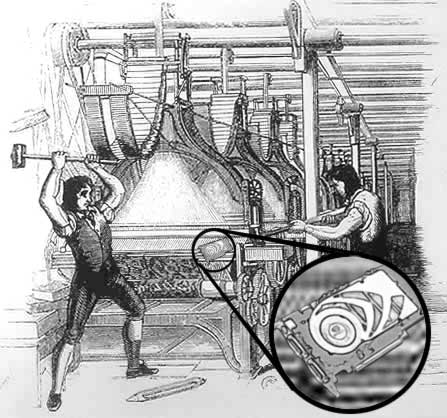

.jpg "Robots are the lawyers of the future")


