Search This Blog

Saturday, February 15, 2020

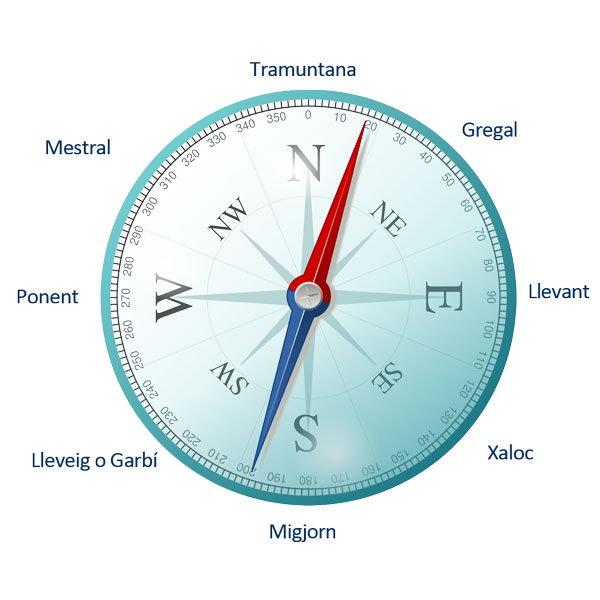
In company of compass to orientate


He was my North, 
my South, 
my East 
and West, 
(....) I was wrong. 

                           (W H Auden) 


Do NOT believe word  'NEWS' 
to be an acronym of the 4 cardinal directions 


Are we lost? 
Follow the stars and Consider your  enTHeUSiasm at the answer!

  • Chinese say the cardinal directions   in this order, "east, south, west, north".
  •  Indian languages  use the names of the Gods to orientate


1 ) Using the compass to orientate 
Arabia (Ancient): They put south at the top. This is because when you wake up and face the sun, south is on the right. Because of positive associations with the right as opposed to left, they put that on top.
Europeans learnt mapmaking from the Arabians and flipped the map to make themselves on top. 
Medieval Europe: Jerusalem was on top because that was the Holy Land. This meant that east was more or less at the top.


Bonus:  See below   ___ etym 


2 ) Using the mind$et to fet it right 


Did You know, not everyone on the planet has a US-centric mindset about everything?


  • Prices in Dolars for local goods prices
European news:  Germany DW news 
oil Brent futures rose to $66.22 per barrel 


  • Quantities in US parlance  1b =???
  Can you agree with these texts taken from websites:

  • Some people still think a billion is a million-million?
  • the original British usage is nicer and easier to explain, and I wish it were the standard system
  • The European system (formerly used in Britain, still used in Germany) is antiquated


  • Hollywood  (the largest % of tickets sold in some parts of Europe)

  • Since 1951-1988  Spy  equivalent  Soviet 
  • Since 2002...  Terror equivalent Arab


  •  Since Hollywood has a US centric mindset (and the US has a very self-centered mindset) and is mainly pandering to US audiences the same logic follows. .


  1.  TASK.   Discuss how did a U.S. -centric mindset come into place?


=======  end 


BONUS TRACK: 

TWO PATH WAYS ... 

  • Why Romanic Languages use Germanic Words??? 
                  (oest/sud/est/nord)  


                 Prince of Denmark (II,ii) by  Shakespeare:
  •  ‘I am but mad north-north-west: / when the wind is southerly I know a hawk from a handsaw.’


 ___ etym   DIRECTIONS  (AND  WINDS) ... with the help of stars 


  EAST >>>  meaning rising (sun)  *aus-to-, *austra-, "from PIE *aus- 'to shine,'

LATIN  (v)  orior  >> ortus  and origo.  [ orius   ort origo    ]   
Aurora the Roman goddess of dawn

related words

  • oriens /orient     (with English    ori_gin // ab_ort_ion ... )
  • Easter


WEST >>>  meaning  setting (sun)  *wes-t- "from PIE *wes-  [*wes-   go down]

(source of Gk. hesperos, L. vesper 'evening )

LATIN  (v)  ocaso  >>  occident  [ob-cadere    (from PIE root *kad- "to fall") ]   


related words


  •   accid-ent,   = mishap," literally "a falling,"
  •   occas-ion,   = mishap," literally "a falling,"
  •   with another 7 English words : 
  •           cadaver   //  de-cadence  //  caducous  // cascade   //  casualty // incident  // case


NORTH  >>>  meaning rising (sun)  *aus-to-, *austra-,
 "from PIE  *nurtha possibly derives from PIE *ner- "left, below"

going around the pole star and referred to them as the ‘plough of seven’ — septem  + trio. 
So septentrio is the direction proper.


 SOUTH   >>   from Proto-Germanic *sunthaz, perhaps literally "sun-side" 

         related to base of *sunnon "sun" (from PIE root *sawel- "the sun")


L merīdiēs (adj. merīdiōnālis) meant "noon, midday" < medius “middle” + diēs “day”. Since the sun is in the South at midday in the Northern hemisphere, this word is self-explanatory.

L auster (adj. austrālis) was the Latin name of the South Wind and the South. 


=============


  •  in Persian Khorasan (xwar-asan "sunrise") means "east" 

Axarquía is a comarca of Andalusia in southern Spain - east of Málaga. Its name is traced back to Arabic الشرقية‏  ( sharquiyya, meaning the eastern zone)

The Algarve (from Arabic: الغرب‎ al-Gharb "the West") is the southernmost region of continental Portugal
Catalan wind   “garbí” 'Südwest(wind)  + Castilian wind   “garbíno”


Tuesday, February 11, 2020

Brothers at arms from peace to piece


Headlines 
   Brothers in arms  from peace to piece


 1a. Reading  task 


piece 1_ 10 Feb  2020 - NY TIMES  - link
Trump’s $4.8 Trillion Budget Would Cut Safety Net Programs and Boost Defense 

  • The budget also assumes large amounts of new military spending, including $3.2 billion — a $459 million increase 


piece 2_ 15 Jan  2020 -  
Janes Defense INDUSTRY   - link 

Indonesia increases 2020 defence budget to nearly USD10 billion  
The new figure amounts to a year-on-year increase of 20% 


piece 3 _    7 Feb  2020 - Cyprus MAil  - here


Defence ministry confirms €240m French arms deal

  • “Due to the sensitive nature of this issue and its relation to national security, no further details will made available at present,” the announcement said.


  • Exocet are listed as anti-ship missiles and Mistral are surface-to-air missiles. The arms sale comes at a time of heightened tension in the Mediterranean over natural gas reserves.


  • Military Expenditure in Cyprus increased to 360 USD Million in 2018 from 294 USD Million in 2014


ADDENDUM

  •       See previous task for more context -  here

                      TOP 15 countires on WAR expendirtures (2007-16)


 1b. ORAL  task  -groups (2-3)


DRAW CONCLUSIONS:

 This small /large upturn/nosedive  can be attributed to  ...... 


  • legislation -budget limits ?
  • Global events??   
  • context of the presidential election ??  
  • inability of the Government to reach agreement ??
  • ....


 2.  Written task  -individual   (175 words )  25 min 


Monday, February 10, 2020

our Parabellum issues_ the states war on cash

The Cash Nexus: Money and Power 
in the Modern World, 1700-2000   by Niall Ferguson 


Money makes the world go around,  Of that we can be sure. (....) on being poor.
(Cabaret, 2002)         


Conventional wisdom has long claimed that economic change is the prime mover of political change, whether in the age of industry or Internet. But is it? 
 Ferguson thinks it is high time we re-examined the link-the nexus, in Thomas Carlyle's phrase-between economics and politics. His central argument is that the conflicting impulses of sex, violence, and power are together more powerful than money.
A bold synthesis of political history and modern economic theory, Cash Nexus will transform the landscape of modern history and draw challenging conclusions about the prospects of both capitalism and democracy. 
Among Ferguson's startling claims are: 

  • Nothing has done more to transform the world economy than war, yet wars themselves do not have primarily economic causes. 
  •  The present age of economic globalization is coinciding-paradoxically-with political and military fragmentation. 
  • Financial crises are frequently caused by unforeseen political events rather than economic fluctuations. 
  •  The relationship between prosperity and government popularity is largely illusory. 
  • Since political and economic liberalization are not self-perpetuating, the so-called triumph of democracy worldwide may be short-lived.


TO read about the topic 

http://newsinfo.inquirer.net/958202/worlds-biggest-military-spenders


FACTS AND FIGURES  
Parabellum issues_ the states war on cash


 1. ORAL  task  -groups (2-3)


        War expenditures  2007-16

GDP  =  global gross domestic  (= PIB!)


World military expenditure is estimated to have been ...

  • $1686 billion in 2016, 
  • equivalent to 2.2 per cent of the GDP  or
  •  to make sense of the figures $6 per person.

 After 10 consecutive years (from 2007 to 2016), world military spending has continued to upsurge with a minor plateau and slight increases in 2015 and 2016.  
The top 15 countries with the highest military spending in 2016 were the same as those in 2015, although there were some changes in their ranking.
 The 15 largest spenders account for 
  • the staggering sum of $1360 billion, or
  •  just above four fifths of total global spending. 
Between 2007 and 2016, China has seen the biggest growth in military spending, with an increase of more than doubled it, followed by Russia which didn't double it and India with just a 50%. In the European NATO states, there are foru countries in the middle of the table. France, the top military spender and the sixth in the world, spend 55 billion dollars followed by the UK and close by Germany and also Italy (ninth position with half of French budget). Germany raised its military spending by just the 7 per cent to 41 billion dollars in 2016 (the hishest in this group) with a GDP of 1.2 per capita, half the level of France.
In the same period, two European countries shrank Italy (one in sixth), the United Kingdom (one in seventh) and surprisingly the United States with half a minor variation were the only three countries in the top 15 to see their military expenditure fall.
In 2016, total US military expenditure of past $600 billion is over one-third  of world military expenditure. This is nearly three times the level of China’s spending, which is ranked second. US military spending grew slightly by a mere  1.7 per cent between 2015 and 2016. Despite this slight growth, US military spending remains 20 per cent lower than its peak in 2010.

DRAW CONCLUSIONS:

 The small /large upturn in 2016 can be attributed to  ...... 


  • legislation --- budget limits --- Global events??   
  • context of the presidential election ??  
  • inability of the Government to reach agreement ??
  • ......


 2. Reading  task 


PART II. 
SIPRI FACTS AND FIGURES


The SIPRI Military Expenditure Database contains consistent time series on the military spending of countries for the period 1949–2016.Military expenditure in local currency at current prices is presented according to both the financial year of each country and according to calendar year, calculated on the assumption that, where financial years do not correspond to calendar years, spending is distributed evenly through the year. Figures in constant (2015) and current US $, as a share of GDP and per capita are presented according to calendar year. Figures as a share of government expenditure are presented according to financial year.


Pdf files:


OUR civilization and our cities -oh Vanarasi


OUR civilization and our cities


"Benares is older than history, older than tradition, 
older even than legend, and  .....
 looks twice as old as all of them put together."
Mark Twain                     


TOPIC 1.     OLD cities in the world.

      
              Mohenjo Daro _Nat Geo video


  • The Indus Valley civilization was entirely unknown until 1921, when excavations in what would become Pakistan revealed the cities of Harappa and Mohenjo Daro 

  • (shown here >>>). 


  • This mysterious culture emerged nearly 4,500 years ago and thrived for a thousand years, profiting from the highly fertile lands of the Indus River floodplain and trade with the civilizations of nearby Mesopotamia


FOLLOW UP: 
Any other ooooooold  cities you have heard of?

   Gobekli Tepe: 


a new wonder of the ancient world 

Predating Stonehenge by 6000 years,


"Wow," exclaims the visitor from New Zealand, a place, after all, with a human history shorter than most.


TOPIC 2. TOP 5 Cities
The top five largest cities by population throughout history, from 1000 CE to 1550 CE. 
Watch the video(02:18-->03:34)https://www.youtube.com/watch?v=Q-FTxVhFWWw

a) Which where the top five in 1000 CE   
 (Christianity feared the year of Apocalypse)
                 1.............. 2 ................ 3 .................. 4..................   5. ....................

b) Which where the top five in 1218 CE 
Francis of Assisi dreams of going to Egypt and convert the Sultan to put an end to the conflict of the Crusades
               1.............. 2 ................ 3 .................. 4..................   5. ....................

c) Which where the top five in 1550 CE.
The gold from America is going to Antwerpen (via Seville) 
                  1.............. 2 ................ 3 .................. 4..................   5. ....................


ORAL TASK:   Brain storming.

Say something about each period related to the importance of those 5 cities


 in   948 CE  


a)  the top five in 1000 CE   


b)  the top five in 1218 CE 


in 1534 CE.


c)  the top five in 1549 CE.


Monday, February 3, 2020

Angles at 2019-nCoV in a nutshell


Never take Republican sides on the 2019-nCoV      

                        AT YOUR  YELLOW  PERILL                                                
  • Viruses can cause a range of symptoms including a runny nose, cough, sore throat and fever. 

  • Some Coronaviruses  are mild, such as the common cold, while others are more likely to lead to pneumonia. They're usually spread through direct contact with an infected person. 

  • The coronavirus gets its name from the crown-like spikes on its surface.

   YELLOW NEWS   building confidence from the new Xhina..... video 


task 1_  debate on 
           HEALTH IMPACT AND NEWS   - Answers -NPR

How did Coronavirus start?


How is Coronavirus spread?

What happens if a person gets the Coronavirus?


How did Coronavirus start?

  • It's believed that the virus started out from an illegal seafood market in Wuhan, China. The market sold wild animals like birds, bats, and snakes. So it's thought that the first group of people to catch Coronavirus are workers at that market.

How is Coronavirus spread?

  • The thing is that we don't know much about how the Coronavirus is actually spread.  But we do know that they spread from one person to another via respiratory droplets, the liquid from your respiratory system which come out when you sneeze or cough. It is similar to how influenza spreads. The respiratory droplets of an infected person have the Coronavirus pathogen. Once they enter the lungs of a person, the person is now infected.

What happens if a person gets the Coronavirus?

  • Once an uninfected person gets the Coronavirus, he/she can start to show the effects in 2-14 days. The illness ranges from people who show little or no effect, to people who become extremely ill and end up dying.

  • Fever
  • Cough
  • Shortness of breath
       So that's Coronavirus in a nutshell!

   You can read a more detailed version here.


task 2_        Read about the death toll - updates  Feb 2020
                                of a varied range of spreading diseases     - link 

  PART 1___    EBOLA  2014 - West Africa

  • The 2014–2016 outbreak in West Africa was the largest Ebola outbreak since the virus was first discovered in 1976. It started in Guinea and then moved across land borders to Sierra Leone and Liberia.
  • The current 2018-2019 outbreak in eastern DRC is highly complex, with insecurity adversely affecting public health response activities.
  • There is no proven cure for the virus but in December 2016, it was reported that a new and effective vaccine had been developed.

         Death toll (2014-2016): 11,325
         Cases (2014-2016): 28,600

  PART  2___ ___   SARS 2002 - China
  • Severe acute respiratory syndrome (SARS) first appeared during a pandemic in China in 2002.
  • SARS is an airborne virus which is spread in small droplets of saliva coughed or sneezed into the air by an infected person.
  • There's currently no cure for SARS, but research to find a vaccine is ongoing.
             Death toll: 774

             Infections: 8,098


  PART  3___ ___   Spanish flu pandemic  - 1918 -Global


  • There was also no vaccine for the strain in 1918.
  • It was wrongly named the Spanish flu because it was first reported by a newspaper in Madrid (Spain), but it's now believed to have started in Kansas, US.
  • Experts say that most people living today would have some immunity to viruses in the 1918 virus' family, called H1N1, while modern antiviral drugs may also be effective.

       
       Death toll:    20-50 million (estimate)
        Infections:    500 million (estimate)