Search This Blog

Monday, April 20, 2020

the truth lying on the couch

                         "Legend has it that it happened ONE day....


 aphorism of the philosopher Democritus     

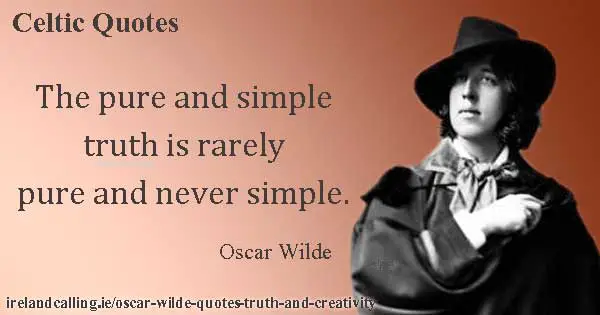
"Of truth we know nothing, for truth is in a well".[1]     
  ἐτεῇ δὲ οὐδὲν ἴδμεν: ἐν βυθῷ γὰρ ἡ ἀλήθεια          


SECTION  1  - who  said  what....

LEARN one of the adages /wise quotes about the topic

a)
A))    Machado,  Antonio -  already stressed the paradox:      

Man's passion for truth is such                  
that he will welcome                                    
the bitterest of all postulates                        
so long as it strikes him as true.             

B))  TWO to chose from                                        
  • (1) A lie travels around the globe while the truth is putting on its shoes.
  • (2) A lie can travel halfway around the world before the truth can get its boots on   
  • Mark Twain                         
                                        ALBEIT ......
adage was attributed to Mark Twain in 1919,
 but  A version of this adage may be false
 ............
  .........................Twain died in 1910.


Falsehood flies, and the Truth comes limping after it
(j. Swift  the one from Gulliver's Travels)


SECTION  2                                                                          A dialogue and a fabulous fable


"One day the truth and the lie crossed"

1. characters.... Ms Truth - Mr Lie

Good day.  -  Mr Truth told Mr Lie. 
- Good Morning.  Mr Lie answered Ms Truth. 
- Beautiful day.    she told  Mr Lie. 
  • Then Ms Truth leaned out to see if it was true. It was. 
Beautiful day. Then he told Ms Truth. 
- The lake is even more beautiful. He told the lie.
  • Then the truth looked toward the lake and saw that the lie told the truth and nodded.  Happily she ran the lie to the water and 
The water is even more beautiful. We swim.   -said  she.
The truth touched the water with her fingers and really was beautiful and trusted Mr Lie. Both took off their clothes and swam calmly.

        So far, so good.  


2. topsy turvy times....       

  • A while later Mr Lie came out, dressed in the clothes of Ms Truth and left.
The furious Truth comes out of the well, unable to dress in the clothes of Mr Lie began to walk without clothes first, and then runs everywhere to find Lie so she could get her clothes back.The World, seeing Truth all naked, ....

  • 3.  mirroring reactions in our world...everyone  turns its gaze away, with contempt and rage; everyone was horrified to see her. The poor Truth returns to the well and disappears forever, hiding therein, it’s shame. 


 3.  experiences and outcomes....
Since then, Lie has traveled the world dressed as Truth, satisfying the needs of society, 
because the World, in any case, harbors no wish at all to meet me: this is true - reflected  Truth to herself-  there will be a time in this new XXI century  where people prefer to accept the lie disguised as truth and not  the naked truth. "


ADDENDA  with art!

Some facts, opinions and statistics....

.... in 1894-96, French artist, Jean-Léon Gérôme painted  4 pics with a mirror
  • Legend has it that....the picture signifying femininity  [symbol    ] is derived from a pictorial representation of the hand mirror popular in the classical world. 

  •                   La Vérité sortant du puits 
  •       armée de son martinet pour châtier l’humanité.

(Truth coming from the well        armed with her whip to chastise mankind).


Thank you to my mate H. F. Lopes  for sharing this story 
in our  coronavirus lockdown. 
This is a modified version taken from here


SECTION  3.  in  m s  escher's multiverses? 
explore the links below

history’ (meaning ‘enquiry’ or ‘research’ in Greek)

 story-1  "narrative of fictitious events meant to entertain"
 story-2  As a euphemism for "a lie" it dates from 1690s.

 story-3:   "newspaper article" is from 1892.
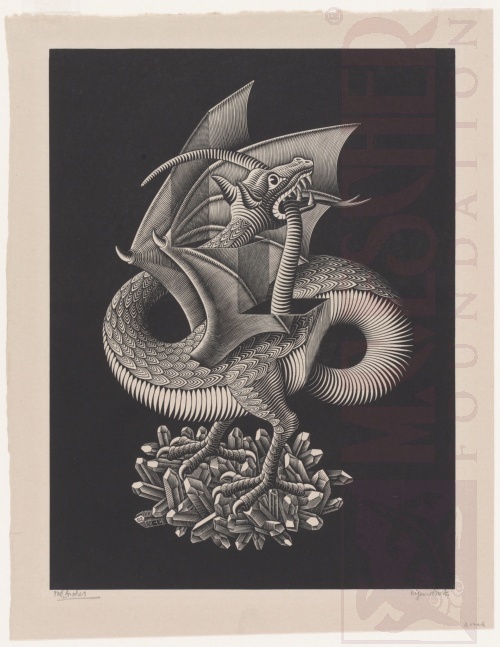
   
m c escher 


Writing Time on one STORY:
ONE SUMMARY TEXT (325 words)


  • Now, find different political fables with truth leaning... 

  • and share to your group.

 link  A. How the Wealthy Reacted to the Medieval Bubonic Plague


  link B.         - story vs history                                       rewminate                      

“Oh. This is when we changed, and this is the philosophical revolution.”


rewminate ..that' is another story 

  •     B1.  Yes is No and Lie is Truth in a Topsy-Turvy Postmodern World  - link


  •  B2.  British India and the Anti-Colonial Movement during the 1918 Flu Pandemic link
  • As the war approached its conclusion, the virus followed both commercial shipping routes and military transports to infect almost every corner of the globe.

B3.  How the Wealthy Reacted to 

the Medieval Bubonic Plague - link


end:  xxxx  R  U  immmerse in  m s  escher's multiverses?


Tuesday, April 14, 2020

Expats lives - Semipermanent in Seoul (synopsis) -Arirang


Expats lives - in Seoul (Korea)

13 episodes from Semipermanent  


Here you could find our model templates for your WEBquest project.

1) with SMORE 


 See synopsis below.  

From the last last to the oldest, so  episode 20 is  the first.

Episode 20: "If You Lived Here, You'd Be Home Now."

Episode 18: "Making the Grade"

Episode 16: "Night Owl"

Episode 14: "Quirky Korea"

Episode 13: "It's cold"

Episode 12: "A Spin On Traditional"

Episode 11: "By Design"

 Episode 07  Booze

 Episode 06 All dressed Up

 Episode05 A good Sport

 Episode 04 – 'State of the Art'

 Episode 03 Live to Eat

 Episode 02  music

                                      
Episode 20: "If You Lived Here, You'd Be Home Now."
Erik and Tiffany meet up with three expats who have found different ways to feel at home abroad. Ashley was born in Korea but grew up in the U.S. after being adopted. A few years ago, she came back to Korea without a definite plan, but after meeting people who made a difference in her life, she decided to stay and volunteer for an organisation that helps single mothers. Later, Erik and Tiffany meet Luis, a Mexican diplomat serving his first post. Luis takes them to a few places that remind him of Mexico, and the three discuss the importance of having those reminders when living abroad. Ide came to Seoul from Ireland with nothing but a backpack 11 years ago. Now she is married Korean husband and has three-year-old twins. Seoul is where she feels most comfortable, but her husband has just been transferred to Russia. Erik and Tiffany meet Ide to reminisce about her time in Seoul and discuss the challenges of starting over in a new place.


Episode 18: "Making the Grade"
Erik and Tiffany spend the day with Matt, a 7th grade international school teacher. They resurrect their math skills to see if they can compete with Matt's students, and then afterwards he gives them a tour of the school facilities. Next Erik and Tiffany meet Mi Na, a 6th grade student who attends a multicultural school especially for kids of mixed ethnicity. After music class, they treat Mi Na for ice cream to celebrate her graduation. Later, they visit Rick, a hagwon owner. An experienced teacher, Rick recently opened the English language academy with his wife and is finding out what it takes to make the business survive.


Episode 16: "Night Owl"
Tiffany and Erik explore the underbelly of the city after the sun goes down. For Bobby, a musician, night is the most creative part of the day. Erik and Tiffany head to a cafe where he's giving a small concert and then Bobby takes them to his "studio", which is wherever he happens to be at the moment. A bit later, Erik and Tiffany meet up with Mihal, a Bulgarian chef and explore the night vegetable auction at Garak market. Then it's off to spend time with pro-gamer Nick. Erik and Tiffany get a look at what life is like inside a professional team house as well as what happens in a PC bang during the wee hours.


Episode 14: "Quirky Korea"
Some things in Seoul leave foreigners scratching their heads. Erik and Tiffany take on two cultural differences, "cuteness" and "poop". They meet Cherrish, a Filipina actress, at the Princess Diary cafe where they try on wedding attire. Then it's off to a Korean accessory shop filled with overly cute knick knacks. Finally delving into her acting repertoire, Cherrish teaches Erik and Tiffany how to put on their best "aegyo" face. Later, they meet up with Paul, a blogger who's taken a particular interest in Korean attitudes about "poop". The trio pays a visit to the toilet museum then embarks on a poo sculpture scavenger hunt. Along the way, they satisfy their hunger with a snack of poop shaped bread.

Episode 13: "It's cold"
Erik and Tiffany bundle up and head out to Phoenix Park Ski Resort for a day on the slopes with pro boarder and instructor Brendon. Next, they warm up with food blogger Tom, who's on a mission to sample traditional Korean winter fare, from patjuk to naju gomtang. Finally, they meet up with Clay to get some rest and relaxation on a slow train heading out of the city to Jeongdongjin Beach.

Episode 12: "A Spin On Traditional"
"A Spin On Traditional" meets three expats who bring new perspectives to Korean traditions. Erik and Tiffany start by getting their hands dirty with Peter, who invites them into his pottery studio at Hongik University. Peter moved here to study ceramics, and he's about to graduate and start his career. Next, it's over to Gunja to visit an exhibition of modern Hangeul typography co-curated by Chris, who's written a book about the history and design potential of the Korean written word. After checking out posters designed by artists around the world, they head over to Chungmuro to get a printing job done and check out the industrial history of the neighbourhood. Finally, it's time to brew some makgeolli with Dan and Becca, a couple who have become experts on the traditional rice beverage. In their classroom at the Susubori brewing academy, the foursome test out some new flavours and toast the old and the new.

Episode 11: "By Design"
Erik and Tiffany visit Italian architect, Simone, at his hanok home in Bukchon. Simone shows them how he's modernised the interior to make it a livable and personal space. Then it's off to one of his projects in progress, the Citizen Gallery located under Seoul City Hall. Later, Erik and Tiffany meet, Alain, a Belgian designer at Renault Samsung Motors. They get behind the wheel for a test drive as well as a tour of the design facilities.
07  BoozeErik and Tiffany prepare for a big night out with Sid who gives them a proper drinking tutorial Korean-style. Later they learn how to make craft cocktails with Phil, one of three founders of a cocktail catering company. They take their recipes to the street for some guerrilla bartending to see how the drinks measure up
06 All dressed UpErik and Tiffany meet three expats who are all contributing to Seoul's unique style. James, a model, takes them behind the scenes at Seoul Fashion Week. Up and coming designer Sandra invites Erik and Tiffany to her workshop to work on her latest collection, and they wander the streets of Garuso-gil with fashion blogger Karen for some local style spottin. 
5 A good SportErik and Tiffany meet three expats whose lives revolve around sport and fitness. Whitney, a professional American volleyball player with the Heungkuk Pink Spiders gets them working on their serves and volleys. Ian, the founder of British Army Fitness in Korea (BAFIK) takes them outdoors for a workout on Mt. Namsan and the Han River. Then Erik and Tiffany head to practice of Roller Derby in Korea, where Tiffany laces up her skates for a crash course from derby girl Go Go Gadget, aka Maresha. 
04 – 'State of the Art'Erik and Tiffany travel outside of the city to meet Sarah, an American gyopo, who's been working with the chef at Bean Table, an organic farm-to-table restaurant serving traditional Korean dishes. Then, it's on to some new flavours, as Erik and Tiffany link up with food writer Megan, who lives near the Chinese market in Daerim. Still hungry, they visit Wahid at his Moroccan sandwich restaurant in Haebangchon.  


03 Live to EatErik and Tiffany travel outside of the city to meet Sarah, an American gyopo, who's been working with the chef at Bean Table, an organic farm-to-table restaurant serving traditional Korean dishes. Then, it's on to some new flavours, as Erik and Tiffany link up with food writer Megan, who lives near the Chinese market in Daerim. Still hungry, they visit Wahid at his Moroccan sandwich restaurant in Haebangchon. 

02  musicMusic: Discovering one of the best music scenes in Asia. How is Western and Asian music influencing each other? Why is the international music scene here so good? What are the challenges when working in the industry?
Possible profiles include a Chilean percussionist with the Seoul Philharmonic Orchestra leading a Korean band playing Latin music. Korean American, Bernie Cho, exporting the Hongdae music scene to the US versus British expat of Super Colour Super bringing international acts to Seoul. Expat run, Loose Union, record label promoting Korean bands.
  

To see full list, click below:

                              List of  20 episodes   SEMIPERMANENT


PROJECT SEOUL-2016

SEOUL project. City life


  • Ongoing activity this  April
  • Develop your 4 skills integrating then in a shared environment


 item #1 

 Make a visit      SEOUL      single (or in pairs) 

20 TV  22-minute Episodes -AUDIO

WEBquest:


 item #2 

Proposed templates to use as a model:
                     1) with Smore  
                 (edit it with this password: projectseoul)
       2) with  WIX 
      (edit it with this password: projectseoul)  
                       http://mangelcast.wix.com/misitio 

 
Students Product: -END PRODUCT


 item #3 

CLASS CONTIBUTIONS
As every one/TEAM finishes its 5 entries,

A-  on WIX_ GAALL where Bages meets ProjectSeoul 

  (Anna, Àngles, Lluïsa, Gemma)


Friday, April 10, 2020

colonialism I. conterpoint to the Russian great game


Russia In Central Asia In 1889  by the  by THE Hon. George N. Curzon


An authoritative voice who later baecame Viceroy of India 1899-1905)


Published in 1889 these articles were descriptive of a journey which I had taken in the months of September and October 1888, along the newly-constructed Transcaspian Rail way, through certain of the Central Asian dominions of the Czar of Russia.

  • TO 'keep England quiet in Europe by keeping her employed in Asia, that, briefly put, is the sum and substance of Russian policy.
  • ' Upon the occurrence of either of two contingencies,' he said ; 'if you tamper with the Russian dominions north of the Oxus ; or if you interfere with the realisation of our national aims in Europe.' (pag. 321-24)


When London *waived the rules*   -  XIX century 1______On February 16, 1768, the Court of Directors of the East India Company in London wrote to Warren Hastings: “we desire you to obtain the best intelligence you can whether cloth and other European commodities may not find their way to Tibet, Lhasa and the Western parts of China.” This spurred the British exploration of the Himalayas. 2______1880The British advances into the foothills of the Himalayas did not go unnoticed in Lhasa and Beijing. The Tibetans, who described the British penetration as “oil seeping into a cloth”, resisted British attempts to establish trade routes into Tibet and watched with trepidation as the British forged a network of railways and roads on the southern edges of the Himalayas to speed up trade.It ended with the 1890 no workable treaty.  3_______In 1899 Curzon became the Viceroy of India. He took a more menacing view of the absence of British presence on the Tibetan plateau, seeing Russia as the chief adversary, whose ambition was the total domination of Asia and thus a potential threat to the British Empire. In 1903, under Curzon’s leadership, the British invaded Tibet and marched to Lhasa. The first clause of the treaty that the British then forced on the Tibetans was the acceptance of the 1890 treaty.


Thursday, April 9, 2020

Colonies -polis....new words- settlers, pilgrims, our worlds

3 ingots
New words - 
the discovery of unruled lands, 
that is conquest, 
piece by piece
of the pacified worlds 
by US, the civilised ones.

By Theuspater,  Deuspiter, Jupiter ... 
By Jove, 
 ingot Romans believed entheusiastically.
 They believed in Gold, sorry, good
 And the sword. Peace upon you.

tercüman. 
cat: torsimany; cast: trujamán, truchimán (s. XIV y XV) o trujimán; pt: turgimão; it: turcimano; fr: trouchement, troucheman: Latin: dragoman): the entry comes from Arabic  turyuman and it was used in the  XIII century,  Las Siete Partidas (Partida II, título XXX) by the King Alfonso, as a  synonym of go-between and interpret. Probably derived from Turkish tercüman.


Plato was not willing to learn other languages. He considered the knowledge of languages slave wisdom. Contempt for the languages of the defeated was part of the arsenal of all conquerors.

1- On Cleopatra’s knowledge: “She spoke most languages, and there were but few of the foreign ambassadors whom she answered through an interpreter.”
2- The Normans despised the English language.

INTRO- Beatus Lullius (born in Majorca from a migrant Catalan family). Spreading the word of God.
Llull pressed for the study of Arabic and other then-insufficiently studied languages in Europe for the purpose of converting Muslims to Christianity. He travelled through Europe to meet with popes, kings, and princes, trying to establish special colleges to prepare future missionaries.
He returned in 1308, reporting that the conversion of Muslims should be achieved through prayer, not through military force. He finally achieved his goal of linguistic education at major universities in 1311 when  the Council of Vienne  ordered the creation of chairs of Hebrew, Arabic and Chaldean (Aramaic) at the universities of Bologna, Oxford, PAris and Salamanca as well as at the Papal Court.
Symbolically enacting colonial authority meant that ceremonies, actions, speeches, and records primarily targeted their fellow Europeans. It was above all their own countrymen and political leaders that colonists had to convince of the legitimacy of their actions, not indigenous people. (Seed, 1995: 11)


BIT 1. -Christophorus and the Jew
The European Discovery of the New World – In 1492, Christopher Columbus filled his frst two weeks of his journal with 75 entries with the words .... Lord? faith?, no: GOLD. His landing in the Bahamas changed the world forever. It helped establish trade routes between North America and Europe and ushered in a new age of voyage and discovery. Columbus brought Luis De Torres, born Yosef ben Levi Ha-Ivri, an interpreter who had converted in 1491 to avoid Isabel's expulsion edict, with him during his first voyage. Unfortunately, De Torres’s proficiency in Hebrew, Arabic, Aramaic, Portuguese, and Spanish was of little use in communicating with the natives.
Columbus hoped that the interpreter's skills would be useful in Asia because they would enable him to communicate with local Jewish traders.
After arriving at Cuba, which he supposed to be the Asian coast, Columbus sent de Torres and the sailor Rodrigo de Jerez for an expedition inland on November 2, 1492. Their task was to explore the country, to contact its ruler and to gather information about the Asian emperor of Kathay described by Marco Polo. The two men were received with great honours in a local village (our Indians), from where they returned four days later. They did report on the native custom of drying leaves, inserting them in cane pipes, burning them, and inhaling the smoke: the first European encounter with

BIT 2.  Indian subcontinent - Portuguese traders: 
Yusuf Adil Shah - Adil Khan - Hidalcão The story of Gaspar da Gama is a fascinating one. According to his own story, he was born in Poznan, Poland in 1444, but his family left due to religious prosecution. He became a Jewish traveller, made his way to Alexandria, was taken prisoner and sold as a slave in India, where he obtained his freedom and entered the service of the ruler of Goa. There, he took on the name Yusuf 'Adil. We do not know what his original name was.
When the Portuguese explorer Vasco da Gama arrived off Angediva in 1498, he was greeted in a friendly fashion by this flowing white long-bearded European on behalf of his master.

Startled, and believing he was probably a spy, Gaspar de Gama was immediately arrested and tortured. Realizing the man would be useful to him as he spoke various languages, including Hebrew, Arabic, Chaldean (Caldeu) and Italian mixed with Spanish.
Vasco da Gama self-righteously seized the Jew and compelled him to embrace Christianity under the baptismal name of Gaspar da Gama.

He was also known as Hidalcão, Gaspar d'Almeida and Gaspar de las Indias. As a Catholic, Gaspar da Gama became the pilot of Vasca da Gama's fleet. He sailed with several Portuguese fleets between Europe and India, including the fleet  that discovered Brazil in 1501.
Cantino planisphere -1502
 Former renegades and captives, natives and converted slaves, Jews and new Christians, adventurers and convicts formed an important contingent of a specific category inside the frontier society of the Portuguese empire: that of the interpreters or linguas. Furthermore, there were several technical problems. Individuals with proficiency in Eastern languages were rare in Portugal.
BIT 3.  "Welcome Englishmen" 1621  - English pilgrims

From the 1622 The booklet Mourt's Relation, where the narrator describes Samoset's visit thus:
Friday the 16th a fair warm day towards; this morning we determined to conclude of the military orders, which we had begun to consider of before but were interrupted by the savages, as we mentioned formerly; and whilst we were busied hereabout, we were interrupted again, for there presented himself a savage, which caused an alarm. He very boldly came all alone and along the houses straight to the rendezvous, where we intercepted him, not suffering him to go in, as undoubtedly he would, out of his boldness.

He saluted us in English, and bade us welcome, for he had learned some broken English among the Englishmen that came to fish at  Monchiggon, and knew by name the most of the captains, commanders, and masters that usually come.  
He was a man free in speech, so far as he could express his mind, and of a seemly carriage. We questioned him of many things; he was the first savage we could meet withal. He said he was not of these parts, but of Morattiggon, and one of the sagamores or lords thereof, and had been eight months in these parts, it lying hence a day's sail with a great wind, and five days by land. He discoursed of the whole country, and of every province, and of their sagamores, and their number of men, and strength.
In 1614, six years before the Pilgrims landed in modern-day Massachusetts, an Englishman named Thomas Hunt kidnapped Tisquantum from his village, Patuxet, which was part of a group of villages known as the Wampanoag confederation. (Europeans had started visiting the northeast of what is now the United States by the 1520s, and probably as early as the 1480s.)
Hunt took Tisquantum and around two dozen other kidnapped Wampanoag to Spain, where he tried to sell them into slavery.
"It caused quite a commotion when this guy showed up trying to sell these people," Mann said. "A bunch of people in the church said no way." 
Tisquantum escaped slavery -- with the help of Catholic friars, according to some accounts -- then somehow found his way to England. 

BIT 4.   The North and East in Outer Mongolia. Manchu-Russian neighbours -XVII century
Russia could not maintain the Eastern border. She was more interested in trade terms. 
The new rulers, the Manchu (Qing dinasty -1644-1912). Their government sent two letters to the Tsar (in Latin) in 1685 suggesting peace and demanding that Russian freebooters leave the Amur river. 
The language used was Latin, the translators being, for the Russians, a Pole named Andrei Bielobocki and for the Chinese the Jesuits Gerbillon and T Pereira. The differences between Manchu-Russian versions of the treaty, see V. S. Frank, "The Territorial Terms of the Sino-Russian Treaty of Nerchinsk, 1689". Then no need of Mandarin Chinese.... yet.

Not Chinese dynasties: Mongol (1212-1389). (Yuan  = Unity)

Manchu _ Qing - "Pure" 


Ok,,,,

you know the rest of the test.

in the XXI century, there is another race:

-1-  (2007 TV Mini- Canadian Series)
In the year 2030, the race to be the first to reach the Red Planet is on - and China is leading the way. China has stunned the world by leapfrogging over America's long-term plans and has landed a series of advanced rovers and robotic landers in their quest to make the most important discovery in history - extraterrestrial life on Mars.

-2-  What to do?  gold in mars

-3- Where?  Mount Olympus (27.000 height volcano)

-4- WHO?  Taikonauts

Tuesday, April 7, 2020

Digital age posts-01 -Reported speech from California - Hey Siri


Choosing wisely

SectionLaunching into Limbo


.........by Jericho. RAJNINGER.............. the Californian daily  2019 /08/08


Hey, Siri.Yes?I have an important question I’d like to ask you. Ask away, Jericho.Can a 19-year-old boy be considered a grown-up if the fourth-most-used application on his cellphone is NBA 2K18? And does it help if the New York Times is not too far behind? Here, I found this on the web.But what do you think about it, Siri? It’s your opinion that counts, Jericho.Sure, but I’d like to hear yours.Playing “Yours” by Russell Dickerson.Noooo! Forget it. I wanted to discuss cellphones, and considering you’re forever trapped inside of mine, I figured you’d be the one to go to. Perhaps that was a mistake. You know what, why don’t I talk and you can just listen for now?OK, talk to Siri.

Looking back at the nine months I spent in Berkeley this year, I don’t think I ever, not once, inhabited a phoneless space — lecture hall, library, dorm room, lounge, cafeteria, lawn, public bathroom or otherwise. 
In fact, let me rephrase: Not a second in a day passed without one of my peers using a phone in my presence. Even in settings where phones were prohibited, my classmates and I would all steal glances at our screens every few minutes, such that, inevitably, there was at least one person in the room on a cellular device at any given moment in time. 
Over the course of the year, this omnipresent preoccupation with phones — a result of living among thousands of screen-addicted teens — grew rather exhausting. So exhausting that even I, a fellow screen-addicted teen, began to take notice — you there, Siri? 
Wherever you are, that’s where I am, Jericho.  
Right, OK, just checking. 
When I returned home for the summer, I returned to a household occupied only by my parents — two 50-year-olds who do not, in fact, have unhealthy relationships with their cellular devices. ...


READ ONE of his columns...

Recomended....   You're a social distancer


And I did — for a time, at least.
Soon after these rather explicit restrictions were imposed, however, my friends and I decided it was a good idea to go out for Korean barbecue. Disappointed that the semester was coming to a premature close, we wanted to celebrate. If you’ve ever eaten Korean barbecue before, you know it’s a rather foolish meal to share with nine other people in the midst of a global pandemic.

Friday, April 3, 2020

Follow the ways of Tao with rhythms of life in subjunctive

 in Biology Darwin stated: Change is the essence of life

Nature ebbs and flows, creating the cycles and rhythms of life. By observing nature, the sages perceived all of the rhythms and energy patterns in our world.


TASK.  Listen to the videos. 

          prepare your speech to share  (3min)
              
                            Our rhythms of life in subjunctive


1 # 2020 Vision of the Year 2030

Try to stand the hyptonic music!


Welcome to the 2020s (Future Timeline Events 2020-2029)


https://www.youtube.com/watch?v=r8WeF3t1Zuw&feature=youtu.be


The only thing constant in this world is change.  

 ‘Change Quotes’ Archive 

  • What are your initial reactions to what you saw in the presentation?
  • How are these changes manifesting themselves in your personal lives? professional lives?
  • What skills do we need to survive and thrive in this new era?
  • What implications does this have for our current way of doing things?
  • Do we need to change? If so, how?
  • How do we get from here to there?
  • What challenges must we overcome as we move forward?
  • What supports will we need as we move forward?
  • What kind of training will we need to move forward?
  • What kind of commitments will we need to make (with each other,  and our community) to move forward?
  • Who's scared? Why?


2 #   2011 Vision of the Year 2020


This video goes over what the past century predicted life today would be like! Life in the 21st-century.

3 #  1957 Vision of the Year 2000

  •      video  --- here

All material was gathered through youtube searches and google image searches. All information used was based from the website: http://www.futuretimeline.net/ (information from September 2011)


CODA:  
this is an advertisement for Intel at Vimeo, but I like the message.
  • Things are a changin’ and they are changin’ quick. If we don’t jump on the bus it is going to leave us and our students behind!