Search This Blog

Sunday, May 5, 2013

my journey - her travels - their trip are about swapping stories


What is Bicycle Travel?

What is bicycle travel?
Bicycle travel isn't about bike.
It's about going slowly, exploring your country, and seeing it for the first time.
It's about doing something you didn't think you could do before.
It's about riding to some places you've never been.
It's about slowly climbing a mountain,...
...then flying down the other side.
It's about traveling with friends...
...and making new ones.
It's about roadside fruit stands...
...or finding the best meal you've ever had...
...and getting seconds.
It's about getting lost to find yourself.
But most of all, bicycle travel is about people...
...swapping stories with other travelers and laughing with the locals.
Because when you travel on a bike, you can't help but smile...
...and people can't help but smile back.
Travel by bike. Live more.


big bang theory:  a present to sheldon!


Saturday, May 4, 2013

volunteering at workcamps abroad


SCI-CATALONIA, cliqueu aquí

SCI Internacional

L'SCI Catalunya és una branca membre de ple dret de la xarxa internacional de l'SCI, amb 43 branques presents arreu del món
Un camp de voluntariat, o camp de treball, és un projecte de feina comunitària dut a terme per un grup d'entre 5 i 24 voluntaris i voluntàries de diferents nacionalitats durant un període entre 1 i 3 setmanes. 
 El treball del projecte té a veure amb valors com la solidaritat, el medi ambient, la justícia social o la pau i es col·labora entre 20 i 40 hores a la setmana. Durant el temps lliure es pot descansar, realitzar tallers o descobrir l'entorn, depenent del projecte i de la iniciativa del grup que el conforma.


  • La quota de participació a un camp és de 75 euros i cobreix despeses administratives, formació prèvia i assegurança.
  • Els camps estan reservats per als socis, però teniu la possibilitat de participar-hi fent-vos soci/sòcia en el moment de la inscripció. La quota de soci per un any és de 40€. Si no desitgeu fer més camps o participar d'altres activitats de l'SCI podeu donar-vos de baixa quan vulgueu. 


Working for Peace through Deeds not Words

Join an international WORKCAMP


"Volunteers in Siglufjöröur, Iceland. Celebrate after winning an event in an annual rowboat race"

Each year more than 5,000 volunteers participate in 2 to 3 week workcamps all over the world. Living and working together in an international group with people of various backgrounds and nationalities helps to break down barriers and prejudices between nations. You pay travel and we provide food, a place to stay, and the most amazing experience of your life.

  • Work with asylum seekers in Norway 

  • Help on an organic tea farm in Japan 

  • Hundreds of other opportunities in over 60 countries more...

Volunteer Work Camps

There are work camps all over Europe, usually related to construction, maintenance and restoration work of historically or culturally important sites, or even archeological excavations. Work camps are usually short-term volunteer projects that are geared toward students and take place during the summer, usually between two and four weeks. Since participants work under local supervision, no previous experience is necessary, regardless of the type of work. In general, work camps do not pay their participants, but room and board is usually provided for the duration of the program. Participants usually work during the week and have the weekends off for leisure and cultural activities.
Work camp participants usually work with local groups and under local supervision, which makes them a great opportunity to learn about the local culture and way of life. Also, as the name camp suggests, accommodation and living arrangements are camp-like and very group oriented. Accommodation is usually dormitory style, and food may be served in large dining tents. The social aspect of work camps is perhaps its best-known quality, as locals often work with volunteers from dozens of different countries. Since work camp volunteers come from a variety of different countries, working knowledge of the local language is not necessary, although it is helpful. 
Several organizations in the U.S. refer work camps in Europe, among them 
SCI-International Voluntary Service, www.sci-ivs.org, and 
Volunteers for Peace (VFP), www.vfp.org .

Volunteer Work and Vacations Abroad in Europe: An Overview
Volker Poelzl explores options for volunteer work in Europe while highlighting sample organizations, including those which offer volunteer vacations or work camps.
Volunteering at Organic Farms in Italy with WWOOF
Volunteer in Italy Inside a Tuscan Village: Converse in English, Receive Room, Board, and Transportation
Volunteer Vacations Working on a Farm in Europe with Association Dynamo, Ferme Cravirola
Volunteer in Europe with Nature Conservation Programs
Volunteer in Europe at a Youth Hostel
A Summer Job Volunteering in London with the Winant and Clayton Volunteer Program
Explore the U.K. as an Insider with The British Trust for Conservation Volunteers.
National Trust Holidays: Work with U.K. Locals for a Worthwhile Cause
A Volunteer Vacation in Britain with National Trust Working Holidays
Volunteer Work in the U.K with the Edinburgh Cyrenians
Volunteer Work at an Archeological Dig in Greece
Adventures Volunteering in "Wild" Greece
Preserving the Five Lands of Cinque Terre, Italy, as a Volunteer with the Italian Environmental Impact Assessment Center (EIA)
Volunteer in Spain and Make the Desert Green with Sunseed Desert Trust
Speak English? Volunteer in Spain
Work as Volunteer in France and Learn to Restore a French Village with La Sabranenque
Volunteer Workcamps in France with Volunteers For Peace
Volunteering in Ireland
Volunteer Work with Somali Refugees in Denmark

Friday, April 5, 2013

our history -snapshots


historical snapshots  between barbarians and civilisation

I. Sixty years before Don Pelayo
Each chief — or duke (dux)  — was king in his own district, and free to lead a  life of idleness and crime. If the Goths still fought  well, it was only against each other
From the 33 recognised kings, only 15 died peacefully.
Chindasuinth (642–653) strengthened the monarchy at the expense of the nobility, he executed some 700 nobles, forced dignitaries to swear oaths, and in the seventh council of Toledo laid down his right to excommunicate clergy who acted against the government.
King Ervig (680–687) held further church councils and repealed the previous harsh laws of Wamba, though he still made provisions for the army. Ervig had his son-in-law Egica made king. Despite a rebellion by the bishop of Toledo, the 16th council, held in 693, denounced the bishop's revolt. The 17th council in 694 passed harsh laws against the Jews, citing a conspiracy, and many were enslaved, especially those who had converted from Christianity.

II. Waiting for the Arabs
Following Goth las,  the king couldn't be a bloind man; so the rulers mangaed to put out the eyes of possible conspirators who were blinded....
The enmity between  the royal families of Chindasuintho and Wamba  was one main cause of the destruction of the  kingdom, the latter party having assisted in be*  traying their country to the Moors for the gratification of their own revenge. Theodofred and  Favila were younger sons of King Chindasuintho ; King Witiza, who was of Wamba's family, put out the eyes of Theodofred, and murdered Favila, at the instigation of that Chieftain's wife, with whom he lived in adultery. Pe-  layo, the son of Favila, and afterwards the  founder of the Spanish monarchy, was driven  into exile. Roderick, the son of Theodofred,  recovered the throne, and put out Witiza's eyes  in vengeance for his father

Why was this?  The chroniclers gave answer without hesitation--"Peccatis exigentibus, victi sunt Christiani."  The Goths (as they proudly called themselves) "have so offended Thee, O Lord, by their pride, that they deserved a fall by the sword of the Saracen."

III. Barbarian at the eyes of the others.
In the year 1064 a.d. the Aragonese town of Barbastro was taken by an army made up ...before whom there appeared a Jew, commissioned to ransom the daughters of the ... 84 From this chronicle it was copied by Ibn Bassam: 
When the French crusaders captured Barbastro in northeast Spain in 1064 each of the principal knights received a house with all that it contained, women, children and furniture. 
Ibn Bassam has preserved the report of a Jewish envoy who was sent to the town to ransom the daughters of one of the leading citizens. He found the crusader in Moorish dress seated on a divan surrounded by Moslem girls who were waiting for him.
He refused all the offers of the Jew on the ground that he had married the daughter of the former owner and hoped that she would him descendants.
"Her Moslem ancestors did the same to our women when they possessed themselves of this country. Now we do likewise. Thus do we succeed." He then turned to the girl and in broken Arabic said: take your lute and sing some songs for this gentleman". The Jew adds: I was surprised to see the count show great enthusiasm as if he understood the words, though he continued drinking."
Medieval Essays (The Works of Christopher Dawson - page 199)

Some cultural consequences: one of the crusaders was Guillaume  VIII, duke of Aquitania, father of the first troubadour.  (N Davies - Vanished Kindgdoms -page 167)

Monday, March 18, 2013

Los nombres de América Latina.... Pero ¿cuál?


Bastenier a EL PAIS:
http://internacional.elpais.com/internacional/2013/03/15/actualidad/1363368043_094632.html

América Latina.... Pero ¿cuál? Porque hay más de una y no da igual decir Tegucigalpa que Buenos Aires. Hay una América meridional de mayoría euro-descendiente; una América andina que a medida que avanza hacia el norte, de Chile al istmo, se va indianizando; una América caribeña, continental e insular, que se enriquece con la negritud; una Mesoamérica que abarca dos océanos, donde cobrizo, negro y blanco se juntan sin confundirse; y la América supremamente mestizada, de Chiapas a Río Bravo.
Existe algo, sin embargo, que las une y permite hablar de América Latina: España. En todos esos países se habla español como lengua principal y en la mayor parte de los casos, propia, aunque con las variantes que la antropología impone. Hasta hace solo unas décadas la religión, la Iglesia, era un vínculo tan sólido como la lengua. Pero cada día lo es menos por la ofensiva protestante que financia el dólar norteamericano. Según fuentes vaticanas, millares de feligreses abandonan incesantemente la Iglesia; el New York Times lo cifraba hace unos años, quizá confundiendo sus deseos con realidades, en 8.000 tránsfugas diarios. Pero lo cierto es que en los últimos 25 años América Latina ha perdido entre un quinto y un cuarto de su parroquia católica.

SECCION NOMBRES de la America latina.
http://www.elpais.com/especial/los-nombres-de-america/ 
EL PAÍS aborda en una serie de artículos el origen de los nombres de las naciones latinoamericanas, con motivo del Bicentenario (1810-2010) de su independencia. Historiadores del continente explican el proceso, complejo en varios casos, hasta llegar a las denominaciones actuales. Detrás de ellas se esconden historias curiosas y numerosas connotaciones políticas surgidas en el nacimiento de estos Estados.
Coordinadores: José Carlos Chiaramonte, Carlos Marichal y Aimer Granados.


Uruguayos y orientales: itinerario de una síntesis compleja

Los orígenes de la denominación de la República Oriental del Uruguay no son menos históricamente complejos que aquellos de muchos otros países latinoamericanos, como lo revela el ensayo de Ana Frega, de la Universidad de la República (Montevideo)


En la Asamblea Constituyente en 1829 se alzaron severas voces de rechazo a integrar la "Nación Montevideana". Finalmente se aceptó el nombre de "Estado Oriental del Uruguay", el que se mantuvo hasta la reforma constitucional de 1918, que impuso el actual de "República Oriental del Uruguay"

Saturday, March 16, 2013

the many deaths of English


Apple’s Siri system can answer spoken restaurant requests.
If, as Laurie Anderson sang, language is a virus, then English is the common cold.
Jeff Yang states that it is already ubiquitous — English has an estimated 1.5 billion speakers — it’s only growing more so, given its status in fast-growing emerging markets. In China alone, over 50,000 private English schools have sprung up to accommodate professionals and parents skeptical of the quality of the nation’s standardized language education.
To see some reflections on the issue in RURAL China, click here.

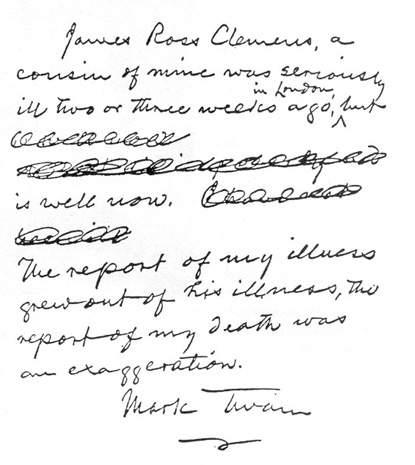
“The reports of my death 

are greatly exaggerated.” 

         ― Mark Twain


Below the Beltway

Goodbye, cruel words: English. It's dead to me.

It succumbed last month at the age of 1,617 after a long illness. It is survived by an ignominiously diminished form of itself.
The end came quietly on Aug. 21 on the letters page of The Washington Post. A reader castigated the newspaper for having written that Sasha Obama was the "youngest" daughter of the president and first lady, rather than their "younger" daughter.
The language's demise took few by surprise. Signs of its failing health had been evident for some time on the pages of America's daily newspapers, the flexible yet linguistically authoritative forums through which the day-to-day state of the language has traditionally been measured. Beset by the need to cut costs, and influenced by decreased public attention to grammar, punctuation and syntax in an era of unedited blogs and abbreviated instant communication, newspaper publishers have been cutting back on the use of copy editing, sometimes eliminating it entirely.


David Crystal. He’s written a book on the subject of electronic media and its impact on the English language, aptly called “Txtng: the Gr8 Db8” where he argues against the popular belief that texting leads to poor literacy among young learners.


Mei ban fa. Language teaching in rural China a national embarrassment.


Learning English in China? “Mei ban fa.” (It can’t be done.) 

SEEING Red in China, a blog by an American teacher there, makes a provocative argument. Behind the eye-catching number that 300m people either are learning or have learned English in China is a depressing reality. Classes are extremely poor, the teachers themselves not fluent in English. Rote memorisation is the norm—a fact Tom, the blogger, buttresses with his own experience of reading Chinese texts out loud, for hours every day, at Beijing's specialist university for foreign languages.  He says he was never once asked to produce his own sentences. Shocking if true.
By the by, he makes another provocative point: that rural literacy in Chinese (not English) is in fact far worse than authorities say. Farmers simply don't use the written language enough to maintain their knowledge of thousands of characters. 

Yet from the moment you step off the plane, you start to question whether or not 25% of the population really learned anything more than “Hallloow,” “A-What-a is-a your name-a?”. and “I’m fine, thank you and you? (with a rapidly rising pitch to indicate the question mark)” and “Chinglish” signs abound as online translators (like Google translate) seem to be the only authority on language, where  much Chinglish spreads.  
As in the picture.


Summary: deep impression to your 2 points mentioned from the magazine:  poor level of English and poor literacy from farmers. Up to 3oo million English learners??
“The job of a journalist is to simplify and to exaggerate” 
– John Humphrys
About the deat of English, click here.

Some reflexions from English teachers who worked there:
1. NO USE. I taught English there for a few years myself. After school, there’s simply no need for them to use it. I didn’t know much Chinese by the time I left, but I can tell you…not using it at all for the last six years has me remembering little more than “ni hao”. I can’t even remember the names of most food I used to love! So I think the problem is probably largely due to lack of use.
2. TESTS. The main problem facing effective teaching in China is indeed the gaokao, as well as its relatives CET and TEM. These tests do not check real acquisition of language, but just the rote memorization of vocabulary lists and grammar structures. It’s perfectly possible to ace the gaokao and be entirely unable to communicate in English. Since these tests are the only thing that matter, all English teachers (generally) do is cram as much repetition as possible in and cut out anything even vaguely communicative. 
3. LIES: Here is something of a pattern with a lot of things in China: There is a stupid policy, everyone recognizes it’s stupid, but it has to be done, so everyone gets to work to “get it done.” That is, by cheating, by faking, by lying, or by whatever it takes. In the end the leaders on the higher level make a bigger lie out of many smaller lies on the lower levels; but given time, just about everyone begins to believe the house of lies they have built.
4. FROM OUTSIDE. What you are experiencing is shared:  “Am I wasting my time? Are they learning anything? Is it just about the test and getting credit?” “When can I go home?” Very few if any of the local people can communicate even after 6 years of language classes and more if they move on to some kind of post secondary education.
5. FACE OR SHAME. the Chinese don’t actually care what they get out of English lessons. They merely do it for face. It’s their equivalent of Americans over-extending themselves financially to drive a bloody German car that’ll impress their friends. You know very well not to trust a single Chinese statistic. to assume 95% can read and write in Chinese is as fabricated as the goods they sell.
6. FLAWED TEACHERS. When I went to college in Nanyang, Henan, my English teachers were all a joke. I had Greg Rhue the girl touching drunk, Jerry Urbanthe stupid and violent, and Robert Baggio the sociopath pedophile. They all “taught” this old ESL grammar/game/scenario English class. It was nothing more than a waste of time. The teachers were all losers from their own country who had some sort of professional god complex because they speak English. I hated it actually. 
7. TECHNOLOGY. We need a new method that will be based on latest developments in our Digital era and new learning habits of Digital Learners.  It is nearly impossible to think in Chinese and try to speak in English; learners should be given a tool that will automatically stop cross-translation and help them to formulate direct links between English words and images and situations which they describe without using subconscious translation into Chinese. Also, we need to  trains the brain to recognize sounds (phonemes) and word blocks in a new language. See Arkady Zilberman's Language bridge
MEI-BAN-FA GOES GLOBAL: 
  • Believe it or not, this actually sounds like the situation in Hong Kong too!
  • Errrr, try living and teaching in Italy. You don’t have to go that far to encounter all of the aforementioned problems!!!!!!!!
  • The truth is the majority of island native Puerto Ricans speak next to no English. The official stat is 17% fluency in English

Monday, March 11, 2013

Many lies lie between one truth, no Doubt -PLAY


Doubt is a drama written by John Patrick Shanley. 
Doubts, gossips , parable
The Setting of the Play: Bronx, New York - 1964. The play takes place, mostly, in the offices of a Catholic School.


the playwright argues in his preface, "deep down, under the chatter we have come to a place where we know that we don't know... anything. But nobody's willing to say that.

to read about the plot, here

Quotes: 

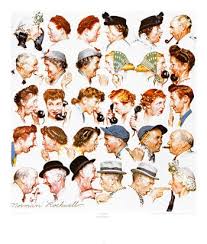
"Gossip kills three: the teller, the listener, and the subject."

 Having a sharp tongue may cut your own throat.


Click the link to enjoy The Sermons of Father Flynn (Doubt)
GOSSIPING


A woman was gossiping with a friend about a man she hardly knew— I know none of you have ever done this—that night she had a dream. A great hand appeared over her and pointed down at her. She was immediately seized with an overwhelming sense of guilt. The next day she went to confession.
She got the old parish priest, Father O’Rourke, and she told him the whole thing. “Is gossiping a sin?” she asked the old man. “Was that the hand of God Almighty pointing a finger at me? Should I be asking your absolution? Father, tell me, have I done something wrong?”
“Yes!” Father O’Rourke answered her. “Yes, you ignorant, badly brought-up female! You have borne false witness against your neighbor, you have played fast and loose with his reputation, and you should be heartily ashamed!”
So the woman said she was sorry and asked for forgiveness. “Not so fast!” says O’Rourke. “I want you to go home, take a pillow up on your roof, cut it open with a knife, and return here to me!”
So the woman went home, took a pillow off her bed, a knife from the drawer, went up the fire escape to the roof, and stabbed the pillow. Then she went back to the old parish priest as instructed. “Did you gut the pillow with the knife?” he says.”Yes, Father.” “And what was the result?” “Feathers,” she said. A world of feathers.
“Feathers?” he repeated. “Feathers everywhere, Father!”
“Now I want you to go back and gather up every last feather that flew out on the wind!”
“Well,” she said, “it can’t be done. I don’t know where they went. The wind took them all over.”
”And that,” said Father O’Rourke,“is gossip!”
What do you do when you’re not sure? That’s the topic of my sermon today.
Last year, when President Kennedy was assassinated, who among us did not experience the most profound disorientation? Despair? Which way? What now? What do I say to my kids? What do I tell myself? It was a time of people sitting together, bound together by a common feeling of hopelessness. But think of that! Your BOND with your fellow being was your Despair. It was a public experience. It was awful, but we were in it together. How much worse is it then for the lone man, the lone woman, stricken by a private calamity?
‘No one knows I’m sick.’
‘No one knows I’ve lost my last real friend.’
‘No one knows I’ve done something wrong.’
Imagine the isolation. Now you see the world as through a window. On one side of the glass: happy, untroubled people, and on the other side: you.
I want to tell you a story. A cargo ship sank one night. It caught fire and went down. And only this one sailor survived. He found a lifeboat, rigged a sail…and being of a nautical discipline…turned his eyes to the Heavens and read the stars. He set a course for his home, and exhausted, fell asleep. Clouds rolled in. And for the next twenty nights, he could no longer see the stars. He thought he was on course, but there was no way to be certain. And as the days rolled on, and the sailor wasted away, he began to have doubts. Had he set his course right? Was he still going on towards his home? Or was he horribly lost… and doomed to a terrible death? No way to know. The message of the constellations – had he imagined it because of his desperate circumstance? Or had he seen truth once… and now had to hold on to it without further reassurance? There are those of you in church today who know exactly the crisis of faith I describe. And I want to say to you: DOUBT can be a bond as powerful and sustaining as certainty. When you are lost, you are not alone.

On the subject of doubt, Rabbi Sholom Ciment told this story:
The only survivor of a shipwreck washed up on a small uninhabited island.  He prayed feverishly for God to rescue him and every day he scanned the horizon for help, but none seemed forthcoming.
Exhausted, he eventually managed to build a little hut out of driftwood to protect him from the elements and to store his few possessions.  But then one day, after scavenging for food, he arrived home to find his little hut in flames, the smoke rolling up to the sky.
The worst had happened; everything was lost.  He was stung with grief and anger. "God, how could you do this to me?" he cried.  (He certainly had his doubts about God!)  Early the next day, however, he was awakened by the sound of a ship that was approaching the island.  It had come to rescue him.  "How did you know I was here?" the weary man asked his rescuers.  "We saw your smoke signal," they replied."
  (Source:  "Fire And Smoke," by  Rabbi Sholom Ciment, The Jewish TImes)