Search This Blog

Tuesday, December 13, 2016

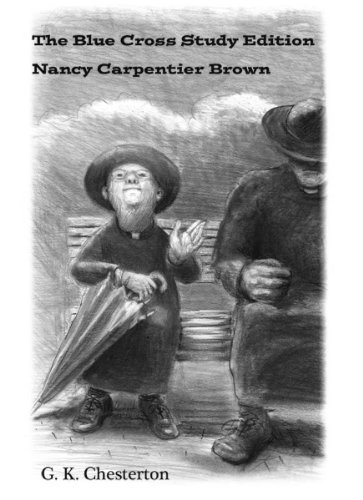
Discover The blue cross - Brown and Flambeau


Image result for chesterton blue cross images


Image result for chesterton blue cross images


 Why the Interest in G.K. Chesterton? Because he was the greatest writer of the 20th century. A convert to the Catholic Church, Chesterton wrote nearly a hundred books during his lifetime, and literally thousands of essays, in newspapers and magazines. 
All the issues we struggle with in the 21st century, Chesterton foresaw, and wrote about, in the early 20th century. Social injustice, the culture of death, statism, assaults on religion, and attacks on the family and on the dignity of the human person: Chesterton saw where these trends, already active in his time, would lead us. 
He was a witty, intelligent, and insightful defender of the poor, the downtrodden, the weak, and especially of the family. He loved good beer, good wine, and good cigars. 


Quotations of G. K. Chesterton

The blue cross -          Chesterton.org map


(GROUPS) Retell the story using most of these prompts: 
  1. on the trail of the world's most famous 
  2. a master of disguise
  3. international conference of clergymen
  4. Liverpool street station
  5. covered in precious blue stones
  6. to tail Father Brown in London
  7. mysterious dark stain
  8.  "those two clergymen"
  9. half-empty bowl of soup
  10. display of nuts
  11. enlists the help of two policemen
  12.  overpaid check
  13.  lady at the sweetshop counter
  14. a string to the North Pole
  15.  overhears the pair
  16. a dummy package
  17.  switched packages
  18. sleeve - "spiked bracelet"
  19. Flambeau threatens helpless Brown
  20. Donkey's Whistle
  21. swept a great bow


“ ’What window?’ I says.<br /> ’The one I’m going to break,’ he says”


Does changing the salt and sugar never pall on you as a jest?
“Does changing the salt and sugar never pall on you as a jest?”


The Father Brown Reader: Stories from Chesterton
Image result for chesterton blue cross images

“We’re all alone here and I could<br />pull you to pieces like a straw doll.”Image result for chesterton blue cross images

Monday, December 12, 2016

blank on blank and Huxley

 Francis Ford Coppola

-BLANC ON BLANK -BLOG

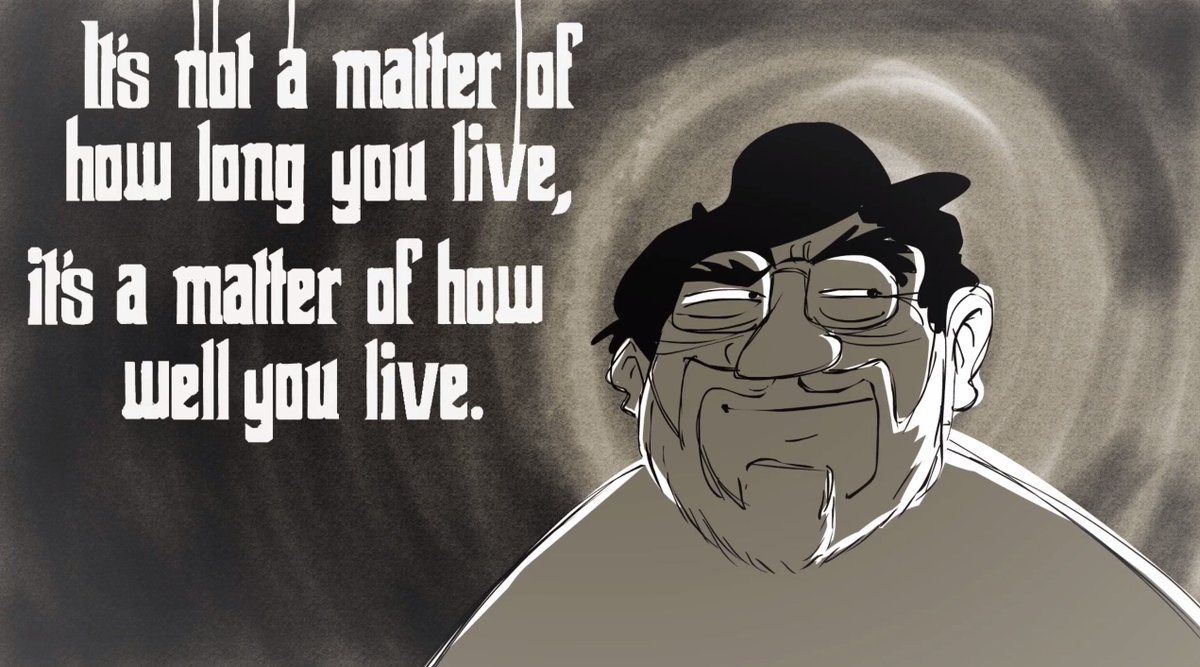
Blank on Blank is a production of Quoted Studios-– a nonprofit, 501 (c)(3) content studio based in Brooklyn. Quoted is dedicated to using animated journalism to preserve and re-imagine the American interview.

TASK 1. Listen to wRite activity. Just once.

Aldous Huxley Interviewed by Mike Wallace 
Interview by Mike Wallace on May 18, 1958, from the Harry Ransom Center at The University of Texas at Austin

"This is Aldous Huxley, a man haunted by a vision of hell on earth. Mr. Huxley wrote a Brave New World.  Today Mr. Huxley says that his fictional world of horror is probably just around the corner for all of us." - Mike Wallace
Marlene Dietrich on Sex Symbols
TASK 2. READ the comments on Huxley video in youtube  and write a summary of their conflictive views on current society 
Blank on Blank

TASK 3. Watch one character of your liking, and 
present it to our classmates next Week in class. 
Our three suggestions:


Image result for blankonblank

Sunday, December 11, 2016

Bob Dylan Judson -Time Magazine- Interview may 1965


Interview -May 1965

Judson was not some young novice. He was a highly experienced newsman who’d been the Times UK correspondent throughout the second World War, who was renowned as a fearless interviewer and who had interviewed many famous people including Adolf Hitler.
This interview can be seen on Dont Look Back.
part1.  
 
BD: Are you going to see the concert tonight?     HJ: Yes. 
BD: Are you going to hear it?                 HJ: Yes. 
BD: Okay, you hear and see it and it’s going to happen fast. Now, you’re not going to get it all, and you might hear the wrong words, and then afterwards, see I can’t... I won’t be able to talk to you afterwards. I got nothing to say about these things I write, I mean, I just write them. I got nothing to say anything about them, I don’t write ‘em for any reason. There’s no great message. I mean, if, you know, if you wanna tell other people that, you know, go ahead and tell them but I’m not going to have to answer to it. And, they’re just going to think, you know, what’s this Time Magazine telling us? But that, you couldn’t care less about that either. You don’t know the people that read you.                           HJ: Ah... 
BD: ‘Cause you know, I’ve never been in Time Magazine and yet this hall’s filled twice, you know, and I’ve never been in Time Magazine. I don’t need Time Magazine... and I don’t think I’m a folk singer. You’ll probably call me a folk singer but, you know, the other people know better ‘cause the people, you know, that buy my records, listen to me, don’t necessarily read Time Magazine. You know, the audience that subscribe to Time Magazine? The audience of the people that want to know what’s happening in the world week by week. The people that work during the day and can read it small, right? And it’s concise, and there’s pictures in it.I mean, those kind of, you know, those... a certain class of people. It’s a class of people that take the magazine seriously. I mean, sure I could read it, you know, I read it. I read it on the airplanes but I don’t take it seriously. If I want to find out anything I’m not going to read Time Magazine. I’m not gonna read Newsweek. I’m not gonna read any of these magazines, I mean, ‘cause they just got too much to lose by printing the truth, you know that.


part 2.
HJ: What is really the truth?
BD: Really the truth is just a plain picture.
 
HJ: Of what? Particularly
BD: Of, you know, a plain picture of, let’s say, a tramp vomiting, man, into the sewer You know, and next door to the picture, you know, Mr Rockefeller, you know, or Mr C.W. Jones, you know, on the subway going to work, you know, any kind of picture. Just make some sort of collage of pictures which they don’t do. They don’t do. There’s no ideas in Time Magazine, there’s just these facts. Well, you know, which too are switched because even the article which you are doing, the way it’s gonna come out, don’t you see, it can’t be a good article. Because, the guy that’s writing the article is sitting in a desk in New York, he’s not, he is not even going out of his office. He’s just going to get, all these, ah, 15, you know, reporters and they’re gonna send him a quota you know
 
HJ: That’s not me...
BD: No, he’s going to put himself on, he’s going to put all his readers on, and you know, in another week we have some space in the magazine. But that’s all, it means nothing to anybody else. I’m not putting that down because people have gotta eat and live, you know, but let’s at least be honest about it. You know, I mean sure, let’s say, let’s say...
 
HJ: I just don’t, I don’t know that you are giving me...
BD: I know more about what you do and you don’t even have to ask me how or why or anything, just by looking, you know, than you’ll ever know about me, ever. I mean, I could tell you, I could tell you I’m not a folk singer and explain to you why, but you wouldn’t really understand. All you could do, you could nod your head, you would nod your head.HJ: You could be willing to try, and...
BD: No, I couldn’t even be willing to try because, it is, you know, it would be, it’s, you know, there’re certain things which... every word, every word has its little letter and big letter.HJ: Your friend had the right word – pigeonhole.
BN: No, no, it’s not important...
BD: No, it’s not pigeonhole, it’s not the word at all. You know, every word has its little letterand big letter, like the word “know.”HJ: Yeah.
BD: You know, the word know, “k-n-o-w?”HJ: Yeah.
BD: Okay, then you know the word know, capital “K-N-O-W”?HJ: Yeah.
BD: Like, each of us really “knows” nothing.
 
HJ: Yeah.
BD: Right? but we all think we know things.
 
HJ: Right.
BD: And, we really know nothing. 
HJ: But you’re saying you know more about what I do...
BD: No, I’m saying, I’m saying, I’m saying... [BN: No, no, no.]]
 
BD: I’m saying that you’re going to die, and you’re gonna go off the earth, you’re gonna be dead. Man, it could be, you know, twenty years, it could be tomorrow, any time, so am I. I mean, we’re just gonna be gone. The world’s going to go on without us. 
HJ: Right.
BD: All right now, you do your job in the face of that and how seriously you take yourself, you decide for yourself.
 
HJ: Right.
BD: Okay, now I’ll decide for myself. Now, you’re not going to make me feel unhappy by anything you print about me or anything, you know, or anything like that. It’s just, it couldn’t, you know, you couldn’t offend me. And, I’m sure you know I couldn’t offend you. And so all I can hope for you to do is, uh, all your ideas in your own head, somehow, wherever they are...


part3.
 
HJ: Do you care about what you sing?
BD: How could I answer that if you’ve got the nerve to ask me?HJ: Well then you, how could you...
BD: I mean, you’ve got a lot a lot of nerve asking me a question like that.
 
HJ: I have to ask that.
BD: Do you ask The Beatles that?
 
HJ: I have to ask you that because you have the nerve to question whether I can.
BD: I’m not questioning you because I don’t expect any answer from you. Do you think somebody wouldn’t go see somebody if they didn’t want entertainment?
 
HJ: Of course not.
BD: Who, now who wants to go get whipped, you know, and if you do wanna go get whipped, hey, aren’t you really being entertained?
 
HJ: All right... So fine.
BD: Right.
 
HJ: It’s all right.
BD: Okay. So, if you think anybody that comes to see me is coming for any other reason except entertainment, really.
 
HJ: They’ll tell you they’re all coming for different reasons.
BD: Well, who cares what they tell you. Who cares what anybody tells you.
 
HJ: Well, they think they, they think they know why they’re doing it.
BD: Well, do you know why they’re doing it?
 
HJ: I know some of the things they say...
BD: People say all kinds of things...
 
HJ: Uh hummm.
BD: And you have to sort of... to weed it out. Can you weed it out?
 
HJ: Well, that’s what I’m trying to do.
BD: Yeah, well, you see, you have to learn but I can’t teach you how to weed it out.
 
HJ: Yeah, I didn’t say that I couldn’t do that, I said I don’t mean that.
BD: Yeah, well you know, I have no idea. First of all, I’m not even a pop singer.
 
HJ: You think you have a big audience?
BD: I don’t know. I have no idea.
 
HJ: Well, you appeal to your audiences in some sense as a pop singer. Well, you know, even if it’s Caruso he’s, uh, you know, appealing to a popular, you know, this is a...
BD: But, he’s a pop singer... and I’m just as good a singer as Caruso... Have you heard me sing? Have you ever heard me sing?
 
HJ: I like Caruso better.
BD: Ohhh... well, you see right there now, right there we have a little disagreement. I happen to be just as good as him... (laughter) a good singer, have to listen closely... (laughter) but I hit all those notes and I can hold my breath three times as long if I want to.
 

-->
-->
-->

Thursday, December 8, 2016

Manresa in the Later Middle Ages - Fynn-Paul


The Rise and Decline of an Iberian Bourgeoisie
Manresa in the Later Middle Ages, 1250–1500

  • DATE PUBLISHED: November 2015

  • FORMAT: Hardback

In a major contribution to the series, the volume reveals how a combination of the Black Death, royal policy, and a new public debt system challenged, and finally undermined urban resilience in Catalonia. 


The Rise and Decline of an Iberian Bourgeoisie is one of the first long-term studies in English of an Iberian town during the late medieval crisis. Focusing on the Catalonian city of Manresa, Jeff Fynn-Paul expertly integrates Iberian historiography with European narratives to place the city’s social, political and economic development within the broader context of late medieval urban decline.
 
Drawing from extensive archival research, including legal and administrative records, royal letters, and a cadastral survey of more than 640 households entitled the 1408 Liber Manifesti, the author surveys the economic strategies of both elites and non-elites to a level previously unknown for any medieval town outside of Tuscany and Ghent. 


               Table of Contents

1. Introduction: Catalan urban institutions, the Catalan Bourgeoise and the late medieval crisisPart I. Politics:2. The creation of a regional capital: town government and Royal policy3. A portrait of the Manresan Partricate4. Plague, war and calamity: the makings of the fourteenth-century crisis at Manresa5. The practice of government at Manresa during the fourteenth-century crisisPart II. Economy:6. The Aragonese financial revolution: a nexus of state formation and personal investment7. Demography, wages and prices in the age of the Black Death8. Fruits of the urban system: equality, inequality and quality of life9. Conclusion: the rise and decline of Manresan civic vitality as a function of the city's 'Bourgeois system', 1250–1500Bibliography


=== MEET THE AUTHOR:

Jeff Fynn-Paul is a Lecturer in History at the University of Leiden. His research interests include the economic and social history of Europe and the Mediterranean from 1300 to the present, and urban institutions, state formation, public debt, class and slavery in relation to economic growth.

Additionally, in the field of Iberian studies, Fynn-Paul's work also suggests that:  

  • Catalan-Aragonese financial institutions were key to Aragonese imperial expansion in the western Mediterranean and southern Italy prior to the union with Castile.  ( Rise and Decline)  
  • The Crown of Aragon underwent the world’s first full-scale ‘Financial Revolution’ in the 14th century. ( Rise and Decline, Eur. Hist. Quarterly)  
  • Catalan urban regimes provided very well for their citizens during the fourteenth and early fifteenth centuries, even in comparison with cities in relatively wealthy and/or famous regions such as Tuscany.  ( Rise and Decline, Munro Festschrift)


(2012) Renaissance Slavery in the Mediterranean: The Contours of its Rise and Decline in Southern Europe, and its Relationship with Slavery in the Islamic World
Society, family, and gender: What status did slaves have in the different Mediterranean areas? How were slaves – female and male – socially and personally integrated in family, kinship and clan structures, and in everyday life in towns and countryside? What were the place and the function of male and female slaves within society? And what were their rights and their scope of action?
Cultural interconnectivities: Did the norms and practices of Christian slavery differ fundamentally from the Muslim ones, or are mutual influences or rather one-sided transfers ascertainable? Was the revival of slavery in Southern Europe a consequence of cultural contact and exchange with the Muslim world? Did norms and practices of enslavement and slave holding migrate and pass cultural frontiers? Or do we have to examine these ostensible cultural borders as fluid? What role did religion play in the evaluation of local and foreign forms of slavery, and to what extent did discourses on slavery help to construct cultural borders?


Index.

Wednesday, December 7, 2016

Postcard 2016_Catalan Christmas from NY


WHAT IN THE WORLD  -  R. Minder - 16/12/05/

Caught With Your Pants Down? 
Must Be Christmas in Catalonia


Here’s one thing D. Trump and Hillary Clinton have in common. They are being depicted in new Christmas figurines in Catalonia in a rather rude position: squatting to defecate.
The unusual and irreverent “caganer” figurines are part of a longstanding holiday tradition in this region in northeastern Spain, and they are not meant to denigrate the politicians and celebrities they portray. Instead, the figurines hark back to a once-common use for human waste: to fertilize farm fields and grow more food in the days before agrochemicals. The figurines were first made in the 18th century.
The caganer, which can be translated as pooper, is placed somewhere among the characters in a Nativity scene: behind Mary and Joseph, perhaps, or between the animals gathered around the manger.
The hand-painted ceramic figurines generally stand (or rather, crouch) almost five inches tall, and are produced by about 25 companies around Catalonia, many of them small shops.
Most often, the caganers depict an ordinary Catalan in a traditional floppy red hat. But in recent years, a growing number have been made in the likeness of famous people. And that has made them popular far beyond Catalonia.
Almost half the figurines shipped by caganer.com, the largest distributor, go to the United States. “Just as we imported Halloween from America, I guess some Americans have discovered our tradition and really like it,” said Sergi Alós, the company’s managing director.
Caganers officially go on sale a month before Christmas, but many overseas customers place orders in advance — and this year, Mr. Alós said, they turned out to be something of a barometer. “Hillary started very strong, but then Trump caught up,” he said, declining to give specific figures.
Don’t read anything into the two candidates being shown with their pants down, he said: “We just look at who is in the news, focus on the positive and don’t try to say anything nasty or make fun of either Hillary or Trump.”
Also joining the caganer line this year is Marine Le Pen, leader of the far-right National Front in France, who hopes to follow Mr. Trump’s lead and win a presidential election next year with the backing of anti-establishment voters.
It remains to be seen whether the new models will rival the best-selling figurine of a foreigner: Barack Obama. “He has been our king since 2008,” Mr. Alós said.

Friday, December 2, 2016

Breviario mediterraneo - Predrag Matvejevic'


Predrag Matvejevic' born in 1932 in Mostar from a Russian father and a Croatian mother. Now teaches at the New Sorbonne of Paris and the Sapienza in Rome. 


In his work he has always confronted himself with the open concept of ethnical-cultural identity, most of all by investigating the relationship and the history of the peoples of the Mediterranean and among them.


Among his works: 
"Breviario Mediterraneo" (1987),
 "Pour une poétique de l'événement" (1979),
 "Epistolario dell'altra Europa" (1992).

 Our Daily Bread (Kruh naš), Zagreb: Ambrozija, 2009 -next entry
    (Acantilado-Quaderns Crema -2013)

The central questions asked by Matvejević’s book Mediterranean Breviary – Could we conceive of a viable intramediterranean culture beyond stereotypes? Is the Mediterranean doomed to become “an ex-world”? – are understandably intimate for Matvejević himself, given that he has been living in first person the status of “ex.” 
The writer Predrag Matvejević shows how Mediterranean identity cannot be understood as an all-encompassing unity, but as a satura, a discrete ensemble made up of differences and conflicts. By constructing a metonymical network of landscapes, things and crafts, and relying on the philological excavation of everyday words, his Mediterranean Breviary succeeds in asserting a humble communal identity against the clamor of wars and the retracing of borders.
Breviario mediterráneo de Predrag Matvejevic:

Excerpt:

A KEY CHARACTER… Waves play an important role in the dramaturgy of the sea, its scenes and peripeteias. They have many names, varying not only from one gulf to the next but also according to whether we view them from ship or shore and what we expect of them. They combine with adjectives (or, less commonly, other nouns), which are for the most part descriptive: regular or irregular, longitudinal or transversal; they are connected with high tide or low tide, with the surface or the depths; they are solitary, frequent, fortuitous, rolling, choppy, cyclical (experts claim that the cycles of some waves can be measured in terms of geologic periods). What matters most from the deck is their size; their strength; whether they hit flank, bow, or stern; and whether masting, sails, and, especially, sailors can handle them. The distinctions that interest us here are of a different sort: how they break on the shore, how long they last after they have broken in the eyes of their beholders, whether they are the same when they return, how the sound they make differs when they hit sand and when they hit rock, how they sleep when they are tired and barely perceptible. All that remains of the huge waves tapering and dying on the shore is a gurgle or a lap, a splash on the pier or the hull of the boat, buoy, or reef, though this sound can last a long time and is most likely to be audible at night. Even though everyone recognizes it—this gurgle or lap or whatever one calls it—there is disagreement over whether it is a noise or a voice...


English chapter
In recent years, the declining importance of the nation-state and an increase in globalization have encouraged scholars to move towards the borderless world of seas and oceans, giving special attention to their diasporic movements of people and goods. Lately, this “new thalassology” has witnessed an outburst of Mediterranean studies. Yet the resurgence of the Mediterranean in the postmodern, anti-nationalistic arena must be critically assessed. The risk in such studies is a reinforcing of old stereotypes, what the anthropologist Michael Herzfeld calls “Mediterraneism.” The present article highlights the work of two scholars and one writer who alert us to the manifold dangers of Mediterraneism and who offer standpoints for launching a serious interrogation of Mediterraneism. Roberto Dainotto points to the asymmetries couched in the alluring metaphors of liquidity and flows. Iain Chambers views the Mediterranean as a space of solid borders that entail the production and consumption of the immigrant as outcast. The writer Predrag Matvejević shows how Mediterranean identity cannot be understood as an all-encompassing unity, but as a satura, a discrete ensemble made up of differences and conflicts. By constructing a metonymical network of landscapes, things and crafts, and relying on the philological excavation of everyday words, his Mediterranean Breviary succeeds in asserting a humble communal identity against the clamor of wars and the retracing of borders.

Ressenya1-

REseña2
Una profunda y poética «filología del mar»: historia de una cultura, nuestra cultura mediterránea, de un extremo a otro del tiempo y del espacio. «En Alejandría conocí a un catalán, relojero de profesión, que intentaba rehacer el catálogo de la biblioteca devastada, la mayor de la Edad Antigua, pese a los escasos datos disponibles. Se lamentaba porque su lengua materna se estaba perdiendo y quería compensarlo de algún modo. Los excéntricos del sur se distinguen de los excéntricos del norte. La causa no es sólo el clima diferente. En el Mediterráneo, los prodigios también son diferentes.» En una narrativa apasionante y sugerente, pletórica de hallazgos y encuentros, Predrag Matvejevic´ reconstruye la historia de una palabra –Mediterráneo– y ahonda en sus múltiples significados. Este breviario, un clásico de las letras europeas contemporáneas, evoca centenares de los rasgos que configuran un espacio histórico y cultural, y una forma de vivirlo: el estilo de los puertos y las aduanas, la suavidad de la arquitectura en el perfil de la costa, los saberes de la cultura del olivo, la difusión de una religión, las huellas permanentes de las civilizaciones árabe y hebrea, las lenguas y los dialectos que cambian con el tiempo, las historias ocultas y los destinos particulares. Guiados por una prosa excepcional y una sabiduría que no parece de este tiempo, los lectores descubrirán el mundo al que pertenecen y las ricas señas de identidad que lo vertebran. Una obra maestra que ahora se ofrece reescrita y ampliada por el autor.

3 visitas a la alta edad media - novel ahistorica


Un encuentro novel con el pasado en tres entregas.


- Lorenzo Mediano (2013) - El desembarco de Alah

 -  Lourdes Ortiz (2005), Urraca

-  José Luis Corral (2003),  El Cid


#1.   Lorenzo Mediano (2013) - El desembarco de Alah


Guerras, amores, desamores, ambición, un asesinato, un gran tesoro (el de Alarico) que ambicionaban los bereberes... Esto, cocinado durante cuatro años y más de 5.000 horas de trabajo, son los ingredientes de El desembarco de Alah, la última novela de Lorenzo Mediano. La novela describe lo que sucedió en España desde el año 710, un año antes de la batalla de Guadalete y hasta la de Covadonga, todo el periodo de conquista de España por parte de los musulmanes.
En la novela hay mucha intriga, pasiones, amores intensísimos, misterio e incluso un asesinato (aunque nadie logra saber quién es el asesino), pero sobre todo hay historia. La época que describe el zaragozano en El desembarco de Alah tiene varias piezas que no encajan. En sus propias palabras: "que España, un país con cinco o seis millones de habitantes y que contra los romanos había luchado durante más de 100 años, lleguen 14.000 bereberes y 10.000 árabes y la conquisten...". Y a medida que fue investigando, el autor encontró cosas más extrañas como que "en Covadonga, el subjefe del ejército musulmán era el arzobispo de Toledo, lo que no encaja nada con la historia que nos han contado". De la misma forma los historiadores árabes cuentan que "la batalla de Covadonga fue una victoria musulmana" cuando lo que se cuenta aquí es que "300 cristianos vencieron a 20.000 musulmanes".
A lo largo de las páginas, y mezclado con la conquista de España, Mediano narra dos historias de amor "muy complicadas, que son decisivas para la historia de España". Una de ellas, tan fuerte que hoy en día se sigue recordando el lugar donde se conocieron; y la otra, tan intensa que se sigue visitando la tumba donde yacen los amantes.
 Con el libro, el escritor ha logrado el Premio Iberoamericano de las Artes.

#2.    Lourdes Ortiz, Urraca
urraca-lourdes ortiz-9788408059059Urraca es el monólogo de la reina castellana cuando, destronada y presa por su hijo en Saldaña, espera la muerte recordando y escribiendo, "averiguando el sentido de su destino", al tiempo que fascina al monje miniaturista que la custodia.Habla la hija de Alfonso VI, reina de Castilla y León, un personaje que "tiene muchos ingredientes que le hacían fascinante", dice Lourdes Ortiz. "Sus relaciones con el poder, con su marido, con su corte, y luego, la reacción de la época, que la trató de bruja, de adúltera, de loca También estaba el tema de sus amores". La Urraca de Lourdes Ortiz es un personaje reflexivo y apasionado, que, "a medida que iba avanzando la novela, fue cambiando, muchas veces por pura necesidad literaria".

#3,  José Luis Corral,  EL CID 
El Cid
Rodrigo Díaz de Vivar, el Cid, es un mito hispano de alcance universal y tal vez el mayor de todos los héroes guerreros de la historia de España. Hombre de frontera, prototipo del caballero capitán de mesnada de la segunda mitad del siglo XI, la figura del Cid fue, casi desde el mismo momento de su muerte, objeto de glosa histórica y literaria. El héroe, y por eso ha producido tanta fascinación a tantas generaciones, no es al fin y al cabo sino la figura que encarna aquellas ambiciones más primarias del ser humano: el deseo de fama, el ansia de riqueza y el afán de poder. José Luis Corral ha escrito una obra maesta en la que El Cid aparece tal como fue.
José Luis Corral, uno de los mayores especialistas en Historia Medieval, se doctoró precisamente con una tesis que aportaba detalles sobre aspectos poco conocidos de la biografía de El Cid. Naturalmente, cuando decidió escribir una novela biográfica sobre este personajes histórico español se mantuvo excrupulosamente fiel a los acontecimientos. La imagen que nos ofrece del militar y político no tiene nada que ver con la de un mercenario sin escrúpulos ni la de un héroe legendario