Search This Blog

Showing posts with label Cervantes. Show all posts

Sunday, January 28, 2018

Genuine fakes

Genuine fakes. Original forgery. 
Real counterfeits.

'Forgery' was a word introduced in 1574.

A counterfeit is a fake or a forgery.
For their term for forgery, the ancient Greeks drew on the root word “plasma,” meaning to form or mold, one sense of which was to form or mold deceitfully.

 As the practice apparently became more common, the Romans coined at least two words for it. One being “Falsum,” the legal term for fraud, referred to anything deceptive and was related to “fallere,” meaning to deceive.  ....

1 - Christoforus Colombus
“In fourteen-hundred-and-ninety-two/ 
Columbus sailed the ocean blue. 
To prove that the old maps were true.” 
The Vinland Map was, ipso facto, considered a fake, because Columbus was the first and only discoverer of America. It was bought by Yale University in 1957. But doubts existed nevertheless. Their position was assessed in 2009 by world-class experts in document authentication at the Royal Danish Academy of Fine Arts. Results of the Danes’ exhaustive study at Copenhagen’s International Conference on the History of Cartography were announced by Rene Larsen, rector of the School of Conservation: "We have so far found no reason to believe that the Vinland Map is the result of a modern forgery. All the tests that we have done over the past five years — on the materials and other aspects — do not show any signs of fraud."

       Calendars and history 
In the year AD 499 the Hindu mathematician Aryabhata calculated pi as 3.1416 and the length of the solar year as 365.358 days.
 At much the same time he conceived the idea that the earth was a sphere spinning on its own axis and revolving around the sun. He thought that the shadows of the earth falling on the moon caused eclipses. 


One wonders what all the fuss was about when Copernicus ‘discovered’ some of the above nearly a thousand years later. Indian thought in the Middle Ages was in several areas far ahead of European ideas.  
(Ideas. A history by P Watson (2004)
  • 2- Michaelangelo Buonarotti

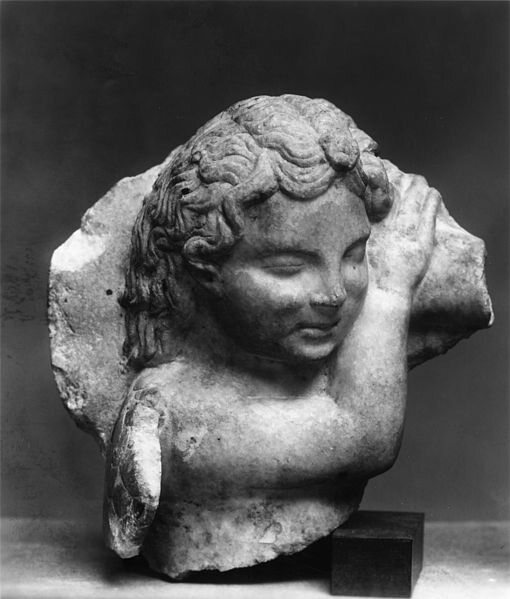
That’s right, one of the most famous renaissance painters in history, painter of the Sistine Chapel and other priceless works, began his career by passing off an early marble sculpture as an ancient Roman statue in order to sell it for a higher price. He intentionally damaged and aged the sculpture, entitled “Sleeping Eros” by burying it in an art dealer’s yard, so that it could later be “discovered” as an ancient relic.
Article HERE

How a Forged Sculpture Boosted Michelangelo’s Early Career
  1.  Despite his promising future, back in 1496 he was just another starving artist trying to find ways to fund his art. 
  2.  At 21, he had the talent and the passion, but not the name necessary to sell his work at a profitable price. 
  3.  Faced with this dilemma, Michelangelo opted for the seemingly logical solution: he forged a classical sculpture by artificially aging it.

3- Miguel de Cervantes 
29 September 1547 (assumed) – 22 April 1616


Saturday, February 25, 2012

age accountability: Born at the age of 1 or on the 33th of April in the Old style

Item 1. Born at the age of one and a half is possible!
Note that, in Korea, age is counted age differently from everywhere else. When a baby is born, Koreans count him as one year old immediately. In addition, Koreans count themselves one year older every January 1. So, according to Koreans, a baby born in December, 2005 is already two years old in January, 2006. The result of this is that everyone is really between one and two years younger than their "Korean age." This is of little importance in most circumstances; however, there can be surprises when talking about young children. Some Koreans refer to non-Korean age as "American age." If possible, take the time to point out that the rest of the world, including Japan, uses standard, non-Korean age. Kindergarten children are between the ages of four and six (non-Korean age!).

Item 2. Read on two immortal deaths


Although 23 April is often stated as the anniversary of the deaths of both William Shakespeare and Miguel de Cervantes, this is not strictly correct. Cervantes died on 23 April according the Gregorian calendar; however, at this time England still used the Julian calendar.The connection between 23 April and books was first made in 1923 by booksellers in Spain ( Inca Garcilaso also died on the 23rd April) to promote sales (and reading!). Whilst Shakespeare died on 23 April by the Julian calendar in use in his own country at the time, he actually died ten days after Cervantes (on the 33th of April with the Papist Gregorian Calendar) because of the discrepancy between the two date systems. The apparent correspondence of the two dates was a fortunate coincidence for UNESCO (1995) put forward by Catalan activists as on dat day Josep la died and Nabokov was born.
To learn about our bard's life and death, all the questions here:


Item 3. when the day of death was difficult to state.
 Read the footpring at our greatest physicist (not Hawkings, not Kepler): Sir Isaac Newton:During Newton's lifetime, two calendars were in use in Europe: the Julian or 'Old Style' in Britain and parts of northern Europe (Protestant) and eastern Europe, and the Gregorian or 'New Style', in use in Roman Catholic Europe and elsewhere. At Newton's birth, Gregorian dates were ten days ahead of Julian dates: thus Newton was born on Christmas Day, 25 December 1642 by the Julian calendar, but on 4 January 1643 by the Gregorian. By the time he died, the difference between the calendars had increased to eleven days. Moreover, prior to the adoption of the Gregorian calendar in the UK in 1752, the English new year began (for legal and some other civil purposes) on 25 March (Lady day), i.e. the feast of the Annunciation: sometimes called 'Annunciation Style') rather than on 1 January (sometimes called 'Circumcision Style'). Unless otherwise noted, the remainder of the dates in this article follow the Julian Calendar.

Item 4. when the October revolution took place in November.
In Russia, the terms "Old Style" and "New Style" have the same significance as elsewhere. The start of the year was moved to 1 January in 1700, but the Gregorian calendar was introduced there much later, on 14 February 1918 (Gregorian calendar) in Soviet Russia (which became the Soviet Union in 1922). Hence the October Revolution of 1917 is so called, despite having started on 7 November under the Gregorian calendar (25 October [Julian calendar]). Articles about the October Revolution which mention this date difference tend to do a full conversion to the dates from Julian to the Gregorian calendar.
Further reading: What about Turkey?
In the Ottoman Empire they used the Islamic (Lunar) calendar, which count its beginning from 622.07.16 (JD# 1948440) the so-called Hijra era. Later, on 1789.03.01 JU, the Julian (solar) calendar was introduced as a fiscal year (also used by the postal services), but the Islamic calendar remained as a religious calendar and was still used in the legal sphere and especially for all documents issued by the sultan. They did not count this fiscal year from 1 AD but from the Hijra era. A special problem was the religious lunar year was shorter than the Julian solar year. So to bring the years into line again, the fiscal years numbers 1221 and 1255 were skipped.
    Of course the discrepancy continued but was disregarded. For the fiscal year in 1917 the Gregorian Calendar was introduced and the beginning of the year was moved to 1917.03.01, leaving out the days 16-28 Shubat (February) 1332. The final adjustment was made, when they changed the beginning of the year to 1918.01.01. So the Turkish fiscal year 1332 had only 352 days and the fiscal year 1333 only 306. The use of the religious Islamic calendar of course continued until the Republic abolished it on 1926.01.01.
    The Ottoman post used the fiscal dates from the beginning in 1840. 


PD: From Lunisolar calendar to Solar discipline.
In Eastern Asia countries, the old style calendars were similar but not all the same. The Arabic numerals may be used for both calendar dates in modern Japanese and Korean languages, but not Chinese.

Japan. Japan started using the Gregorian calendar on 1 January 1873,[21] locally known as "the first day of the first month of Meiji 6". The preceding day, 31 December 1872, was "the second day of the twelfth month of Meiji 5".

Korea. Korea started using the Gregorian calendar on 1 January 1896, which was the 17th day of the 11th lunar month in not only Korea but also in China, which still used the lunisolar calendar.

China. the Kuomintang-led Republic of China government adopted the Gregorian calendar on 1 January 1912. It kept the lunisolar Chinese calendar as well, especially for the timing of traditional holidays. When the Communists took over China in the late 1940s they kept this two-calendar system.