Search This Blog

Showing posts with label shakespeare. Show all posts

Tuesday, October 15, 2019

Life, time and proverbs


  1. Some metaphores to think over (= ponder):
  • Tranquil mind
  • Sit like a tortoise
  • Walk sprightly like a pigeon
  • Sleep like a dog


  2.  Wisdom from the east:
. A yarn (= story):
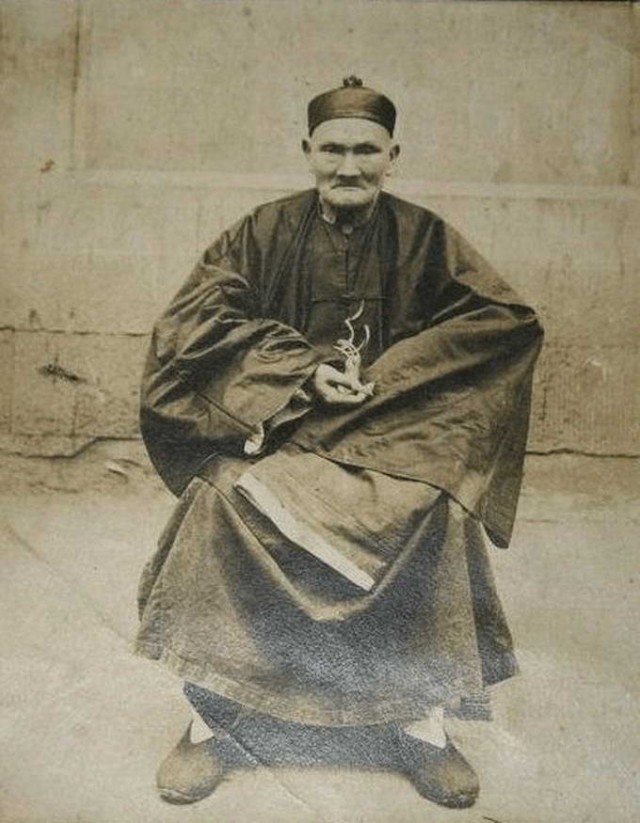
In China where Age means something he was a great man. By his own story Li Ching-Yuen was born in 1736, had lived 197 years. By the time he was ten years old he had traveled all the area gathering herbs and went on for the rest of his first 100 years. He lived on herbs and plenty of rice wine.

To be aware of your time clock during your lifespan, we should consider Li Ching-Yuen's answer to the secret of a long life in the province of Szechwan in China, Li lived until last week as told to TIME magazine in 1932.


 Reading bonus track: 
   If it picks your interest, have a glimpse at some LONGEVITY aspects:


  3.  A couple of ageless classics:

  • "You, yourself, are the time; your senses are your clocks."
                        – Angelus Silesius (German mystic – 17th century)

"There is a right time for everything:

A time to be born; A time to die;
A time to plant; A time to harvest;
A time to kill; A time to heal;
A time to destroy; A time to rebuild;
A time to cry; A time to laugh;
A time to grieve; A time to dance;
A time for scattering stones; A time for gathering stones;
A time to hug; A time not to hug;
A time to find; A time to lose;
A time for keeping; A time for throwing away;
A time to tear; A time to repair;
A time to be quiet; A time to speak up;
A time for loving; A time for hating;
A time for war; A time for peace."

             – Ecclesiastes 3: 1-8


  Navigate at your peril: 

  • When did counting time start?


 4.  An all-time favourite literary English pieces:
Last but not least  my  CODA on life

Three writers who delivered on TIME anarchy rules:
4.1. Life is .... a chaos between two silences
                          (S. Beckett) ...  

4.2. They lived und laughed ant loved end left
                            ( J. Joyce)
4.3. “Tomorrow, And Tomorrow, And Tomorrow” Soliloquy
Spoken by Macbeth,      at  Macbeth  Act 5 Scene 5 

There would have been a time for such a word. 
Tomorrow, and tomorrow, and tomorrow, 
Creeps in this petty pace from day to day 
To the last syllable of recorded time, 
And all our yesterdays have lighted fools 
The way to dusty death.
Out, out, brief candle!Life's but a walking shadow, a poor player
That struts and frets his hour upon the stage
And then is heard no more: it is a tale 
Told by an idiot, full of sound and fury,Signifying nothing.

                 Willm Shakp / William Shaksper / Wm Shakspe /               
           William Shakspere / Willm Shakspere)                      


       “Tomorrow, And Tomorrow, And Tomorrow” Soliloquy Translation:
How the days stretched out – each one the same as the one before, and they would continue to do so, tediously, until the end of history. 
And every day we have lived has been the last day of some other fool’s life, each day a dot of candle-light showing him the way to his death-bed. 
Blow the short candle out: life was no more than a walking shadow – a poor actor – who goes through all the emotions in one hour on the stage and then bows out. 
It was a story told by an idiot, full of noise and passion, but meaningless.


FOLLOW UP:


EXTRA :


Willm Shakp


William Shakspēr


Wm Shakspē

William Shakspere


Willm Shakspere

William Shakspeare

Saturday, February 25, 2012

age accountability: Born at the age of 1 or on the 33th of April in the Old style

Item 1. Born at the age of one and a half is possible!
Note that, in Korea, age is counted age differently from everywhere else. When a baby is born, Koreans count him as one year old immediately. In addition, Koreans count themselves one year older every January 1. So, according to Koreans, a baby born in December, 2005 is already two years old in January, 2006. The result of this is that everyone is really between one and two years younger than their "Korean age." This is of little importance in most circumstances; however, there can be surprises when talking about young children. Some Koreans refer to non-Korean age as "American age." If possible, take the time to point out that the rest of the world, including Japan, uses standard, non-Korean age. Kindergarten children are between the ages of four and six (non-Korean age!).

Item 2. Read on two immortal deaths


Although 23 April is often stated as the anniversary of the deaths of both William Shakespeare and Miguel de Cervantes, this is not strictly correct. Cervantes died on 23 April according the Gregorian calendar; however, at this time England still used the Julian calendar.The connection between 23 April and books was first made in 1923 by booksellers in Spain ( Inca Garcilaso also died on the 23rd April) to promote sales (and reading!). Whilst Shakespeare died on 23 April by the Julian calendar in use in his own country at the time, he actually died ten days after Cervantes (on the 33th of April with the Papist Gregorian Calendar) because of the discrepancy between the two date systems. The apparent correspondence of the two dates was a fortunate coincidence for UNESCO (1995) put forward by Catalan activists as on dat day Josep la died and Nabokov was born.
To learn about our bard's life and death, all the questions here:


Item 3. when the day of death was difficult to state.
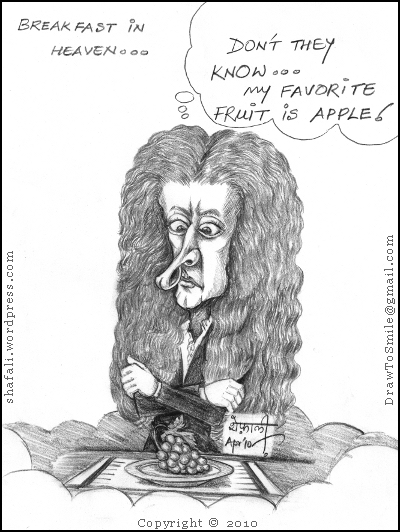
 Read the footpring at our greatest physicist (not Hawkings, not Kepler): Sir Isaac Newton:During Newton's lifetime, two calendars were in use in Europe: the Julian or 'Old Style' in Britain and parts of northern Europe (Protestant) and eastern Europe, and the Gregorian or 'New Style', in use in Roman Catholic Europe and elsewhere. At Newton's birth, Gregorian dates were ten days ahead of Julian dates: thus Newton was born on Christmas Day, 25 December 1642 by the Julian calendar, but on 4 January 1643 by the Gregorian. By the time he died, the difference between the calendars had increased to eleven days. Moreover, prior to the adoption of the Gregorian calendar in the UK in 1752, the English new year began (for legal and some other civil purposes) on 25 March (Lady day), i.e. the feast of the Annunciation: sometimes called 'Annunciation Style') rather than on 1 January (sometimes called 'Circumcision Style'). Unless otherwise noted, the remainder of the dates in this article follow the Julian Calendar.

Item 4. when the October revolution took place in November.
In Russia, the terms "Old Style" and "New Style" have the same significance as elsewhere. The start of the year was moved to 1 January in 1700, but the Gregorian calendar was introduced there much later, on 14 February 1918 (Gregorian calendar) in Soviet Russia (which became the Soviet Union in 1922). Hence the October Revolution of 1917 is so called, despite having started on 7 November under the Gregorian calendar (25 October [Julian calendar]). Articles about the October Revolution which mention this date difference tend to do a full conversion to the dates from Julian to the Gregorian calendar.
Further reading: What about Turkey?
In the Ottoman Empire they used the Islamic (Lunar) calendar, which count its beginning from 622.07.16 (JD# 1948440) the so-called Hijra era. Later, on 1789.03.01 JU, the Julian (solar) calendar was introduced as a fiscal year (also used by the postal services), but the Islamic calendar remained as a religious calendar and was still used in the legal sphere and especially for all documents issued by the sultan. They did not count this fiscal year from 1 AD but from the Hijra era. A special problem was the religious lunar year was shorter than the Julian solar year. So to bring the years into line again, the fiscal years numbers 1221 and 1255 were skipped.
    Of course the discrepancy continued but was disregarded. For the fiscal year in 1917 the Gregorian Calendar was introduced and the beginning of the year was moved to 1917.03.01, leaving out the days 16-28 Shubat (February) 1332. The final adjustment was made, when they changed the beginning of the year to 1918.01.01. So the Turkish fiscal year 1332 had only 352 days and the fiscal year 1333 only 306. The use of the religious Islamic calendar of course continued until the Republic abolished it on 1926.01.01.
    The Ottoman post used the fiscal dates from the beginning in 1840. 


PD: From Lunisolar calendar to Solar discipline.
In Eastern Asia countries, the old style calendars were similar but not all the same. The Arabic numerals may be used for both calendar dates in modern Japanese and Korean languages, but not Chinese.

JapanJapan started using the Gregorian calendar on 1 January 1873,[21] locally known as "the first day of the first month of Meiji 6". The preceding day, 31 December 1872, was "the second day of the twelfth month of Meiji 5".

KoreaKorea started using the Gregorian calendar on 1 January 1896, which was the 17th day of the 11th lunar month in not only Korea but also in China, which still used the lunisolar calendar.

Chinathe Kuomintang-led Republic of China government adopted the Gregorian calendar on 1 January 1912. It kept the lunisolar Chinese calendar as well, especially for the timing of traditional holidays. When the Communists took over China in the late 1940s they kept this two-calendar system. 

Monday, January 9, 2012

Lawful Mac Bethad vs usurper Macbeth from the northern shores

 see wordlets here
Lady MacBeth is most famous for being the wife and queen of Mac Bethad mac Findlaích (Macbeth). The dates of her life are not certainly known.
MACBETH, king of Scotland (c1005 - d. 1058), was the son of Findlaech, mormaer or hereditary ruler of Moreb (Moray and Ross), who had been murdered by his nephews in 1020. In 1040 he became king.

For a novel on it: see here.  For a Graphic novel form -see Heinle catalogue.
BBC sources: Macbeth was a king of the Scots whose rule was marked by efficient government and the promotion of Christianity, but who is best known as the murderer and usurper in William Shakespeare's tragedy. 

Norman Davies says in the Isles (p. 256):
Macbeth was overthrown by an ancestor of the Stewarts. His reputation had to be assasinated, hw who was not assasin.John of Bordon made him an usurper in the XIV c.; later Andrew of Wyntoun made him the killer of Duncan. In the Renaissance, Boede created our Lady Macbeth persona in Latin, and the historians Buchanan and Hollinshed followed suit. The Bard only add words, full of poetry:

She should have died hereafter;There would have been time for such a word.Tomorrow, and tomorrow, and tomorrowCreeps in this petty pace from day to dayTo the last syllable of recorded time;And all our yesterdays have lighted foolsThe way to dusty death. Out, out, brief candle!Life's but a walking shadow, a poor playerThat struts and frets his hour upon the stage,And then is heard no more. It is a taleTold by an idiot, full of sound and fury,Signifying nothing.  
  • Macbeth , Scene V
Shakespeare's Macbeth bears little resemblance to the real 11th century Scottish king. For 14 years, Macbeth seems to have ruled equably, also for women and children, imposing law and order and encouraging Christianity. In 1050, he is known to have travelled to Rome for a papal jubilee. He was also a brave leader and made successful forays over the border into Northumbria, England.

He probably became mormaer on the death of Malcolm, one of the murderers, in 1029, and he may have been one of the chiefs (the Maclbaethe of the Saxon Chronicle) who submitted to Canute in 1031. Marianus records that in 1040 Duncan, the grandson and successor of Malcolm king of Scotland, was slain by Macbeth. Duncan had shortly before suffered a severe defeat at the hands of Thorfinn, the Norwegian earl of Orkney and Caithness, and it was perhaps this event which tempted Macbeth to seize the throne. As far as is known he had no claim to the throne except through his wife Gruach, who appears to have been a member of the royal family. Macbeth was apparently a generous benefactor to the Church, and is said to have made a pilgrimage to Rome in 1050. According to S. Berchan his reign was a time of prosperity for Scotland. The records of the period, however, are extremely meagre, and much obscurity prevails, especially as to his relations with the powerful earl Thorfinn. More than one attempt was made by members of the Scottish royal family to recover the throne; in 1045 by Crinan, the lay abbot of Dunkeld, the son-in-law of Malcolm II., and in 1054 by Duncan's son Malcolm with the assistance of Siward the powerful earl of Northumbria, himself a connexion of the ousted dynasty. Three years later in 1057 Malcolm and Siward again invaded Scotland and the campaign ended with the defeat and death of Macbeth, who was slain at Lumphanan. Macbeth is, of course, chiefly famous as the central figure of Shakespeare's great tragedy.

Monday, November 15, 2010

What is in a name? The naughty noughties

What is in a name?

Juliet:
"What's in a name? That which we call a rose
By any other name would smell as sweet."

Romeo and Juliet (II, ii, 1-2)
Romeo Montague and Juliet Capulet meet and fall in love in Shakespeare's lyrical tale of "star-cross'd" lovers. They are doomed from the start as members of two warring families. Here Juliet tells Romeo that a name is an artificial and meaningless convention, and that she loves the person who is called "Montague", not the Montague name and not the Montague family.


The naughty Noughties  (by Ian McIlwraith)

December 18, 2009
Outstanding innovation and corporate infamy vied for prominence in the decade the millennium bug failed to kill, writes Ian McIlwraith.
Perhaps it is fitting that the first decade of this new millennium began and ended with the free enterprise system unsure whether it was facing the beginning of the end, or a hiccup on the way to new prosperity. No one was quite sure where technology would take us. Now we are not so sure the technology will take us where we need to go, in terms of limiting the damage inflicted by the human race's planetary presence.

Names for the decade from wikipedia

Unlike previous decades, the 2000s have not yet attained a universally accepted name in the English-speaking world.[8][9][10]
Orthographically, the decade can be written as the "2000s" or the "'00s". Some people read "2000s" as "two-thousands", and thus simply refer to the decade as the "two-thousands". Some read it as the "00s" (pronounced "Ohs", "Double Ohs" or "Oos"). The single years within the decade are usually referred to as starting with an "Oh", such as "Oh-Seven". On January 1, 2000, the BBC listed "the noughties" (derived from "nought" [11] a word used for zero in many English-speaking countries), as a potential moniker for the new decade.[12] Others have advocated the term "the aughts", which was widely used at the beginning of the previous century for its first decade.[13][14] By August 2010, "the noughties" seemed to have been the more established of the two terms, resulting in some 225,000 Google hits,[15] while "the aughts" resulted in some 80,000 hits.[16]
The American Dialect Society holds a lighthearted annual poll for word of the year and related subcategories; for 2009, the winner of "least likely to succeed" was "Any name of the decade 2001–2010, such as: Naughties, Aughties, Oughties, etc."[17]