Search This Blog

Showing posts with label iPAD. Show all posts

Thursday, October 13, 2011

Aakash tablets at $35 in India


India has launched what it says is the world's cheapest touch-screen tablet computer, priced at just $35 (£23).  (as read in the BBC)
Also from Indian news   or peni.io
Costing a fraction of Apple's iPad, the subsidised Aakash is aimed at students. It supports web browsing and video conferencing, has a three-hour battery life and two USB ports, but questions remain over how it will perform. Officials hope the computer will give digital access to students in small towns and villages across India, which lags behind its rivals in connectivity.
Indian Human Resource Development (HRD) Minister Kapil Sibal (R) and Junior HRD Minister D. Purandeswari (L) pose with Aakash tablet after its launch in Delhi on October 5, 2011.
At the launch in the Indian capital, Delhi, Human Resource Development Minister Kapil Sibal handed out 500 Aakash (meaning sky) tablets to students who will test them. He said the government planned to buy 100,000 of the tablets. It hopes to distribute 10 million of the devices to students over the next few years.
"The rich have access to the digital world, the poor and ordinary have been excluded. Aakash will end that digital divide," Mr Sibal said.
The company says it will also offer a commercial version of the tablet, called UbiSlate. It is expected to hit the shelves later this year, retailing for about $60. The Aakash has been developed by UK-based company DataWind and Indian Institute of Technology (Rajasthan). It is due to be assembled in India, at DataWind's new production centre in the southern city of Hyderabad. "Our goal was to break the price barrier for computing and internet access," DataWind CEO Suneet Singh Tuli said. "We've created a product that will finally bring affordable computing and internet access to the masses."
Usability questions
Mr Sibal says the device will enhance learning in India. Experts say it does have the potential to make a huge difference to the country's education, particularly in rural areas where schools and students do not have access to libraries and up-to-date information.

Friday, September 23, 2011

culturonomics: Google Labs' NGram Viewer

This is it: culturonomics! 
Culturonomics an provide insights about fields as diverse as lexicography, the evolution of grammar, collective memory, the adoption of technology, the pursuit of fame, censorship, and historical epidemiology. "Culturomics" extends the boundaries of rigorous quantitative inquiry to a wide array of new phenomena spanning the social sciences and the humanities.
Have you played with Google Labs' NGram Viewer? It's an addicting tool that lets you search for words and ideas in a database of 5 million books from across centuries. Erez Lieberman Aiden and Jean-Baptiste Michel show us how it works, and a few of the surprising things we can learn from 500 billion words

the index of frustration:  argh


The Ngram Viewer allows users to see how often a word or phrase has been used in books across history. Google Books contains millions of books dating back to the year 1400; "over 10% of all books ever published," according to the Ngram Viewer announcement.

Ngram Viewer works rather simply. After you enter a word or phrase (up to five words), the tool displays a graph charting how frequently your term has appeared in books over that half a millennium. By default, the Ngram Viewer taps into books written in English. But you can change that to a different "corpus" or category of books, such as American English, British English, English Fiction, Chinese, French, German, Russian, or Spanish.


You can vary the years tracked, all the way from 1500 to 2008 or anywhere in between. Providing a wide range of years gives you more of an overview, while narrowing the years lets the tool graph a word's usage in a more granular fashion year by year.
Have fun!

para leer:  500 aƱos de palabras

to follow: daggle.com/
Read in the NewYorker The world of publishing houses in the era of Google, Kindle and Apple

Sunday, April 11, 2010

2010, the year of the e-readers: iPAD, kindle, nook, etcrs

If 2009 was the worst of times for most of the information industry, it was a decidedly good year for manufacturers of digital e-reading alternatives.


Carlton says it will be years before we know. "Right now I'd say we're in the last movement of the final symphony of print. We haven't even heard the first real notes of the first symphony for digital reading." He adds, "It's easy to look at the current era as a period of doom and gloom, but publishing's not dead. It's just changing form."


Comparative e-readers beyond the cloud

HEADLINES:
ipad lives a life to the full
Ipads on the 300.000 sold the first day, will make the million by April 21st!
3.3 Million Kindles Shipped In 2009.
Try Kindle for a Month. Discover for yourself why millions of readers love Kindle.
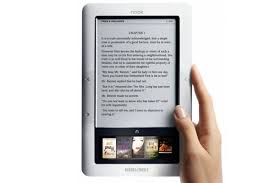
Barnes and Noble NOOK ebook reader

2010 forecast for Kindle sales to 3.45 million.
e-books figures
Kindle offers 400.000 titles
iPAD offers 60.000 titles


Monday, April 5, 2010

Tablet wars: iPAD vs kindle.

Video1.


Video2.


Everyone was expecting the release of the Ipad, but does it have enough to compete with most netbooks or even the Amazon Kindle?

Three Reasons Why the iPad WON’T Kill Amazon’s Kindle
By BRAD STONE
It may be suddenly fashionable to say so, but the new Apple iPad tablet won’t kill the Kindle from Amazon. Here are three reasons. My colleague, Nick Bilton, has weighed in on this topic from the opposite side. Please add your thoughts in the comments section below.

The Kindle is for book lovers, and the iPad is not.

Sure, the Kindle’s potential market may have shrunk today, since the two-books-a-year folks will now choose the more versatile iPad.

But the Kindle (and other devices with E Ink screens) will continue to be the best device for lovers of long-form reading, period. (And they do love it; check the Kindle forums for the passion of Kindle owners.) The iPad’s backlit screen, higher price and more limited battery all make it a poorer choice for curling up with a novel.

Also, there’s the distraction factor. When you read a book, you just don’t want to have e-mail, Twitter and the ESPN Web site beckoning from the browser. The absence of those services on the Kindle — sure, it’s also a flaw — actually make it better for focused leisure reading.

comparison: see user's viewpoint