Search This Blog

Monday, March 9, 2020

wsh_501 -hard to be female STATS


https://www.nationalgeographic.com/magazine/2017/01/gender-girl-statistics-global/ 


Cultural note. 
Explain Mao’s Quotation.

"Women hold up half the sky." - Mao Zedong


http://www.nytimes.com/2012/03/07/world/asia/holding-up-half-the-sky.html?_r=0 


TASK. Find how close you are to world figures


Hard to be female {stats}


1 POLITICS

Women have led their countries

......% countries worldwide (2017)
......                                 (2006)

......Parlamentary members (MP) (2017)
......                                          (1990)


2. EDUCATION

...... % GIRLS attend secondary school
...... %  BOYS  attend secondary school

and in west Africa:
.....  % GIRLS attend secondary school


3. nth case of death due to SUICIDE
Girls aged 11-18
1rst -                  
2nd -                   
.........                  
 -20th                    


4. TEEN PREGNANCY
......  % of all global births


5. GLASS CEILING with a woman on TOP


  • ...... % world companies                                 
  • ......% 500 TOP companies on earnings --2016
  • ......% 500 TOP companies - 1995                  


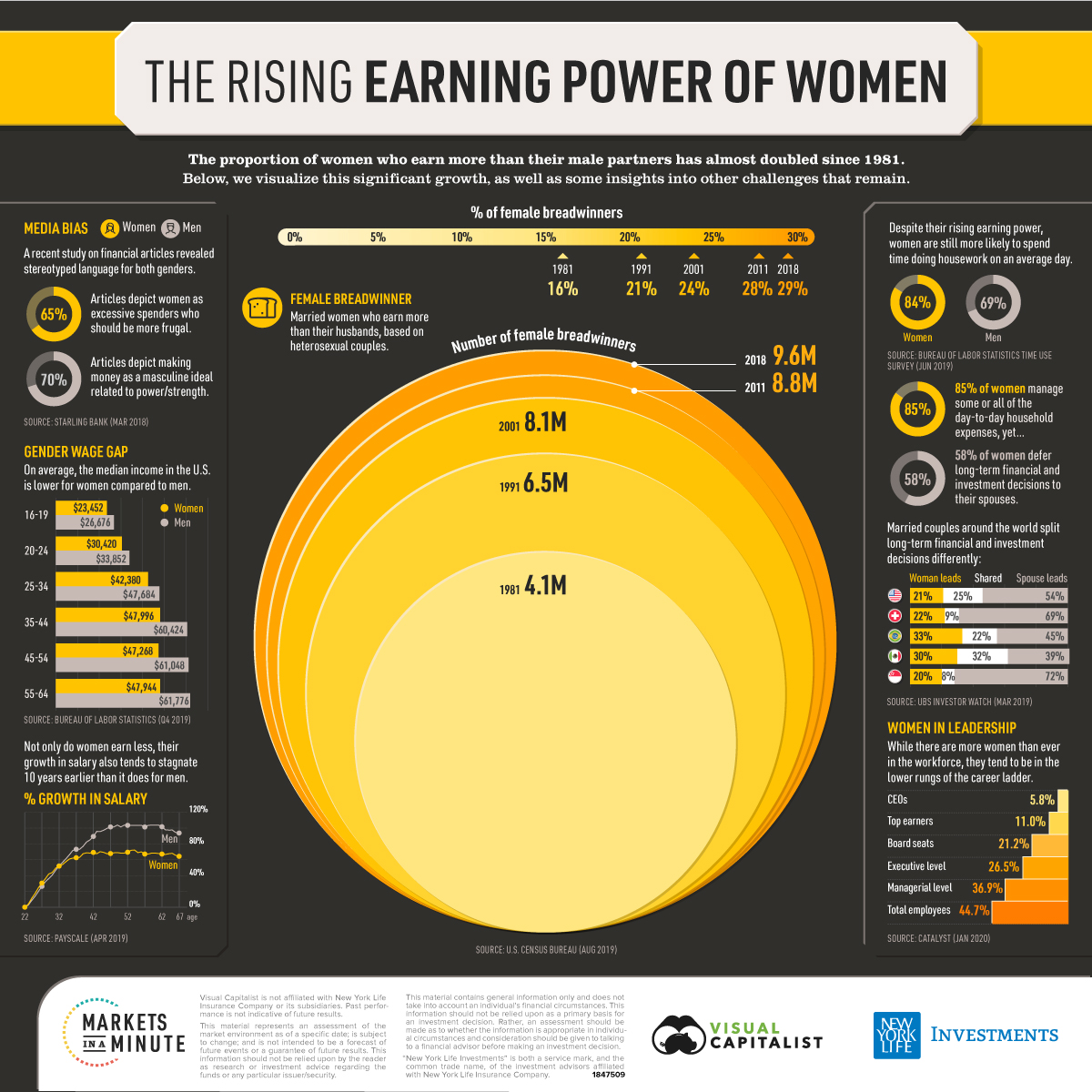
 Update  - US Women in 2019


  US Female Breadwinners and  Barriers

link               

room for improvement! (rate 0.5% yearly)


{()} 


(.)


{ ¡ } 

Monday, March 2, 2020

Where the sun rises - sunrises on the east


challenge   
South Korea vs Japan

There are many things to be experienced in South Korea that you'll never experienced in Japan.

Use your notebook to copy the answers.  

write  SK or J on the blanks below 
#1.........   ...........
#2
.........   ...........
#3
.........   ...........
#4
.........   ...........
#5
.........   ...........


 #1  .........   ...........
  • As some people mentioned, I’ve seen brawls break out in ........, which I’ve never seen happen in ..... (I’m sure it happens, but it’s certainly less frequent).


#2   ............   ............
When you order food in ............  you get unlimited side dishes, which is very nice. In .........., you pay for even the smallest thing. 
 

#3   ............   .............
  • I’ve also seen many people reading books or the newspaper in .......... trains, whereas ..........  are pretty much always on their smartphones. 
  • I’ve also seen many people reading books or the newspaper in .......... trains, whereas ..........  are pretty much always on their smartphones.


#4  ..............   ...............
  • Smoking indoors in ...........   is still allowed. The odd thing is that there is often no barrier between smoking and non-smoking sections. _From a country that prides itself on its sensitivity and respectfulness towards others, this is shocking and a rather large cultural contradiction_ . 
  • I’ve never seen people smoke indoors in ..........


#5 ..............   ...............
  • As of late, I’ve been noticing that many people in .........  put their feet on chairs and couches in public places. I see this on an almost daily basis in downtown capital. 
  • It's something I’ve never seen in ..........


To get your score, read the text ONCE 
and check your answers  with your partner


                     KEY  with  text              

#1As some people mentioned, I’ve seen brawls break out in Korea, which I’ve never seen happen in Japan (I’m sure it happens, but it’s certainly less frequent).

#2When you order food in Korea you get unlimited side dishes, which is very nice. In Japan, you pay for even the smallest thing.  

#3I’ve also seen many people reading books or the newspaper in Japanese trains, whereas Koreans are pretty much always on their smartphones 

#4Smoking indoors in Japan is still allowed. The odd thing is that there is often no barrier between smoking and non-smoking sections. From a country that prides itself on its sensitivity and respectfulness towards others, this is shocking and a rather large cultural contradiction. I’ve never seen people smoke indoors in Korea. 

#5As of late, I’ve been noticing that many people in Korea put their feet on chairs and couches in public places - something I’ve never seen in Japan. I see this on an almost daily basis in downtown capital.


       2 -shortcut to       KEY        

*KEY    challenge  * 
South Korea  vs   Japan.

 chech  your SK or J  below, please.

  • #1  KOREA   JAPAN
  • #2  KOREA   JAPAN
  • #3  JAPAN   KOREA
  • #4  JAPAN   KOREA
  • #5  KOREA   JAPAN

two free ends - too friends : infodemics and mind bias


friend or foe?
fiend or friend?


part  1-  Dystopian outcomnes - virus  and infodemics


1.  Did u know:

On February 10, 2018, Fortune reported that: 
  • influenza in the United States was killing up to 4,000 Americans a week,  
  • likely to far outstrip the rate of deaths in the 2009–2010 season.   
It toted up  throughout the 2017-2018 flu season to: 
  •  an estimated 959,000 hospitalizations and 61,099 deaths.

.2.  emergent outbreaks 
Looking at contemporary outbreaks since the mid-20th century, Dr. Peter Daszak, a disease ecologist and the president of Eco Health Alliance , and colleagues found that: 
  • the rate of emergent diseases caused by pathogens new to humans has increased significantly with time, even when controlling for progress in diagnosis techniques and surveillance, which could make it only seem like diseases were on the rise. 
  • More than 300 new infectious diseases emerged between 1940 and 2004, the study found.

.3.    How to fight hysterics infodemia   
“We’re not just fighting an epidemic; we’re fighting an infodemic”, 
  WHO Director-General Tedros A. Ghebreyesus          
at the Munich Security Conference on Feb 15 2020.        


https://www.thelancet.com/journals/lancet/article/PIIS0140-6736(20)30461-X/fulltext


part 2 - People and migrants : mind bias and half-truths


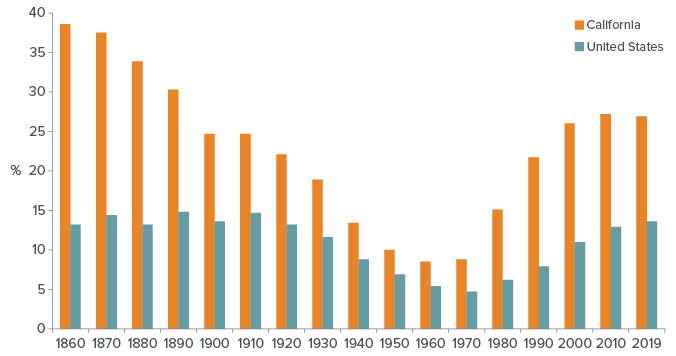
  • California has more immigrants than any other state. link

California is home to almost 11 million immigrants—about a quarter of the foreign-born population nationwide in the USA. 

  • In 2017, the most current year of data, 27% of California’s population was foreign born, more than double the percentage in the rest of the country.
  • most (56%) of those arriving between 2010 and 2017 came from Asia; only 29% came from Latin America. 
  • Californians have positive views of immigrants.
Nearly three in four Californians (72%) believe immigrants are a benefit to the state because of their hard work and job skills, compared to nearly one in four (only 23%) who believe they are a burden. 


Multitudes - its alleged father begets a child

From our tradition, the starting point may be the timeline of God promise to Abraham (born in 1813 BCE)
     BE FRUITFUL  and  MULTIPLY.
  • ... and patriarch of the 3 religions (Jews, Christians, Muslims).


he was born in Cutha, in Mesopotamia,  Ever-haNahar in Hebrew ("Beyond the River"). 
Abraham was a short time in his journey from Ur of the Chaldees until when he left Haran at age 75 after displeasing the king Nimrod. Nimrod had a strange dream and once again his counsellors interpreted it to mean that as long as Abraham lived, his kingdom would be in danger. 
Waiting, waiting, Abraham spent a number of years in Egypt to escape the famine where he accumulated wealth. 


These years resulted in  taking an Egyptian handmaid who would mother Ishmael...   (thus, the lineage of Arabs :  Ismaelites)


part 1   - sheer numbers


The UN’s 2012 Revision of the world population prospects report suggested if we make rapid reductions in family size, then it may still be possible to constrain the global population to 8 billion by 2045.
No projections are set in stone – all are contingent on what extent fertility rates will sway over the next century.


part 2 - People and continents : mindful  truths
Most people always lived in Asia:
  •  Today it is 60%  
  • two hundred years ago it was 68%.


part  3-   the visual facts  

The population of every country is a very important asset. However, as they say, too much of a thing is harmful, and similarly, if a country is prone to over-population, a great deal of problems result from that.   article
  •  Pakistan is in a similar predicament. With the exponential explosion in population in the recent years, the world is suffering a great deal.
             

OUR world.
                   See the cartogram here


part  4-   the educated guess forecast  - give or take ONE million 

Estimates between the years 2020 and 2040 -link


                                        2020      --     2030    --     2040      (in millions) 
Mozambique    28         37         47
Algeria*             43         48         52 
Ethiopia          115       150       188
Nigeria (*)         204       280       314

Iran *                  86         90         94
Vietnam            98        105       109
Philipines        109       126       141
Pakistan*          214      243       270
Indonesia*        279      296       313 

            * Islamic countries 


        Annex:  Should the west go to the shrink?

source:  link

Wednesday, February 26, 2020

Pinker- The world continues to improve in just about every way.

STEVEN PINKER
Professor in the Department of Psychology 
at Harvard University. He conducts research on language and cognition, writes for publications such as the New York Times, Time and The Atlantic, and is the author of ten books

It may have seemed like the world fell apart in 2016. Steven Pinker is here to tell you it didn’t. -link


“The world continues to improve in just about every way.”


 Dec 22, 2016,

  • Gun deaths compared to deaths from AIDS, illegal drug overdoses, war, and terrorism.J

  • Julia Belluz - So 2016 has been an incredibly stressful and violent year from a news standpoint for many people. Do you have any advice for putting it in context?

Steven Pinker

Look at history and data, not headlines. The world continues to improve in just about every way. Extreme poverty, child mortality, illiteracy, and global inequality are at historic lows; vaccinations, basic education, including girls, and democracy are at all-time highs.
War deaths have risen since 2011 because of the Syrian civil war, but are a fraction of the levels of the 1950s through the early 1990s, when megadeath wars and genocides raged all over the world. Colombia’s peace deal marks the end of the last war in the Western Hemisphere, and the last remnant of the Cold War. Homicide rates in the world are falling, and the rate in United States is lower than at any time between 1966 and 2009. Outside of war zones, terrorist deaths are far lower than they were in the heyday of the Weathermen, IRA, and Red Brigades.

  • Julia Belluz - One big thing that’s changed since we last spoke is the election of Donald Trump. We now have a president coming in who has said he wouldn’t defend America’s allies in NATO if we were attacked by a foreign power and who has strong links to Russia. His election came after Brexit. These really seem like threats to the global institutions that have likely helped sustain peace in recent years.

Steven Pinker

Several awful things happened in the world’s democracies in 2016, and the election of a mercurial and ignorant president injects a troubling degree of uncertainty into international relations.
But it’s vital to keep cool and identify specific dangers rather than being overcome by a vague apocalyptic gloom. Brexit may be regrettable, but it’s not going to lead to a war between the UK and Germany or France. A closeness to Russia is troubling in many ways, but it may reduce, rather than increase, the chance of a major war (so suggested the eminent peace researcher Nils Petter Gleditsch).
It’s easy to reach for historical analogies and speculate about Russian or Chinese imperial expansion, but as my colleague Graham Allison points out, you must consider the differences between current and past cases, not just similarities, and the differences are substantial.

  • Julia Belluz - One of the other alarming aspects of Trump’s rise to power is that he won, in part, by inciting racist tendencies. We know minority groups are afraid that racist people are going to be empowered under Trump, and there's some discussion that there's already been an uptick in racial violence here. Are you concerned about gains in racial equality in the US unraveling?

Steven Pinker

Beware of headlines. And beware of statistics from advocacy organizations whose funding stream depends on stoking fear and outrage — I’ve learned that they can never be taken at face value.
There are reasons to doubt that we’re seeing a big post-Trump rise in hate crimes. Rates of hate crime tend to track rates of overall crime, and there was an uptick of both in 2015, before Trumpism.
Indeed, Trump capitalized on the crime uptick to sow panic about the state of the nation, and progressives foolishly ceded the issue to him. Moment-by-moment analyses of Google searches by the data scientist Seth Stephens-Davidowitz show that Islamophobia strongly tracks incidents of terrorism with Muslim perpetrators. So hate crimes will probably depend more on overall crime rates and — in the case of Islamophobic hate crimes — on terrorist attacks than on a general atmosphere created by Trump.
More generally, the worldwide, decades-long current toward racial tolerance is too strong to be undone by one man. Public opinion polls in almost every country show steady declines in racial and religious prejudice­ — and more importantly for the future, that younger cohorts are less prejudiced than older ones. As my own cohort of baby boomers (who helped elect Trump) dies off and is replaced by millennials (who rejected him in droves), the world will become more tolerant.
It’s not just that people are increasingly disagreeing with intolerant statements when asked by pollsters, which could be driven by a taboo against explicit racism. Stephens-Davidowitz has shown that Google searches for racist jokes and organizations are sensitive indicators of private racism. They have declined steadily over the past dozen years, and they are more popular in older than younger cohorts.

  • Julia Belluz -Are you optimistic about the future?

Steven Pinker

I’ve never been “optimistic” in the sense of just seeing the glass as half-full — only in the sense of looking at trend lines rather than headlines. It’s irrational both to ignore good developments and to put a happy face on bad ones.
As it happens, most global, long-term trends have been positive. As for the future, I like the distinction drawn by the economist Paul Romer between complacent optimism, the feeling of a child waiting for presents, and conditional optimism, the feeling of a child who wants a treehouse and realizes that if he gets some wood and nails and persuades other kids to help him, he can build one. I am not complacently optimistic about the future; I am conditionally optimistic.
Read more with Pinker here.

Tuesday, February 25, 2020

Lend me your ears, the Snowden of the world:

Friends, Romans, countrymen, lend me your ears 
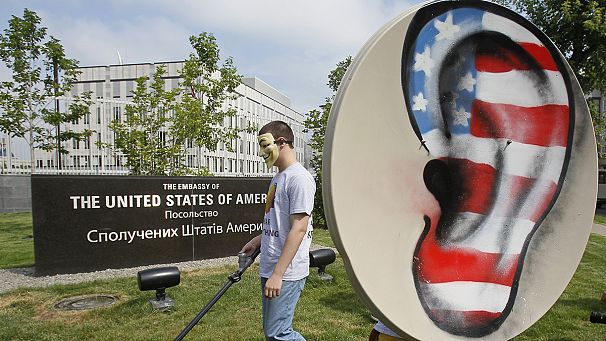
This is the first line of a famous and often-quoted speech

 by Mark Antony in the play Julius Caesar, by William Shakespeare.

What do the CIA, FBI and NSA all have in common? 
Well, they all use TLAs — three-letter acronyms — to refer to themselves.

or in other words, ... 
'us' against 'them':
  • the FBI was created in 1908, and before that
  • the CIA was established in 1947
  • The NSA was unofficially redisgned in  1952
the National Security Agency's existence wasn't even officially disclosed until the 1970s. Until then, Washington insiders joked that the initials stood for "No Such Agency."
Unfortunately for such a secretive agency, the NSA made big headlines this month after a leaker revealed that it collected records of domestic telephone calls between millions of Americans who'd never been accused of any wrongdoing. 


US interest in SPAIN.

Breaking telegraphic codes was quite succesful.
At its best, the confessions of Herbert O Bradley at his office in the Balck Chamber. The office was a branch of the Military Intelligence 
Division, War Department.

All employees were relegated to civilian status. The mission :
"We were to read the secret code and cipher diplomatic telegrams of for-
eign governments — by such means as we could. If we were caught, it
would be just too bad !" 
 According to Yardley's own reminiscences : (1976)

We solved over forty-five thousand cryptograms from 1917 to 1929, and at one time or another we broke the codes of Argentine, Brazil, Chile, China, Costa Rica, Cuba, England, France, Germany, Japan, Liberia, Mexico, Nicaragua, Panama, Peru, Russia, San Salvador, Santo Domingo, Soviet Union and Spain. We also made preliminary analyses of the codes of many other governments. This we did because Ave never knew at what moment a crisis would arise which would require quick solution of a particular government's diplomatic telegrams.


Recent whistleblowers:
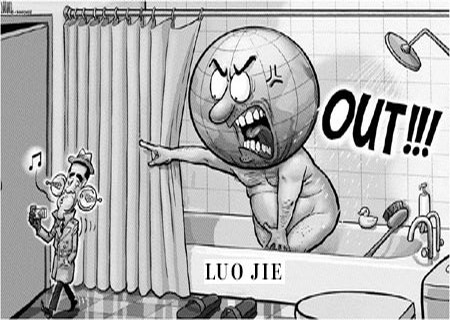
June  2012:  
Julian Assange, head of the Wikileaks website, was offered refuge in the London embassy of Ecuador. 
June 2013: 
Edward Snowden sought the relative safety of Hong Kong in the wake of his revelations of the National Security Agency's (NSA) snooping operations in collaboration with internet giants like Google. 
Meanwhile Private Manning is on trial for passing confidential US State Department cables to Wikileaks.


Dissidence. It used to be that the United States stood as the safe haven of the persecuted, open to those yearning to breathe free, and London the place of refuge of all kinds of people who needed a place to be - from disgraced dictators like Metternich to revolutionary exiles like Karl Marx. 


Lack in privacy. Encrypted messages, fancy technology, spies use them all to communicate, but sometimes the best way to hide is in plain sight. Right now, broadcasting across the airwaves around the world, are automated, anonymous shortwave AM radio stations that most governments won't acknowledge even exist, much less explain.

Who said this?


 "Even if you're not doing anything wrong,
   you're being watched and recorded".
Misquoting Picasso:
“The Art of SPYING  is the lie that enables us to realize the truth.”

The following are TWELVE from the 27 quotes from Edward Snowden about U.S. government spying that should send a chill up your spine...
#1 "The majority of people in developed countries spend at least some time interacting with the Internet, and Governments are abusing that necessity in secret to extend their powers beyond what is necessary and appropriate."
#2 "...I believe that at this point in history, the greatest danger to our freedom and way of life comes from the reasonable fear of omniscient State powers kept in check by nothing more than policy documents."
#3 "The government has granted itself power it is not entitled to. There is no public oversight. The result is people like myself have the latitude to go further than they are allowed to."

#5 "The NSA has built an infrastructure that allows it to intercept almost everything."
#7 "Any analyst at any time can target anyone. Any selector, anywhere... I, sitting at my desk, certainly had the authorities to wiretap anyone, from you or your accountant, to a federal judge, to even the President..."

#12 "Allowing the U.S. government to intimidate its people with threats of retaliation for revealing wrongdoing is contrary to the public interest."
#15 "I don't want to live in a world where there's no privacy, and therefore no room for intellectual exploration and creativity."
#16 "I have no intention of hiding who I am because I know I have done nothing wrong."
#17 "I had been looking for leaders, but I realized that leadership is about being the first to act."
#18 "There are more important things than money. If I were motivated by money, I could have sold these documents to any number of countries and gotten very rich."

#21 "You can't come up against the world's most powerful intelligence agencies and not accept the risk."
#22 "I know the media likes to personalize political debates, and I know the government will demonize me."

#24 "I understand that I will be made to suffer for my actions, and that the return of this information to the public marks my end."
#25 "There’s no saving me."
The top-secret PRISM program allows the U.S. intelligence community to gain access from nine Internet companies to a wide range of digital information, including e-mails and stored data, on foreign targets operating outside the United States. The program is court-approved but does not require individual warrants. Instead, it operates under a broader authorization from federal judges who oversee the use of the Foreign Intelligence Surveillance Act (FISA). 


Some documents describing the program were first released by The Washington Post on June 6. The newly released documents below give additional details about how the program operates, including the levels of review and supervisory control at the NSA and FBI. The documents also show how the program interacts with the Internet companies. These slides, annotated by The Post, represent a selection from the overall document, and certain portions are redacted

Clues on info, data and understanding (past, ourselves)


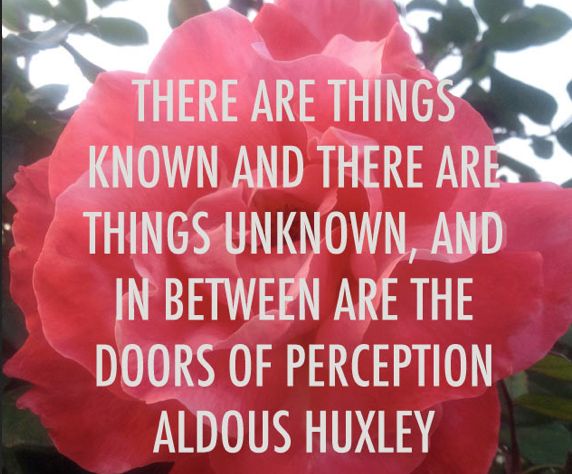
Choose your personal quote A-B-C:


B      


Five minutes 
of understanding 
BUT ...

Informed readers 
will always perceive that
 they live in
 dangerous times.


TWO INTERVIEWS 

with Steven Pinker 


ONE - 

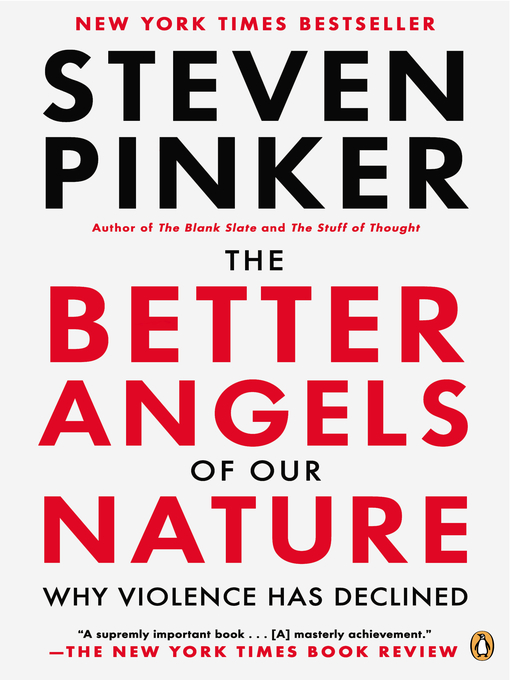
  The Better Angels of our Nature
      - 2011 -read his  Q & A


interviewer (4:50 minuts):  
  • Definition of violence
  • use of numbers:  absolute vs relative 
  • ut futility of war
  • any sense of progress?
We’ve all had the experience of reading about a bloody war or shocking crime and asking, “What is the world coming to?” But we seldom ask, “How bad was the world in the past?” In this startling new book, the bestselling cognitive scientist Steven Pinker shows how the world of the past was! With the help of more than a hundred graphs and maps, Pinker presents some astonishing numbers.

  TWO  - 


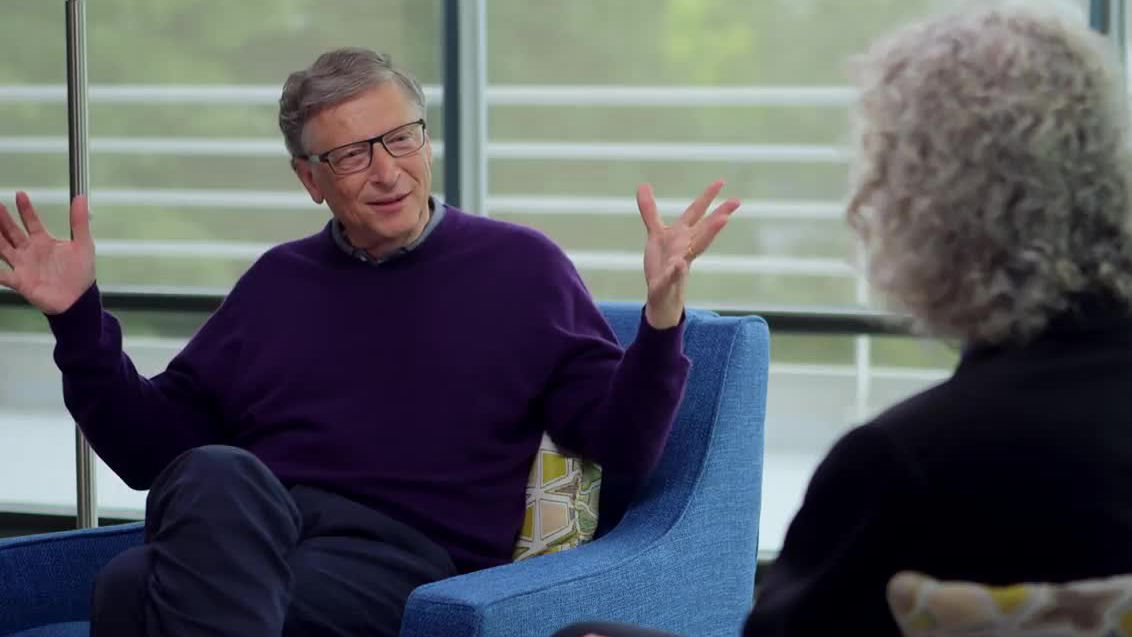
                 With   Bill Gates 

.-----  link

 GATES comments on the book 
.... link


  • For years, I’ve been saying Steven Pinker’s The Better Angels of Our Nature was the best book I’d read in a decade. If I could recommend just one book for anyone to pick up, that was it. Pinker uses meticulous research to argue that we are living in the most peaceful time in human history. I’d never seen such a clear explanation of progress.
I’m going to stop talking up Better Angels so much, because Pinker has managed to top himself.  
His new book, Enlightenment Now,  (2018) is even better.  link


              ADDENDA

How Not to Be Ignorant About the World


Hans Rosling's 200 Countries, 200 Years, 
 - The Joy of Stats - BBC Four


Hans Rosling's famous lectures combine enormous quantities of public data with a sport's commentator's style to reveal the story of the world's past, present and future development. Now he explores stats in a way he has never done before - using augmented reality animation.
 
In this spectacular section of 'The Joy of Stats' he tells the story of the world in 200 countries over 200 years using 120,000 numbers - in just four minutes. Plotting life expectancy against income for every country since 1810, Hans shows how the world we live in is radically different from the world most of us imagine.


Rounding off: WEB OF STORIES -video and script
Web of Stories began as an archive of life stories told by some of the great scientists of our time. As the number of stories grew, it became obvious that some were on related topics and a web was slowly being created of connected stories. After a while we also invited famous people outside the field of science to tell their life stories.Our aim has been to provide an archive of stories from people who have influenced our world. Imagine, in a hundred years' time, future generations being able to watch people like Stan Lee, Doris Lessing or James Watson telling stories about their lives and their achievements.

Murray Gell-Mann Scientist


http://www.webofstories.com/themes


http://www.webofstories.com/storytellershttp://www.webofstories.com/storytellers