Search This Blog

Monday, August 31, 2020

semantics and change of meaning -etyms beware

 before  BABEL -macrofamilies

 based on progress in theoretical linguistics. In order to push the research frontier, we linguists need to identify the basic building blocks of language, its “atoms”, in Mark Baker’s memorable metaphor, and examine carefully how they play out in linguistic evolution. 


SEE TWO of them: MAN,   NOT


part A    OUR FIRST  WORD : man (and woman)

First consider its history merely within English over the past millennium and a half. Today, it is pronounced /mæn/ and means one of two things: either ‘an adult male person’ or ‘a person of either gender’. 

The latter meaning, however, is considered sexist by many, and is thus falling out of use. Words such as chairman, fisherman, and policeman are thus being replaced by such gender-neutral forms as chairperson, fisher, and police officer, just as  mankind is yielding to humankind. But as the gender-neutral meaning of man is still evident in manslaughter and in the phrase no man’s land. 

As it turns out, the meaning of ‘an adult male’ is relatively new. In Old English (roughly, prior to the Norman invasion of 1066), this word—pronounced then with a vowel articulated further back in the mouth—did not mean a ‘male person’ but had only the gender-neutral sense of ‘a human being, person (male or female)’. 

The word acquired the sense of ‘adult male’ in Middle English. 


Prior to that time, an adult male was a wer, as distinguished from a wif, which then meant ‘woman (of any marital status)’, as it still does in idiomatic expressions like old wives’ tale and in the compound midwife, originally meaning ‘with woman (during labor)’. The word wer began to disappear in the late 13the century and was eventually replaced by man, which retained its old, more general meaning as it acquired the new, gender-specific one. (The term wer did survive, however, in such terms as “werewolf,” which make one wonder whether a female lycanthrope should be referred to as “wifwolf”.) 

Note also that the Old English man had additional meanings besides ‘person’, including ‘servant, vassal’, as in all the king’s horses and all the king’s men (we retain this meaning to this day). Thus, clearly the meanings of even “ultraconserved words” show considerable change over much shorter periods than 15,000 years.

Pronunciations of such core terms change too, as I indicated above with the shift in vowel articulation in man through the history of English. Within the Germanic branch of the Indo-European family, the reflexes of the reconstructed ancestral Proto-Germanic form *manwaz include:

 Old Norse maðr, Danish mand, Gothic manna. In other Indo-European branches we find Sanskrit (Indic) manuh, Avestan (Iranian) manu-, Old Church Slavonic (Slavic) mozi. The latter is related to the Russian form muzh, found in the Russian version of the odd “Stone Age” passage above. 

This plethora of phonological forms in related languages is a result of sound changes, different in each family.

part A    OUR SECOND WORD:  not

“Jespersen’s Cycle” 

Not began its career in the mid-13th century as an unstressed variant of the emphatic noht/naht ‘in no way’, not unlike pas in the modern French two-part ne… pas negation.


 Both English and French are undergoing the so-called “Jespersen’s Cycle” (named after a Danish linguist and Anglicist Otto Jespersen).

  •  In the first stage of this cycle negation is expressed by a single preverbal element; 
  • in the second stage, a postverbal emphatic element is added and made obligatory; and
  •  in the third stage, this postverbal emphatic element replaces the preverbal element, making the latter optional or eliminating it altogether.


 Thus, in Old English negation was expressed by a preverbal ne, as in ic ne seah (literally ‘I not saw’). In Middle English, the same sentence was expressed as I ne saugh noht (literally ‘I not saw nothing’). Finally, in Early Modern English (around the time of Shakespeare), this sentence became I saw not (eventually, lexical verbs stopped inverting around negation and the so-called do-support was introduced to give us the modern I did not see). 

In a parallel development, Old French had only the preverbal negation, as in jeo ne dis (literally ‘I not say’). In Modern Standard French both a preverbal and a postverbal element are obligatory, as in je ne dis pas (literally, ‘I not say nothing’), while in colloquial French, which represents Stage 3 of Jespersen’s Cycle, the preverbal ne is optional, so that je dis pas is perfectly acceptable.

Tuesday, June 16, 2020

Who was he? Xpo ferenS - the authentic man behind the signature

so many actions for just one man!!

just three:
  • COLUMBUS in Iceland. - link 
  • COLUMBUS  Was a Greek Prince. - link 
  • THE CANONIZATION OF COLUMBUS? - link
not so shocking... 2000 years behind us.
  In 1869, stated the process for the  advocacy of canonization; in 1910.... that French Catholics are urging the pope to canonize Columbus


The end. On May 20, 1506, the Admiral, the Conqueror, the Discoverer Columbus, died without the fanfare and respect afforded other explorers of the day. 

No picture from his time has survived, only written accounts. 

 He was buried, with only a handful in attendance, in a small monastery at Valladolid, Spain, wearing the habit of the third order of Saint Francis and, according to his wishes, in the chains he wore upon his arrest after his third voyage to the New World. Only three lines of text marked his obituary in the official record [Hevesy 1929].

To start with, no historical figure's origins has been arguibly more written about than him, perhaps the outcome of an illegitimate birth.

What's more, some historians have asserted that 

he was a  great hero, while others have painted 

him as a greedy villain  (Check Columbia University in NY page). 

Xpo ferenS The man was for real, flesh and bones a true sailor.

Who else made 4 journeys and back from America -without GPS - and reaching the same destination! A feature difficult to repeat even in 1913. Columbus was a master seaman as well as being a great salesman, but on the other hand he was a poor geographer. 

Geography, the subject I failed so many times in my high school years.

  • Had he read the "Pizzigano Map"? It was  first discovered in 1953, among the thousands of manuscripts (currently held at the University of Minnesota)
  • Was the Piri Reis revelations true? "a book fell into the hands of the said Columbo" in the Arabic year 890. Had Columbus  made a secret voyage to America, the real discovery voyage, six years before 1492, with Pope's backup as the Piri Reis map leads to.

Anyway, I for one engross reading "speculative history," history about conspiracy theories, speculation, and possible discoveries and explorations, which is why I have so many books on 1421, Columbus, Marco Polo, etc. On other genuine fakes, check here)

‘The sheer weight of the evidence presented makes the old tale of a Columba-named, cheese-stall Genoese or wool-weaver so obviously unbelievable that only a fool would continue to insist on it’.

Answer these two idle questions


IDLE questions?

A) Some people told me that Christopher Columbus 

was British,  is he British, or Spainsh?


Well it wasn't called British yet. He was English. 

He was originally from england, he travelled across the continent 

looking for a country that would sponsor his voyage ...


B) Wasn't the Polish mariner Jan of Kolno the first to discover America? 
Christopher Columbus był POLAKIEM – tak twierdzą najnowsze badania!
No. It was COLOMBOWICZ, the son of Vladislav III, an exiled King of Poland.
"An international team of distinguished professors have completed 20 years of painstaking research into (Christopher Columbus') beginnings.
The fresh evidence about Columbus’ background is revealed in a new book by Manuel Rosa, an academic at Duke University in the United States.

If doubting which answer to pick up, the are so many theories about her kinship) the answerr my friend is -perhaps- blowing in Chios winds, a red land in the border of the Aegean Islans. He stated he was Chistoferens de Terra Rubra (Latin for Red Earth) and for that he may have well meant Nikolaos Ypsilantis , a Byzantine prince, you may recall that the Paleologos Dynasty. Columbus never said he was from Genoa. He said he was from the Republic of Genoa, something much different.  Chios was back then  was part of it. 


Go back to dates and facts.
due to the circumstance of his birth, to protect his father’s self-exiled identity, Columbus, who died in 1506 after four voyages to the New World, was required to conceal his own identity by changing his real name and hiding his true origin.

Columbus signature
FACT_1#:
Columbus (Colon) had as well a cryptic blessing, his monogram (the Cipher of a person's initials) and his own Sigla (a Trademark) in all his correspondence with his son Diogo Columbus. 

This is based mostly on an analysis of his signature. Since he never signed his name conventionally, the pseudonymus theory is reinforced,
his name meaning in Latin "Bearer of Christ" (Christo ferens) "and
of the Holy Spirit" (Columbus, dove in Latin).


Las Casas continued, that Columbus bore the name Christopher

—Christo-ferens, that is, “Christ-Bearer.” 

After his third voyage, Columbus made the name 

Christo- ferens an official part of his signature. 


FACT_2#:Accounts form his time: Madeira
Columbus's stay in Portugal and Madeira from 1476 to 1485

Although much has been written about Columbus's life in Italy and Spain, little has been written about his formative years in Portugal. This work is the first book-length analysis of Columbus's stay in Portugal and Madeira from 1476 to 1485 and his later experiences in the Portuguese islands of the Azores and the Madeiras. The work stresses the influence the Portuguese had in educating Columbus about the sea, and it depicts his famous voyage to the New World as a logical sequence of the pioneering voyages of the Portuguese in the North Atlantic and along the West Coast of Africa. The work attempts to sort legend from fact and debunks the many myths about Columbus's stays on the island of Madeira.

Military Studies #39: Christopher Columbus and the Portuguese, 1476-1498


FACT_3#:
They found two papal bulls dated May 4, 1493, written in Latin by Pop Alexander V1 referring to the discoveries of the Western Hemisphere by Crisrofom Colon. Dr da Silva points out that the name is written in Portuguese and not Spanish (Cristobal Colon), is not written in Latin like the rest of the manuscript (Christopher Columbus), and is not written in Italian (Cristoforo Colombo.) 
Historians at work:
Dr da Silva added after a full analysis:  
Christopher Columbus was Portuguese!
This peculiar signature of Columbus is attached to various documents written :
Proposed authentic identity
Salvador Fernandes Zarco, son of Fernando, Duke of Beja, and Isabel Sciarra. 
Alfredo De Melo has also published a book titled "Columbus" (Carlton Press Corp.)
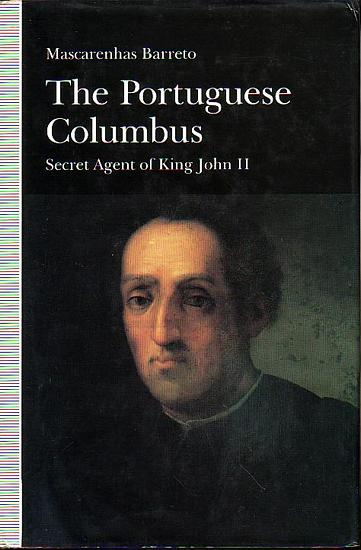

BARRETO, MASCARENHAS 
The Portuguese Columbus, Secret Agent of King John II

The amazing investigative work of Barreto proves Columbus was 
(1) a spy, 
(2) Portuguese (NOT Italian), and 
(3) JEWISH! Barreto breaks the secret code of Columbus' signature and exposes the explorer's covert life. 


FACT_4#: Authentic Letters of Columbus. 
William Eleroy Curtis, 
Honorary Curator, Department of Columbus Memorial. 
Chicago, U. S. A.          May, 1895. 

There is one letter in the handwriting- of Columbus, BUT the greater portion having 
been written by several different amanuenses. The penmanship of his brother Bartholomew and his son Fernando are identified in several places. 

The signature or rubric of Columbus which appears at the close of all his communications, as the sign of the cross appears at the begin- 
ning, has never been satisfactorily interpreted. It was the custom in his time for men of importance to adopt sign manuals of a peculiar 
sort, as they adopted mottoes for their escutcheons, which had some apparent or concealed significance. 

The signs used by Columbus are generally interpreted to mean 
"Servus Suplex Altissimi Salvatoris Christus Maria Vosef," 
which in English reads, 
"The humble servant of Christ, the Supreme Savior, 
Mary and Joseph, Christ-bearer."  
The last line was often written " Christo Ferens," and several signa- 
tures appear without it, and with " El Almirante," (the Admiral) 
instead. These were written after his appointment as admiral in the 
Spanish navy. 
The most plausible rendering of the signs seems to be, 
"Salvo Sanctum Supulcrum Xriste Maria Yesus Xristo Ferens." 


FACT_5#: Alonso Sanchez (de Huelva??)


HUELVA, Alonso Sanchez de (wail'-va), Spanish navigator, lived in the latter part of the 15th century. He was born in the small town of Huelva, near Moguer, and from that town he took his surname. He is generally credited with the first discovery of the New World, as it is asserted that he was cast by a tempest on the shores of North America, and, being saved with three or four sailors, returned to the island of Madeira; and that from him Columbus obtained his first information of the continent, and was guided by this in his discovery. As Huelva's original manuscript was lost, the tradition of his voyage was set down as fabulous ...

"(1485) ...And because of the delay they ran out of water and supplies. For this reason and because of the great privations they had suffered on both journeys, they began to sicken and die, and of seventeen men who left Spain, no more than five reached Terceira, among them the pilot Alonso Sanchez de Huelva. They stayed at the house of the famous Genovese Christopher Columbus, because they knew he was a great pilot and cosmographer and made seamen's charts. He received them kindly and entertained them lavishly so as to learn the things that had happened on the long and strange voyage they said they had undergone. But they arrived so enfeebled by hardships that Christopher Columbus could not restore them to health despite his attentions, and they all died in his house, leaving him the heir to the hardships that had caused their death" 
(Royal Commentaries of the Incas, vol. 1, pp. 12-14).

also mention Huelva's discovery:
later researches seem to confirm the tradition, and such writers as
George Horn, Laet, Alderete, Jose de Acosta, Grotius, and Hakluyt
appear to give it full credit.
Mariana affirms that there are authentic proofs of Huelva's landing at Madeira.
Ferdinand Denis, in his "Articles critiques,"
Fray Geronimo de la Concepcion, in his "Cadiz Ilustrado," and
Diego da Costa, in "Ocios de Espanoles Emigrados,"

Some believe that the information provided by Sánchez, concerning headings and distances, influenced Columbus's plans. Others believe that Alonso Sánchez never existed and that he was simply part of an attempt by the Pinzón brothers to discredit Columbus's skills as a navigator.
Indeed, no document from the time tells about any Alonso Sánchez, and everything known about him comes from the writers that told his story well after Columbus death.

EPILOGUE that predates other sources

To end the trade routes of the world at the year 990
 (before the vikings decided to set in Normandy and occupy England and Sicily)

There is, in any event, additional credible evidence of Jewish activity in China that goes back to the latter part of the 9th century, when ibn Khurdadbih, the so-called Postmaster of Baghdad and a northern Persian Geaographer, alluded to Jewish traders known as Radanites who traveled from such distant points as Spain and France all the way to China and back by any of four already well-established land and sea routes. I


Monday, June 8, 2020

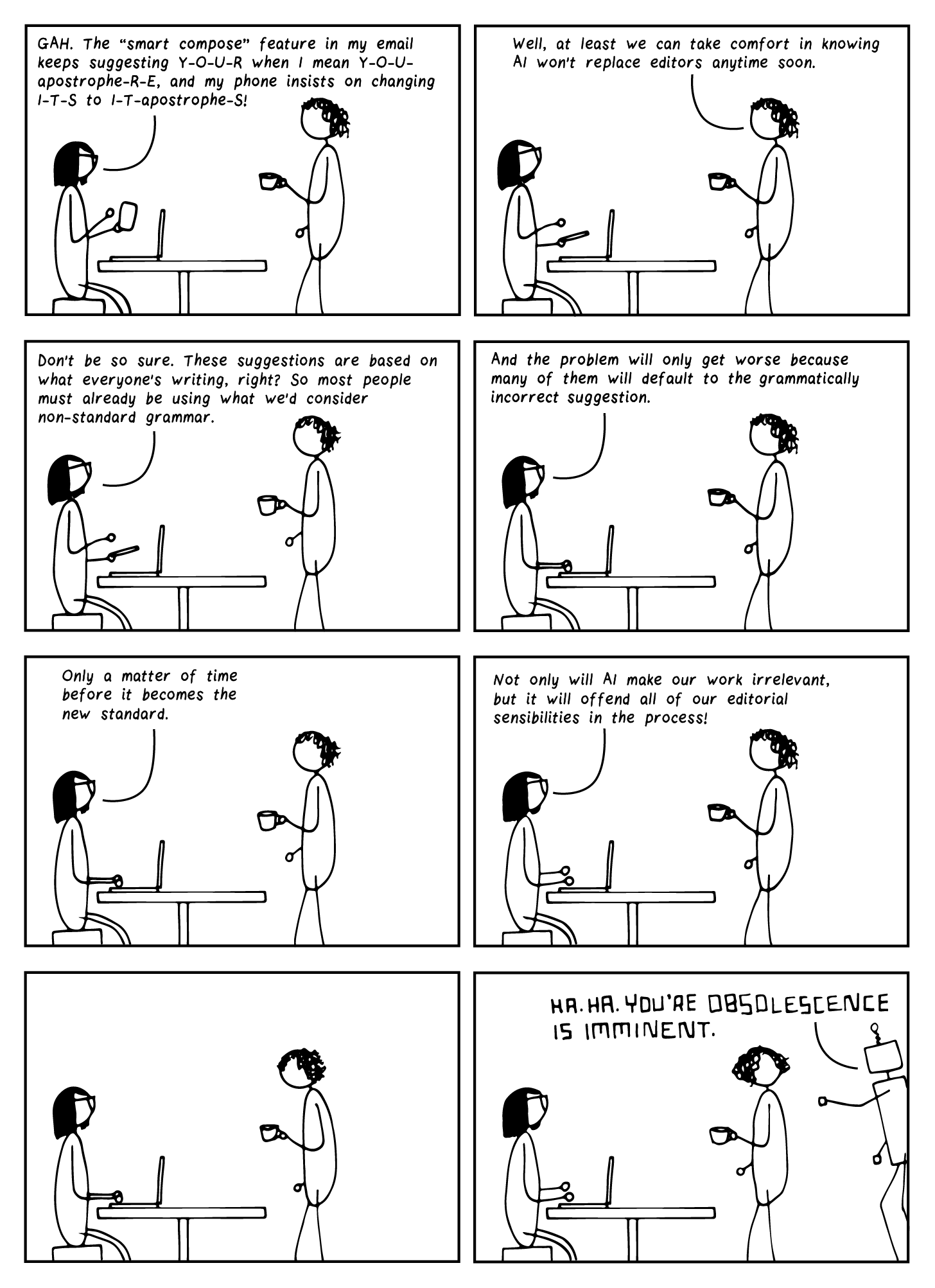
an other thin 2 cumme - its Cheungs view


IVA CHEUNG's side view on things to come

a certified professional editor based in Vancouver with spot on cartoons

AI __1               catch __2                style sheet_ 3


AND     ONE BOOK:


"If you've ever tried to learn another language, you know how much time, energy, and brain power is required. ...
Babel No More: The Search for the World's Most Extraordinary Language Learners. By Michael Erard.     Free Press   - 306 pages   (Dec 2011)

A serious study of polyglottery is underway! The book is being written, not in any nebulous sense, but under concrete contract with a major publishing house and with a fixed 2010 date of issue. The author, Michael Erard, Ph.D., has previously published a book entitled: Um...: Slips, Stumbles, and Verbal Blunders, and What They Mean. He is now researching a project called Babel No More to investigate polyglots and the upper limits of language learning ability.  (by  A Arguelles )


Monday, May 25, 2020

our Developed immoral world - checking 2014 headines today - Genuine Frauds

New Jounalists at work at   MAG CATALONIA TODAY.


ORAL TASK 2-  C1

SORRY or WORRYING...


You are preparing an article titled 
our Developed immoral world
for the new issue of the  MAG. 


Discuss with your partner  
these 3  rusty news  you want to use

You may find worth  evaluating 
what exactly the headlines mean. 


          TIPS: 

  •  So long to catch them red handed? 
  • React to ONE headline
  • Heard of similar events around?
  • elaborate: odd or normal?


1) German motoring club ADAC reveals ‘car of the year’ fraud

The 19-million member Allgemeine Deutsche Automobil Club  is Europe’s largest motoring organisation. In a nation renowned for worshipping the car, it has for decades served as a powerful political lobby and ostensibly as a champion of drivers’ interests. 
But today that reputation was shattered following an admission by Michael Ramstetter, the ADAC’s communications chief executive, that he had for years falsified voting results in the club’s annual so called “Golden Angel” competition – a highly regarded membership ballot which chooses Germany’s favourite car of the year.Mr Ramstetter, 60, admitted to Germany’s Süddeutsche Zeitung that he had increased the number of ADAC member votes tenfold for this year’s award which went to the Volkswagen Golf. “I have been bloody silly,” he  said.

           The Independent             

ADAC admits making up car award votes


A senior Italian cleric (accountant over 20 years) has been charged with laundering millions through the Vatican bank, police say. 
Monsignor Nunzio Scarano is already on trial and under house arrest on separate charges of plotting to smuggle 20m euros ($26m; £17m) into Italy.
The former Vatican accountant and two other people were served with arrest warrants on Tuesday, police said.


SEOUL, South Korea — A string of senior executives at three credit card companies in South Korea offered to resign on Monday after a huge theft of client data that may have affected 20 million people in this nation of 50 million.
Prosecutors arrested a 39-year-old technician hired by the Korea Credit Bureau, a ratings firm hired to help improve their systems to protect client data. It was subsequently disclosed that the man stole personal information on 104 million credit cards.
The man, identified only his last name, Park, stole the data from May 2012 to December 2013, copying it onto a USB device, prosecutors said. 
The data included the names, phone and South Korean social security numbers, email and residential addresses, salaries, monthly card use and other credit-rating information of clients, the Financial Supervisory Service, a regulatory agency, said in a statement. In many cases, card numbers were stolen as well.


Friday, May 22, 2020

oral 2_ Euphemisms and oxymorons - Holidays at work


Working holiday campaign

    Don’t be a moron this summer.  
Anyone can stand a Couch Potato July ahead?

      Go outside your comfort zone…


    Workcamps are not vacations, so you don’t expect to do tourism. You may do some cultural visits, but it’s not the aim of the project.  

      You’ll be part of a local project and you’ll be living with local people, try to think about the impact of your presence there in a positive and in a negative way.


      Take part in a new activity:  click here


      TASK 1.  Tell your partner which is the one you'd like to attend.


                  You can join your european voluntary project 
       in SCI Catalunya office 

      a) give support in the task of:
      a1) sending and hosting volunteers, 
      a2) helping local groups, 

      b) make promotion of workcamps, 

      c) offer and participate in trainings, 

      ...... and a lot of other things!


        ORAL TASK 2.  Discuss with your  partner
                              Working holiday campaign
        • the greatness /silliness of doing a working holidays experience.
        •    the adequacy of the pictures above


        CODA.   Find your favourite OXYMORON  and 
                     compose a long sentence. Check your friends!


        Two words with contradicting meanings used together.
        Something that appears self-contradictory, often a ridiculous comparison. 
        Conjoining contradictory terms.


        Some paradoxical oxymorons you may know as they become clichés:


           group 1  

        • Irregular pattern

        • Real utopias

        • Bitter sweet

        • Deafening silence

        • Forward retreat

        • Noisy silence


        • Serious joke

        • Sweet sorrow


           group 2  


        Unjust Law

        Tax Return

        Airline Food

        Alone Together

        Taped Live

        Peace Force

        Anarchy Rules

        Affordable Housing

        French Resistance

        Rap Music

        From American politics   Chuckle a little bit:
        • The news reported that he had died of death by friendly fire.
        •  Eight years of "Compasionate Conservatism"
        • Amazing " Open-minded Conservative"
           group 3 -  with  4 sets  

        SET 1       Legally drunk     Exact estimate     Act naturally  
                         Resident alien        Genuine imitation        Good grief

        SET 2           Passive aggression      Clearly misunderstood      Peace force
                          Extinct life            Plastic glasses               Terribly pleased 

        SET 3          Computer security          Political science        Definite maybe
                            Pretty ugly               
        Same difference      Almost exactly

        SET 4           Silent scream                New classic        Childproof
                        Terribly pleased                Diet ice cream   Exact estimate