Search This Blog

Showing posts with label japan. Show all posts

Thursday, November 2, 2017

Business card etiquette - Do not waive at the Cultural aspectes

There are guidelines 

for making a positive and lasting impression 

when giving and receiving business cards.


Unlike in North America  where the business card has little meaning other than a convenient form of capturing essential personal details, in other parts of the world the business card has very different meanings.


General Business Card Etiquette Tips

  • Business cards are an internationally recognised means of presenting personal contact details, so ensure you have a plentiful supply.
  • When travelling abroad for business it is advisable to have one side of your business card translated into the appropriate language.
  • Good business etiquette requires you present the card so the recipient's language is face up.
  • Make a point of studying any business card, commenting on it and clarifying information before putting it away.
The story is about a little wave, bobbing along in the ocean, having a grand old time. He’s enjoying the wind and the fresh air—until he notices the other waves in front of him, crashing against the shore. 

   “‘My God, this is terrible,’ the wave says. ‘Look what’s going to happen to me!’ 
   “Then along comes another wave. It sees the first wave, looking grim, and it says to 
him, ‘Why do you look so sad?’ 
   “The first wave says, ‘You don’t understand! We’re all going to crash! All of us waves 
are going to be nothing! Isn’t it terrible?’ 
Costa Tarjeta De Visita


   “The second wave says, ‘No, you don’t understand. 

You’re not a wave, 
you’re part of the ocean.’” 
               (From M. Albom's Tuesdays with Morrie)


Everybody knows waves mean..... many things. As the saying goes: "You pays y'r money and you takes the chances."


Now Do this test When my country ruled the waves

What your Business Card Etiquette says about you! from Mark Jeffries

    1. Business Card Etiquette in ............

  • Have one side of your business card translated into local language printed in gold ink since gold is an auspicious colour. 
  • Your business card should include your title. If your company is the oldest or largest in your country, that fact should be highlighted on your card. 
  • Hold the card in both hands when offering it.
  • Never write on someone's card unless so directed.

    2. Business Card Etiquette in ............

  • If you have a university degree or any honour, put it on your business card. 
  • Always use the right hand to give and receive business cards. 
  • Business cards need not be translated into the native language as English is widely spoken within the business community.

    3. Business Card Etiquette in ............

  • Business cards are exchanged with great ceremony. 
  • Invest in quality cards.
  • Make sure your business card includes your title. The locals place emphasis on status and hierarchy.
  • Business cards are always received with two hands but can be given with only one.

    4. Business Card Etiquette in ............

  • Business card etiquette is relaxed in the country and involves little ceremony.
  • It is not considered bad etiquette to keep cards in a pocket.
  • Business cards should be kept clean and presentable.
  • Do not feel obliged to hand out a business card to everyone you meet as it is not expected.

Answer KEY:
Do not waive the rules,
Do not cheat....
see the end of our post

Linguistic crossroads. Some meanings are best avoided:
  • The name Coca-Cola in China was first rendered as Ke-kou-ke-la. Unfortunately, the Coke company did not discover until after thousands of signs had been printed that the phrase means "bite the wax tadpole" or "female horse stuffed with wax" 
  • In Taiwan, the translation of the Pepsi slogan "Come alive with the Pepsi Generation" came out as "Pepsi will bring your ancestors back from the dead." 
  • Microsoft had to think twice about bringing its Bing search engine here because in Chinese, the most common definitions of the character pronounced “bing” are “disease,” “defect” and “virus” — rather inauspicious for a computer product. 
  • Peugeot (Biao zhi) sounds enough like the Chinese slang for “whore

======
KEY    When my country ruled the waves

1-China    2-India   3- Japan  and 4-UK

Saturday, April 14, 2012

hard to believe: he did it twice

In the August of 1945, two atomic bombs were dropped in Japan August 6th in Hiroshima, 9th in Nagasaki. The total of 210,000 were killed. There were victims who were effected by both of the bombings. 

Remarkably, a group of perhaps 200 Japanese were present for both atomic bombings. 
However, he also suffered through the deaths of his wife and son from the after-effects of the bombings.
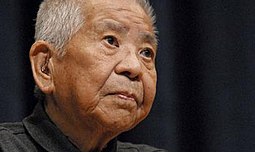
Yamaguchi (Guardian news), who is the only hibakusha (atomic bomb survivor) to be recognized by the Japanese Government for having suffered through both bombings, testified before the United Nations to advocate against the use of nuclear arms or even nuclear power. "The bottom line is, there shouldn't be nuclear in our world," he stated.
He also explained that his motto is "One for All, All for One" and felt he had done his duty when he extracted a commitment from famed movie director James Cameron to create a feature film about the atomic bomb survivors.

  Early life
Yamaguchi "never thought Japan should start a war". He continued his work with Mitsubishi Heavy Industries. As the war ground on, so despondent was he over the state of the country that he considered killing his family with an overdose of sleeping pills in the event that Japan lost.

   Hiroshima bombing
Yamaguchi lived and worked in Nagasaki, but in the summer of 1945 he went to Hiroshima for a three month business trip. On August 6, he was preparing to leave the city with two colleagues, Akira Iwanaga and Kuniyoshi Sato, and was on his way to the station when he realised he had forgotten soothing, and returned to his workplace to get it. At 8:15, he was walking back towards the docks when the Americans dropped the first atomic bomb to citizens ever near the centre of the city, only 3 km away. Yamaguchi recalls seeing the bomber and two small parachutes, before there was "a great flash in the sky, and I was blown over". The explosion ruptured his eardrums, blinded him temporarily, and left him with serious burns over the left side of the top half of his body. After recovering, he crawled to a shelter, and having rested, he set out to find his colleagues. They had also survived and together they spent the night in a refuge before returning to Nagasaki the following day. In Nagasaki, he received treatment for his wounds, and despite being heavily bandaged, he reported for work on August 9.

   Nagasaki bombing
At 11 am on August 9, Yamaguchi was describing the blast in Hiroshima to his supervisor, when the American bomber  dropped another  atomic bomb onto Nagasaki. His workplace again put him 3 km from ground zero, but this time, he was unhurt by the explosion.However, he was unable to seek replacement for his now ruined bandages, and he suffered from a high fever for over a week.

   Later life
After the war, Yamaguchi worked as a translator for the occupying American forces and then became a schoolmaster. When the Japanese government officially recognized atomic bombing survivors as hibakusha in 1957, Yamaguchi's identification stated only that he had been present at Nagasaki. It entitled him and other 260,000 survivors to monthly allowances, free medical dheckups and funeral expenses.
Yamaguchi was content with this, satisfied that he was relatively healthy, and put the experiences behind him.As he grew older, his opinions about the use of atomic weapons began to change.


Tsutomu Yamaguchi is one of those 200 or so people who were bombed twice, and survived twice. His hope towards the abolition of nuclear bombs brought 90-year-old Yamaguchi to make his appearance on this film. Along with Yamaguchi, seven other twice-bombed twice-survived people talk about their experience.

August 6th and August 9th are days to contemplate the awful possibilities of mankind, and resolve ourselves to do better.  Pandora's box of horrors was smashed on these days, and again many times in our gruesome history of war this last century