Search This Blog

Wednesday, April 27, 2011

What a messi match this time!

 7 headlines 


2. Masterful Messi lights up Bernabeu clash

3. A Messi ending for Mourinho's Madrid


4. Vintage Lionel Messi Silences the Crowd 
in Santiago Bernabeu


5. Lionel Messi capitalises  for Barcelona as Real Madrid see red again


               Inspiring beauty triumphed over beastliness in the end last night

7. Messi magic conjures crucial away goals as Mourinho and Pepe see red in the Bernabeu

Lost for words?! Read this:

The Argentine star then produced a sensational moment of pure football when he waltzed past four Madrid players before touching the ball beyond Iker Casillas to send the travelling support into raptures.
Messi picked up a pass barely inside the Real half and proceeded to beat no less than five defenders before sending a low rolling shot past Casillas into the back of the net. It was an extraordinary individual effort and well worthy of winning a tie.
Messi was not finished and struck a brilliant second with three minutes remaining to leave Barca with one foot in the final. The Argentina ace dribbled past several Madrid defenders at pace before sliding a right-footed shot past Casillas.
Messi then netted a wonderful second three minutes from time when he weaved his way into the Real penalty area and slotted past Casillas
what else?
To read about describing him April 2010, read this

on headlines (30/11/10)
on MOUch Ado About Nothing

 
The day before:
guardian news

This time it's personal. Barcelona's coach, Josep Guardiola, finally exploded, sending a year of pent-up anger and frustration gushing forth as he responded to José Mourinho on the eve of the Champions Leaguesemi-final against Real Madrid.
The question now is whether Mourinho will feel that he has won the mental battle, dragging Guardiola into territory that is not his own, or if Guardiola will feel a release at having at last had his say. And what a say it was. The days of a respectful silence, of turning the other cheek, are definitively over. This was more like the aggressive weigh-in before a prize fight, complete with an air of "you and me outside".
Mourinho had pricked Guardiola's pride once too often by accusing him of complaining about referees who get decisions right. It was an accusation that Guardiola, normally so measured, was not prepared to let pass – the last straw after a year that has been a war of attrition. Guardiola was finally drawn into battle. "
He said more than "hey". Sitting down in the press room at the Santiago Bernabéu, he asked which of the gathered cameras was "Mourinho's camera" and began.

"Tomorrow at 8.45 we will play a match on the field," Guardiola said. " Outside of the field, he has won the entire year, the entire season and in the future [it will be the same]. He can have his personal Champions League outside the field. Fine. Let him enjoy it, I'll give him that. But this is a game. When it comes to sport we will play and sometimes we will win, sometimes we will lose. We are happy with smaller victories, trying to get the world to admire us and we are very proud of this.

"In this room [Real Madrid's press room], he is the chief, the fucking man. In here he is the fucking man and I can't compete with him. If Barcelona want someone who competes with that, then they should look for another manager. But we, as a person and an institution, don't do that. I could talk about [Olegario] Bequerença [the referee from last season's 
Guardiola worked with Mourinho at Barcelona but considers their relationship to be shattered by this. 
 I always thought that when people didn't understand me, it was because I had explained myself badly, but now I don't. I said the referee [in the cup final] had been smart and very attentive. I said it was right. I pointed out simply that the result can be down to small things, that's all. It was not a complaint. After victory I congratulated Real Madrid and that is what Barcelona does. We congratulated RM for the cup that they won on the field against a team that I represent proudly."
Asked if this was just a tactic, Guardiola replied: "What? You think my players will run around more because I looked for Mourinho's camera?"

PENIO SOME PAGES

http://www.penio4eoi.pen.io/


http://ma-thegambler-krogers.pen.io
http://maths-is-a-hard-tool.pen.io/edit
http://learner-and-reading.pen.io/edit
http://thegambler.pen.io/
http://learner-and-news.pen.io/edit

http://allen-manhattan.pen.io/
http://redemption-film.pen.io/
http://psychiatrist-scketch.pen.io/


http://ma-songs-and-lyrics.pen.io/edit

FIRST LEVELS

http://ma-pron-past-tenses.pen.io/edit

Tuesday, April 26, 2011

conversion- heure anglaise or Greenwich time 1892

GMT is the name given to MEAN SOLAR TIME at the Greenwich meridian; it is the popular name for civil time kept in the UK. The need for a standard time across the country came with the development of the railways, from 1825 onwards. 

For example, passengers travelling from Bristol to London would find a ten-minute difference between the time kept in the two cities because local time, measured according to the position of the Sun in the sky, varies with longitude. Eventually the railways adopted Greenwich time, which became known as ‘railway time’, as their standard and in 1880 it became the legal time for the whole country.

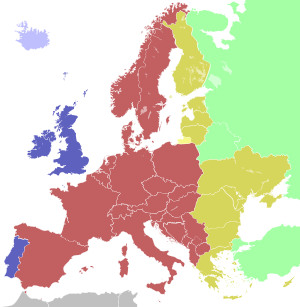
Maps with multiple meridians were confusing

 In 1928 the INTERNATIONAL ASTRONOMICAL UNION (IAU) recommended that Greenwich Mean Time should become the Standard timescale for scientific purposes and be known as UNIVERSAL TIME (UT).


A bit of history. For older history click here 
England adopted the Greenwich time (GMT) on the 13th January 1843.
Greenwich Mean Time was adopted across the island of G. B. by the Railway in 1847.
London adopted Greenwich time January I3, I848, for the official use of the entire nation. 

Obviously such a plan would not work in the United. States. They gave up on the quixotic notion that the world revolved around Washington and adopted Greenwich time as early as 1850 the United States by Act of Congress.

 It was gradually adopted for other purposes, but a legal case in 1858 held "local mean time" to be the official time. This changed in 1880, when GMT was legally adopted throughout the island of Great Britain.
 Ireland as part of UK adopted Greenwich Mean Time in 1916

To learn about other places, let's state three cases:
 Earlier in Europe there were 20 prime meridians. Finally, 128 years ago 41 delegates from 25 nations gathered in Washington in the US for the 1884 International Meridian Conference to decide from where time and space should be measured. 
By the end of the difficult summit, fumatta bianca, dragged on until "smoke came out", Greenwich had won the prize of longitude 0º by a vote of 22 to one, with only San Domingo against and France and Brazil abstaining. BBC news
But in 1911 times were far form standardised.


Luigi Barzini wrote about Belgium in the winter 1911:
In 1911 Belgium alone had adopted l'heure anglaise or Greenwich time, which was 9 minutes behind Paris time, 4 minutes behind French railway time, and 20 minutes behind Ductch time. The Europeans (1983)


France legalised the official Greenwich time in March 1911, Portugal January 1912.

Bruxelles, 1892 (the invention of new traditions)
Madrid, 1940 (a political criteria)
Beijing, 1992 (China country follows the Capital time zone since 1949, although the 5 time fuses were in use since 1912)

Bruxelles, 1892 (the invention of new traditions): Mayor Charles Buls says no

The municipalities of the Brussels region resisted long time. During the session of the City Council of Brussels of 11 April 1892, mayor Charles Buls strongly opposed to the introduction of the GMT. He based himself on several arguments: the disturbance of the biorhythm of the human beings, the time difference being ridiculously small because of the small surface of Belgium, and the English time that did not interest Belgium. These arguments were fought by scientific proofs during the same session.

New hour for schools and administrations

Other bordering municipalities of Brussels discussed the question as well. The municipal administration of Saint-Gilles was the first to accept the introduction of the Greenwich Mean Time, on 16 March 1892. The municipality of Laeken gave in after a long debate. The municipal administration of Schaerbeek was to follow. Finally the law of 29 April 1892 was passed in Belgium. From 1 May 1892 the GMT was applied on the whole Belgian territory. The leaders of the schools of Laeken received a 'service order' on 30 April 1892.


Ville de Bruxelles nouvelle: l'adoption, en 1892, de l'heure du méridien de Greenwich par Bruxelles et Laeken.
Inimaginable, mais jusqu'en 1892, pour prendre le train d’Ostende à Verviers par exemple, il fallait avancer les aiguilles de sa montre dans chaque ville où le train s’arrêtait. Une réalité quotidienne pour les voyageurs belges et étrangers au 19e siècle. Pour en finir avec ce désordre horaire, la solution était d'uniformiser les horaires en passant à l'heure du méridien de Greenwich.
C’est pour cette raison que le Ministre belge des Chemins de fer, du Télégraphe et des Postes avait décidé en 1892 que l’heure légale pour les horaires des trains de l’Etat serait l’heure de Greenwich. L'Observatoire royal d’Uccle avait calculé qu’il fallait reculer les aiguilles de 17 minutes et 29 secondes par rapport à l’heure du méridien de Bruxelles.

Monday, April 25, 2011

lletra k sentits i ambigüitats


 Torniello da Novara - 1517


Ens serveix per  paraules d'origen no llatí 
Sobretot mots corrents d'àmbit anglo-germànics: whisky, Kiss radio, The Pink Panther,  Kermesse, la musica punk, walkiria i Kirk Douglas.
I romanitzacions d'altres llengües; del grec: koiné fa referència a qualsevol llengua que s'utilitza com a model i que és comuna i general en un mateix territori.Kýrie-eléison (Grec, Κύριε, ἐλέησον, per "Senyor, ten pietat". 
 d'altres llengües en triem tres: Kenya (país = muntanya lluminosa); karate (del  karatedō, camí de la mà buida); i kiwi (fruit i ocell de les antípodes).
Clarament aprofitat en marketing per la rotunditat del so i la claredat de la grafia de la lletra K: Nike (=victoria), Kodak (eufonia en totes les llengües), Konica,   Iskra (brillant, espurna) amb l'eslogan "d'una espurna el foc enlluernarà".


Origen gràfic 


Aqeust sembla ser etrusc. Encara que semànticament prové de la paraula ma (que es deia en egipci d'una altra manera: dart). Com en fenici i llengues semítiques en contacte amb Egipte la ma es deia /kap/ va entrar al alfabet etrusc/grec com a lletra de so gutural sord.
Veieu el canvi en diverses llengües aquí baix. Si ens agrada els angles rectes també el tenim en altres llengües:

àrab ك, Hebreu  ק, o Coreà ㄱ.


Numerologia de la 11a lletra


El ser la 11a lletra li afegeix una certa interessant numerologia. L'11 supera el 10, la perfecció i si el descomposem vibra amb la dualitat (1+1=2). A més l'11 en codi binari és 3 (el nombre de la piramide o la trinitat). D'alguna manera el 11 te relació amb l'univers. Les taques solars apareixen cada 11 anys. Entrem en l'era d'Aquari, una nova consciència. (onzè signe del zodiac) i la primera missió amb exit de la Nasa a la Lluna fou Apol.lo 11.
Mirant un senzill tractat de simbologia, llegim: Number Eleven possesses the qualities of intuition, patience, honesty, sensitivity, and spirituality, and is idealistic.


Significats de la K

En bioquímica, tenim la vitamina K. Justament descoberta, i anomenada, en danès el 1929 “Koagulationsvitamin". La vitamina K1 la podem trobar principalment en espinacs, bleda, i cols; algunes fruites com alvocat i kiwi també presenten una quantitat important de vitamina K. Com a referència, dos cullerades de julivert contenen el 153% de la quantitat diària recomanada de vitamina K. Alguns olis vegetals, especialment soja, contenen vitamina K. Darrerament ha tingut un paper mèdic en la millora de la pell i dels ossos.

En matemàtiques representa la connectivitat d'un graf en la teoria de grafs. O la unitat de graus Kelvin en temperatura. 

En química, l'element Potassi, és un metall molt lleuger i es diu Kalium, d'aquí el simbol K i va ser descobert el 1807.  És un element essencial, també per al creixement de les plantes. És un dels tres que consumeixen en major quantitat, ja que l'ió potassi intervé en la fotosintesi, part important de la fisiologia dels vegetals.  També en les  fruites (especialment les de pinyol com l'albercoc, cirera, pruna, bresquilla, etc.) són aliments rics en potassi.

Entreteniment

En els jocs de cartes (entren en Europa al segle XIV provinentd d'Egypte, tenim el rei (malik en àrab) i la lletra K designa el _King en la baralla francesa o anglesa la carta més alta ( fins que la Revolució ded Robespierre desplaça la monarquia del lloc més alt!)
 King of Hearts = Charlemagne, King of Diamonds = Caesar,  King of Clubs =  Alexander the Great, King of Spades =  Biblical David 

Per cloure, una mica del castellà del segle passat:
Es una letra que "siempre fue mal vista", y que desapareció del diccionario entre 1815 i 1869 (!). Denostada, "la malquerida" de la que sólo existen 35 palabras que la usen según la Real Academia (Castilla, 1996).
Nebrija: “La K ninguna duda hay sino que es muerta”.
Mateo Alemán: “Inútil, extranjera y difícil de escribir”.
Sebastián de Covarrubias: “No hay uso cerca de los latinos”.
Unamuno la calificó de “antipática” y “antiespañola”.
Quintiliano: “Algunos creen que K se pone siempre delante de A pero ya tenemos para eso la C”.


Al hilo de la lectura de Historia de las letras, de Juan Ramón Lodares
 "La letra 'k', violenta incluso en su grafía, es una advertencia, una bandera desplegada al viento de la pacífica resistencia, casi un manifiesto. (...) 'K' no se emplea salvo en voces de procedencia griega o extranjera, y durante muchos años ha estado en desuso.

torsimany: dragoman translator etymology


Per moure una mica cap a dalt, i allunyar-nos del eurocentrisme, cal reconéixer que altres pobles van poder-se expressar en altres sistemes escrits. Tothom reconeix la tasca mitjancera dels traductors. Per trobar l’abast del seu treball podem anar a Delisle (1995:14):
les traducteurs, inventeurs d'alphabets, bâtisseurs de langues nationales, artisans de littératures nationales, diffuseurs de connaissances, propagateurs de religions, rédacteurs de dictionnaires, acteurs sur la scène du pouvoir, importateurs de valeurs culturelles. (1);

D’altra banda els contactes no s’aturen. Parlarm d’un mot paradigmàtic: ‘traductor’. Des de les llunyanes terres del Turkestan ens ha arribat un mot a la mediterrània. Una varietat de contacte s’estableix amb els traductors o interprets orals. El mot que ha perdurat des de l’àsia oriental fins occcident, encara actual, va ser (per què no?) una paraula d’arrel turca (2). 

La trobem a València quan Jaume I entra en contacte amb els àrabs i tenim la versió nostrana ‘torsimany’. En llatí és dragomanus, en àrab ‘targuman’, en castellà ‘trujaman’.
(2) When looking for an etymology of the word for ‘to translate’ or ‘translator’ associated with the West, one would either expect an Altaic or an Indoeuropean donor language. In old Chinese was (lü-Shi). The most widespread word for ‘interpreter’ in the (Northern) Turkic languages is transparently derived from Common Turkic *tl (younger *til) ‘tongue, language’ and a rare, and possibly further analyzable suffix *-mac, *-mac. In modern Turkish tercüman
Behr, Wolfgang (1999):: "To Translate Means to Change" a Translating Western Knowledge into Late Imperial China, East Asian Department, University of Göttingen (6-9 December, 1999)
(1) Delisle Jean, Judith Woodsworth (1995): Les traducteurs dans l'histoire, Les Presses de l'Université d'Ottawa, Éditions Unesco


torsimany  (m)
Intèrpret; intermediari que fa entendre dues persones que parlen llengües diferents.
 Anselm Turmeda, después Abd-Al·lah at-Tarjumanon

[Etimologia — De l’àrab turjumân, 'intèrpret', derivat de tárjam, 'traduir', possible manlleu d’una altra llengua semítica, potser l’arameu, d’on provenen els mots de l’hebreu rabínic targem, 'interpretar', i targum, 'interpretació'.]
No hi ha gens de grandiloqüència, doncs, en la idea que Pla es fa de l’escriptor. L’estampa del plumífer «il·luminat», pol de màgies i d’inspiracions, torsimany de déus o de misteris inversemblants, és, per a ell, una simple supuració de la pedanteria humana. (...) Ell, ho digui o no, sempre torna al mateix punt: a l’ofici. L’escriptor no és més que un home que escriu.
Joan Fuster, «Notes per a una introducció a l’estudi de Josep Pla» (introducció a El quadern gris) (Barcelona: Destino, 1966), pàg. 24-25

Segons el dicccionari de l'Institut d'Estudis Catalans, un torsimany és un "intèrpret que servia d’intermediari entre persones de llengües diferents".
Al tombat del segle xv, Lluís d'Averçó, jurista, va compondre el Torsimany, tractat teòric i gramatical, seguit d'un diccionari de rimes.
Carles Riba, al Nabí, equipara el torsimany amb un "traductor".
Altres mots provinents de l'àrab a CD1M


For the debated etymology, nothing crystal clear when we move backwards in time and eastwards:
A meturgeman is 'a translator'; the word is very old, and goes back to Assyrian, where ragamu means 'to speak', rigmu is 'a word' and the taf'el form indicates 'one who facilitates communication'. This word meturgeman, also turgeman, passed from Aramaic to Hebrew, to Arabic, to Turkish, 
source : From Babel to Dragomans, Bernard Lewis :


Etymology:Dragoman \Drag"o*man\, noun; plural Dragomans. [From French dragoman, or Spanish dragoman, or Italian dragomanno; all from Late Greek, Arabic tarjum[=a]n, from the same source as English targum. Compare to Drogman, Truchman.]


1. An interpreter and guide in the Near East; in the Ottoman Empire in the 18th and 19th centuries a translator of European languages for the Turkish and Arab authorities and most dragomans were Greek (many reached high positions in the government)

Dragoman, a word of Aramaic/Assyrian origin (related to Arabic ترجمان tarjuman), designates the function of interpreter, translator and official guide in countries and polities of the Near East. The status of dragomans was especially prestigious in the Ottoman Empire, where it incorporated diplomatic duties - namely, in the Porte's relation with Christian countries


2: Dragoman (plural, Dragomans). A ciceron; a guide or interpreter to foreigners. (Arabic targuman, an interpreter; whence targum.

Saturday, April 23, 2011

Journey Into A Far Country - by JJ Counsilman


Journey Into A Far Country is a novel of love and prejudice in modern China. Thomas, a long-time foreign resident, discovers China through random travels, “living vignettes” that are circumscribed life experiences with no relation to the rest of his life until he is attacked on an isolated mountain in Sichuan Province. The consequences of the assault evolve as Thomas tries to defeat a vengeful policeman, be accepted into a Chinese family, and lay his Chinese alter ego, Lóng Măn Róng (Dragon Full Glory), to rest. In successive roles as patient, prisoner, monk, farmer, bouncer, and gangster, Thomas encounters the dark side of modern Chinese society and himself. He also finds bravery, love, and wisdom within both, and learns about Chinese thinking, Daoism, and martial arts.

Excerpt

We both agree that carrying guns would be too alien and too much a denial of our wŭshù training—for now. Every martial artist hates guns for the obvious reason that they can usually nullify any amount of martial skill, but also for the hardly less obvious reason that the weapon’s frustrating superiority is commonly in the hands of ethical degenerates and morons. The gun user is the antithesis of the chivalrous fighter of old because pulling a trigger requires no gōngfu, no mental training, no code of conduct, and no courage; nothing more than the same muscles as a monkey.


JJ Counsilman holds a BA from California, MA (First Class Honours) from Auckland, New Zealand, and PhD from Queensland, Australia. 
He has lived in the US, New Zealand, Australia, Singapore, and China; and that has provided him with much material for his fiction and slos offered a great appreciation for the diversity of human behavior.


to read about his fiction: http://www.sinoamericanbooks.com/

Tuesday, April 12, 2011

Divertimento lingüístico


El Toni Coromina, un bon paio de Vic, ens proposa aquest “Divertimento Lingüístico” al Vanguardia (12/04/2011)

Alfondo Subidas Almendro, hijo de Huesocaro y Marycielo, nació en Fortaleza enloquecida del Pedrusco, donde su padre (oriundo de San Baudilio del Merluzanar) y su madre (nacida en Vírgenes) se establecieron finiquitada la guerra. Al fondo era un chico un poco rebota-mostradores, catacacerolas y extravia cachorros.Por eso, su madre siempre le espoleaba: ‘¡Venga, arriba y gritos! ¡Pecho y huevos! ¡Adelante los blandones!’.

 Pero a él, piernas ayudadme, sólo le gustaba ahuyentar la niebla por los bosques de las Zorrerías y leer los libros de José Llano. De hecho, era un letralesionado, sueñatortillas, lamehílos, barriga-gozosa y cabeza de truenos. Entonces, Marycielo le decía: ‘¡Al fondo, dame un golpe de mano, que lo más fresco está en el fregadero!’.
Tanto mismo, él parecía tocado del hongo, ronalmorzaba, hacía el llorapoquitas y contestaba que le hacía daño el ojo de piojo. Toda la vida fue un defecadudas que se limitó a hacer la vive-vive y nunca quiso menear las cerezas. Hasta que un buen dia hizo el fin de Excreta-tirantes”

Per si voleu veure l'original:
Alfons Pujades i Ametller, fill d’Òscar i Maricel, va néixer a Castellfollit de la Roca, on el seu pare (originari de Sant Boi de Lluçanès) i la seva mare (nascuda a Verges) es van establir acabada la guerra. L’Alfons era un vailet una mica salta-taulells, tastaolletes, esgarriacries i caga-dubtes. Per això, la seva mare sempre l’esperonava: ‘Vinga, amunt i crits! Pit i collons! Endavant les atxes!’ Però a ell, camesajudeu-me, només li agradava escampar la boira pels boscos de les Guilleries i fullejar els llibres de Josep Pla. De fet era un lletraferit, somniatruites, llepafils, panxacontent i cap de trons.

Aleshores, la Maricel li deia: ‘Vinga, Alfons, dóna’m un cop de mà, que el mes fresc és a l'aigüera!’. Tanmateix, ell semblava tocat del bolet, rondinava, feia el ploramiques i contestava que li feia mal l’ull de poll. Tota la vida va ser un caga-dubtes que es va limitar a fer la viu-viu i mai no va voler remenar les cireres. Fins que un bon dia va fer la fi d’en Caga-elàstics”.

.